Wu Shuo, Dai Xinyi, Xie Dielai
Department of E.N.T. & H.N, The Third Affiliated Hospital of Sun Yat-sen University, Guangzhou, China.
School of Life Sciences, Sun Yat-sen University, Guangzhou, China.
Front Genet. 2019 Dec 4;10:1252. doi: 10.3389/fgene.2019.01252. eCollection 2019.
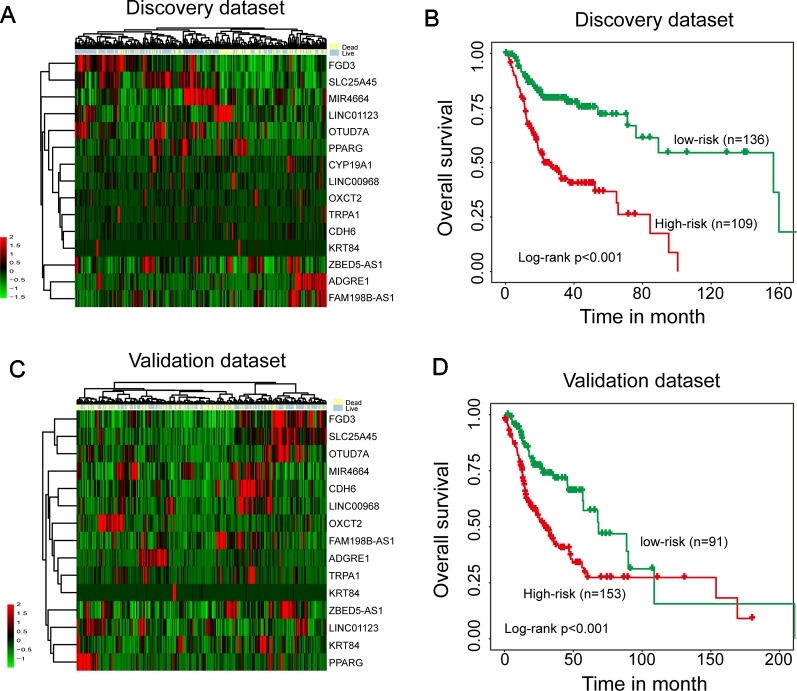
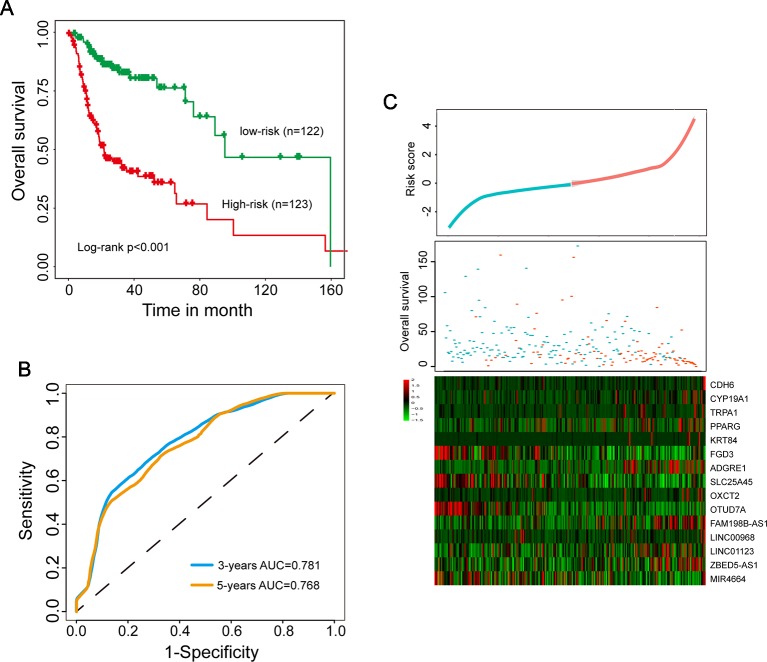
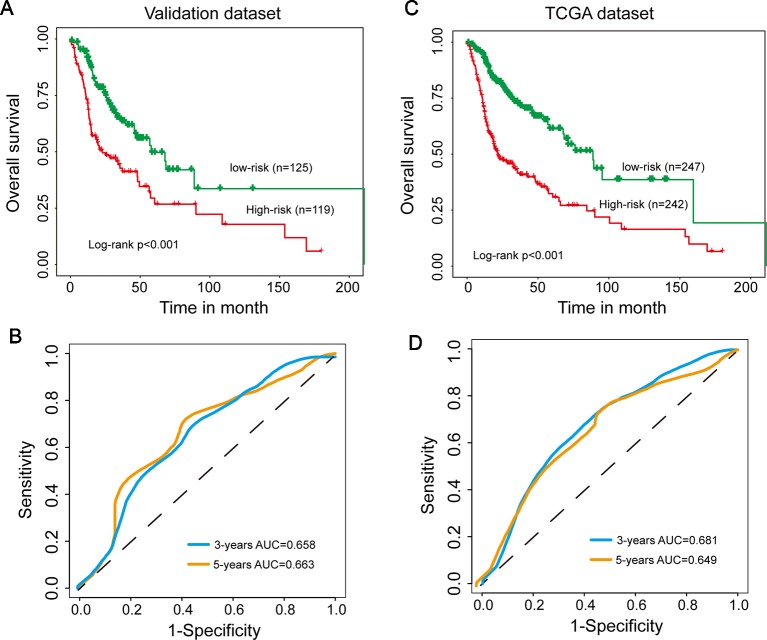
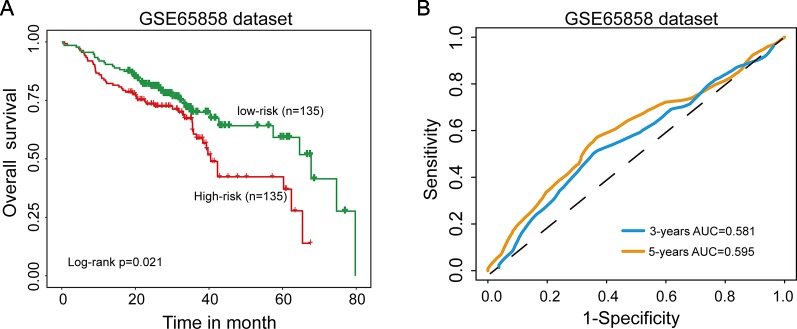
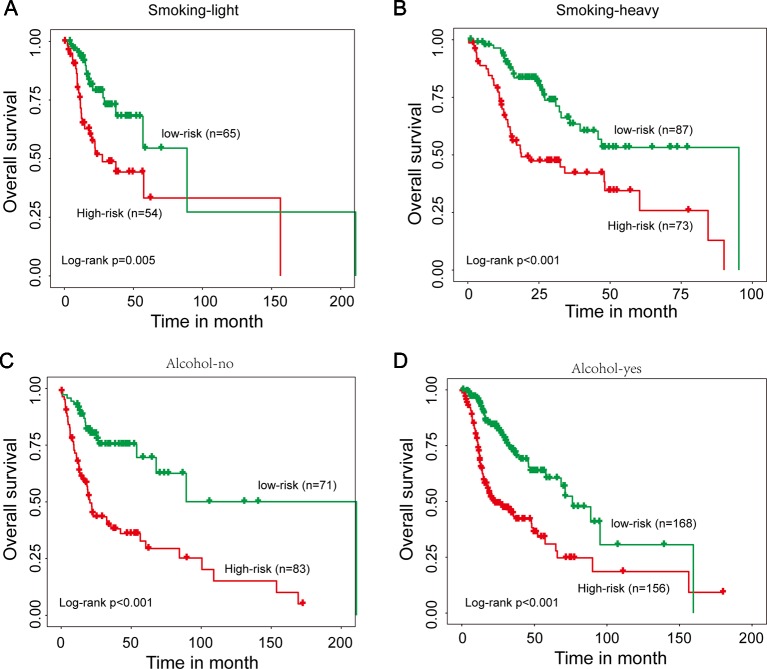
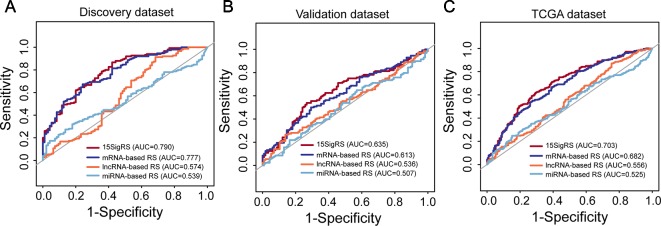
Head and neck squamous cell carcinoma (HNSCC) is a heterogeneous disease characterized by different molecular subgroups and clinical features. Therefore, it is important to uncover reliable molecular biomarkers for distinguishing different risk patient subgroup. Here, we conducted a multi-omics analysis to examine the joint predictive power of a multi-type RNA signature in the prognosis of HNSCC patients through integration analysis of mRNA, miRNA, and lncRNA expression profiles and clinical data in a large number of HNSCC patients. A multi-type RNA signature (15SigRS) was constructed which can classify patients into the high-risk group and low-risk group with the significantly different outcome [hazard ratio (HR) = 2.718, 95% confidence interval (CI), 2.258-3.272, p < 0.001] in the discovery data set, and subsequently validated in the Cancer Genome Atlas (TCGA) testing data set (HR = 1.299, 95% CI, 1.170-1.442, p < 0.001) and another independent GSE65858 data set (HR = 1.077, 95% CI, 1.016-1.143, p = 0.013). Further multivariate Cox regression analysis and stratification analysis demonstrated the independence of predictive performance of the 15SigRS relative to conventional clinicopathological factors. Furthermore, the 15SigRS has a prior performance in prognostic prediction than other single RNA type-based signatures. Functional analysis suggested that the 15SigRS are involved in immune- or metabolism-related KEGG pathways. In summary, our study demonstrated the potential application of mixed RNA types as molecular markers for predicting the outcome of cancer patients.
头颈部鳞状细胞癌(HNSCC)是一种异质性疾病,具有不同的分子亚组和临床特征。因此,发现可靠的分子生物标志物以区分不同风险的患者亚组非常重要。在此,我们进行了一项多组学分析,通过整合大量HNSCC患者的mRNA、miRNA和lncRNA表达谱及临床数据,来检验多类型RNA特征在HNSCC患者预后中的联合预测能力。构建了一种多类型RNA特征(15SigRS),在发现数据集中可将患者分为高风险组和低风险组,其结局有显著差异[风险比(HR)=2.718,95%置信区间(CI),2.258 - 3.272,p<0.001],随后在癌症基因组图谱(TCGA)测试数据集(HR = 1.299,95% CI,1.170 - 1.442,p<0.001)和另一个独立的GSE65858数据集(HR = 1.077,95% CI,1.016 - 1.143,p = 0.013)中得到验证。进一步的多变量Cox回归分析和分层分析表明,15SigRS的预测性能相对于传统临床病理因素具有独立性。此外,15SigRS在预后预测方面比其他基于单一RNA类型的特征具有更优的表现。功能分析表明,可以将15SigRS参与免疫或代谢相关的KEGG通路。总之,我们的研究证明了混合RNA类型作为预测癌症患者结局的分子标志物的潜在应用价值。