Figgett William A, Monaghan Katherine, Ng Milica, Alhamdoosh Monther, Maraskovsky Eugene, Wilson Nicholas J, Hoi Alberta Y, Morand Eric F, Mackay Fabienne
Department of Microbiology and Immunology University of Melbourne at the Peter Doherty Institute for Infection and Immunity Melbourne VIC Australia.
CSL Limited Parkville VIC Australia.
Clin Transl Immunology. 2019 Dec 12;8(12):e01093. doi: 10.1002/cti2.1093. eCollection 2019.
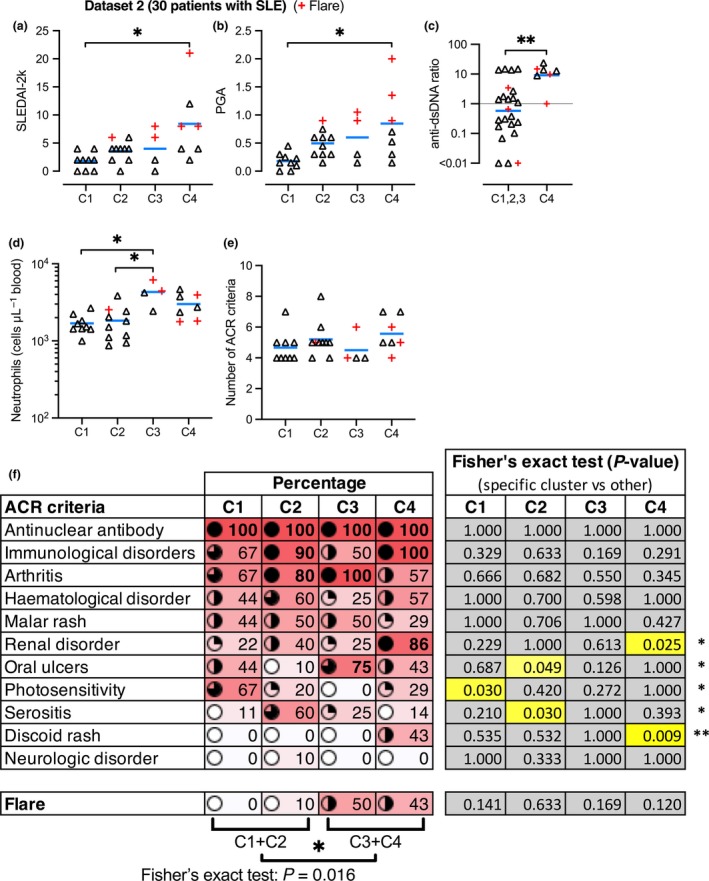
Systemic lupus erythematosus (SLE) is a heterogeneous autoimmune disease that is difficult to treat. There is currently no optimal stratification of patients with SLE, and thus, responses to available treatments are unpredictable. Here, we developed a new stratification scheme for patients with SLE, based on the computational analysis of patients' whole-blood transcriptomes.
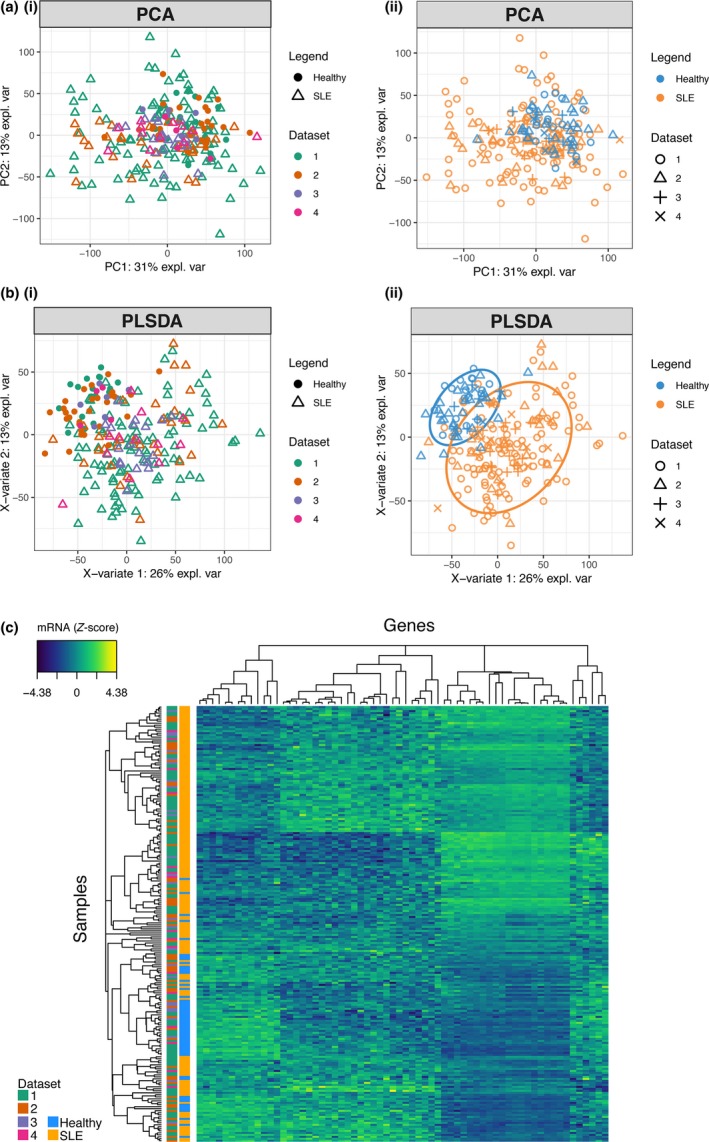
We applied machine learning approaches to RNA-sequencing (RNA-seq) data sets to stratify patients with SLE into four distinct clusters based on their gene expression profiles. A meta-analysis on three recently published whole-blood RNA-seq data sets was carried out, and an additional similar data set of 30 patients with SLE and 29 healthy donors was incorporated in this study; a total of 161 patients with SLE and 57 healthy donors were analysed.
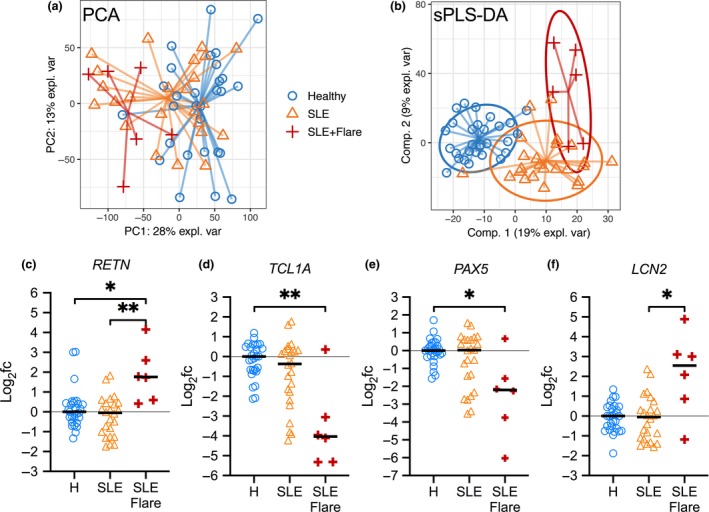
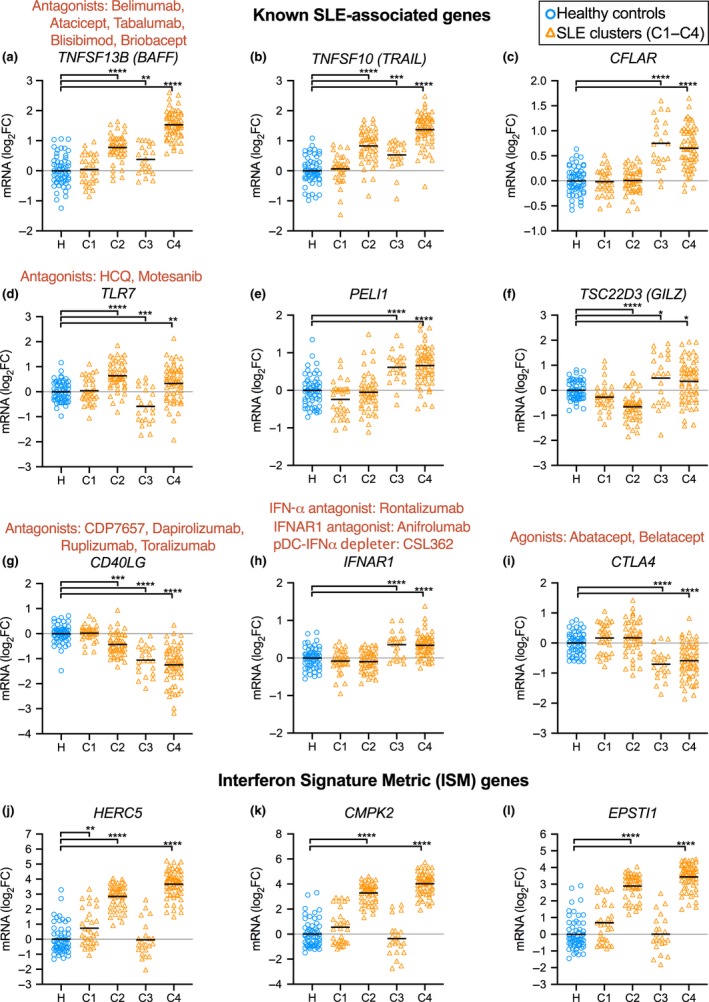
Examination of SLE clusters, as opposed to unstratified SLE patients, revealed underappreciated differences in the pattern of expression of disease-related genes relative to clinical presentation. Moreover, gene signatures correlated with flare activity were successfully identified.
Given that SLE disease heterogeneity is a key challenge hindering the design of optimal clinical trials and the adequate management of patients, our approach opens a new possible avenue addressing this limitation via a greater understanding of SLE heterogeneity in humans. Stratification of patients based on gene expression signatures may be a valuable strategy allowing the identification of separate molecular mechanisms underpinning disease in SLE. Further, this approach may have a use in understanding the variability in responsiveness to therapeutics, thereby improving the design of clinical trials and advancing personalised therapy.
系统性红斑狼疮(SLE)是一种异质性自身免疫性疾病,难以治疗。目前SLE患者尚无最佳分层方法,因此,对现有治疗的反应难以预测。在此,我们基于对患者全血转录组的计算分析,为SLE患者开发了一种新的分层方案。
我们将机器学习方法应用于RNA测序(RNA-seq)数据集,根据基因表达谱将SLE患者分为四个不同的簇。对最近发表的三个全血RNA-seq数据集进行了荟萃分析,并将另外一个包含30例SLE患者和29例健康供体的类似数据集纳入本研究;共分析了161例SLE患者和57例健康供体。
与未分层的SLE患者相比,对SLE簇的检查揭示了疾病相关基因表达模式相对于临床表现存在未被充分认识的差异。此外,成功识别出与疾病发作活动相关的基因特征。
鉴于SLE疾病的异质性是阻碍最佳临床试验设计和患者充分管理的关键挑战,我们的方法通过更深入了解人类SLE的异质性,为解决这一局限性开辟了一条新的可能途径。基于基因表达特征对患者进行分层可能是一种有价值的策略,有助于识别SLE疾病背后不同的分子机制。此外,这种方法可能有助于理解治疗反应的变异性,从而改善临床试验设计并推进个性化治疗。