Wang Shih-Hao, Wu Hsi-Chin, Badrealam Khan Farheen, Kuo Yueh-Hsiung, Chao Yun-Peng, Hsu Hsi-Hsien, Bau Da-Tian, Viswanadha Vijaya Padma, Chen Yi-Hui, Lio Pei-Jei, Chiang Chung-Jen, Huang Chih-Yang
Department of Otolaryngology, Ditmanson Medical Foundation, Chiayi Christian Hospital, Chiayi, Taiwan.
Department of Biotechnology, Asia University, Taichung, Taiwan.
Front Oncol. 2019 Dec 17;9:1309. doi: 10.3389/fonc.2019.01309. eCollection 2019.
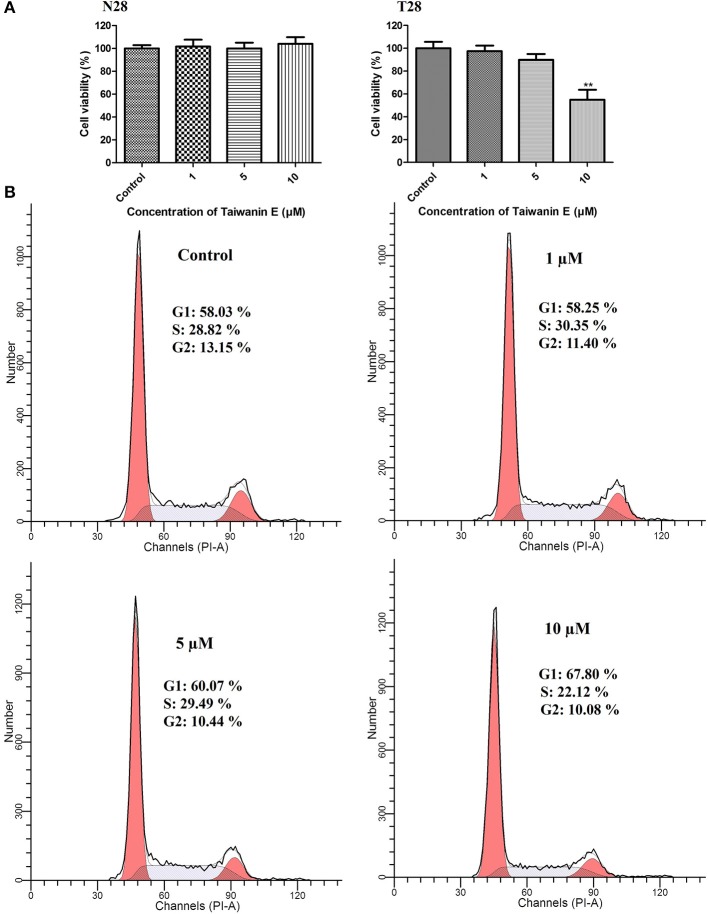
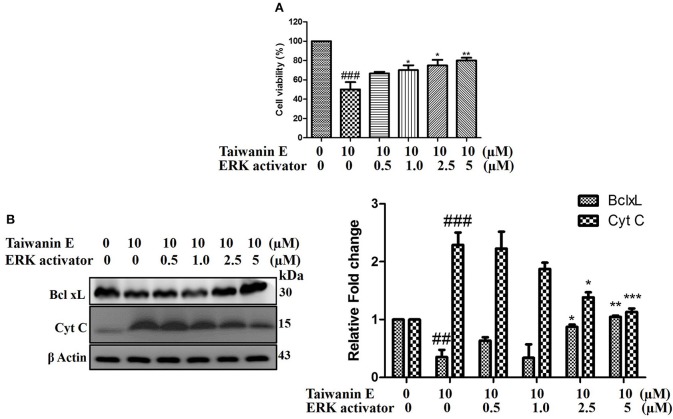
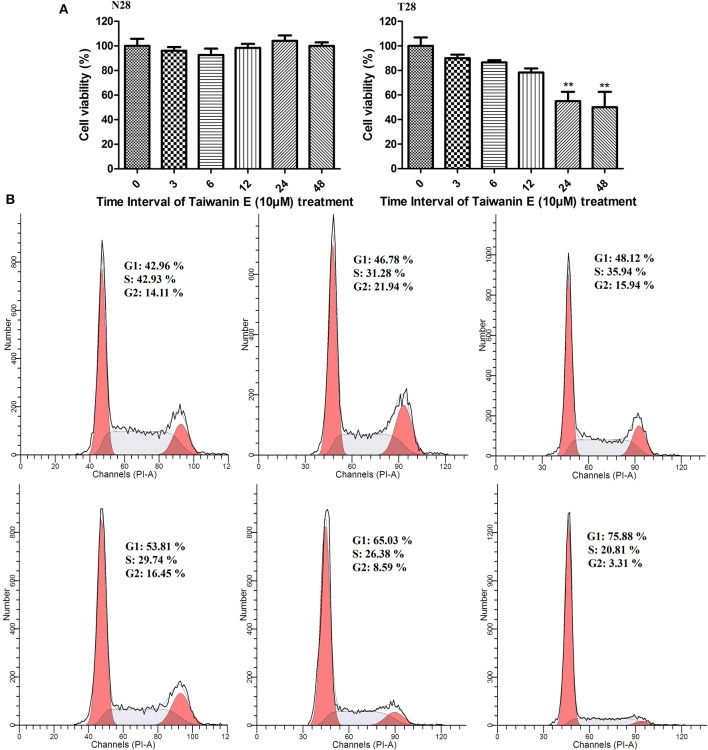
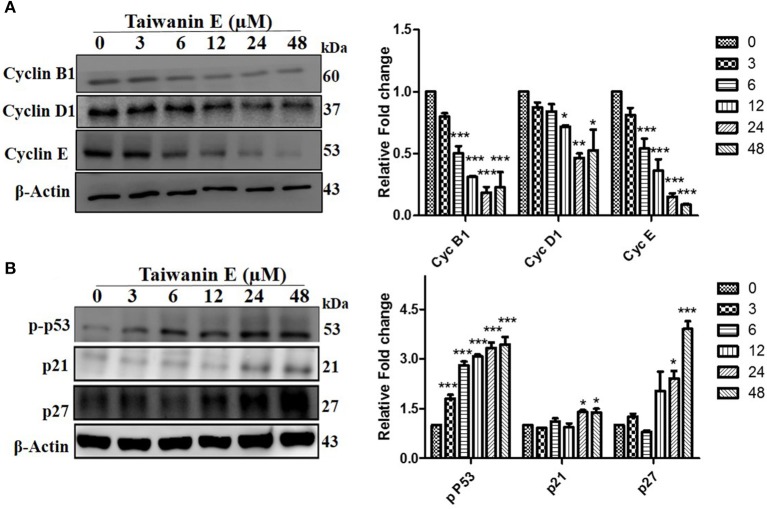
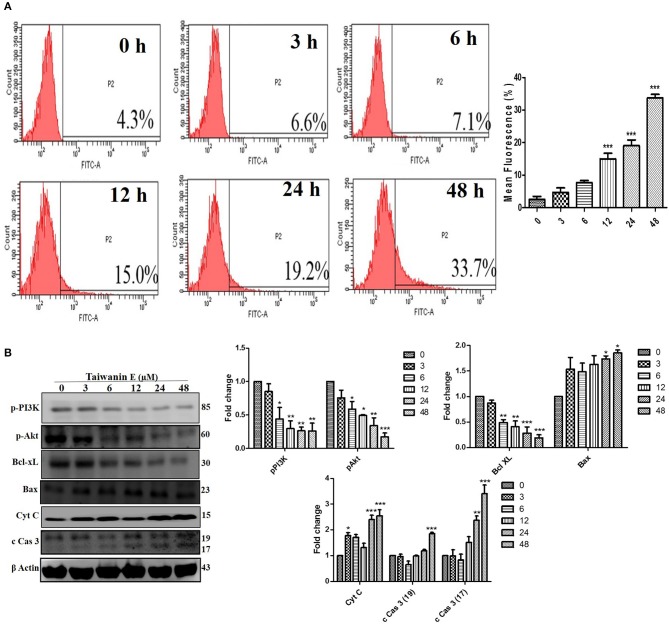
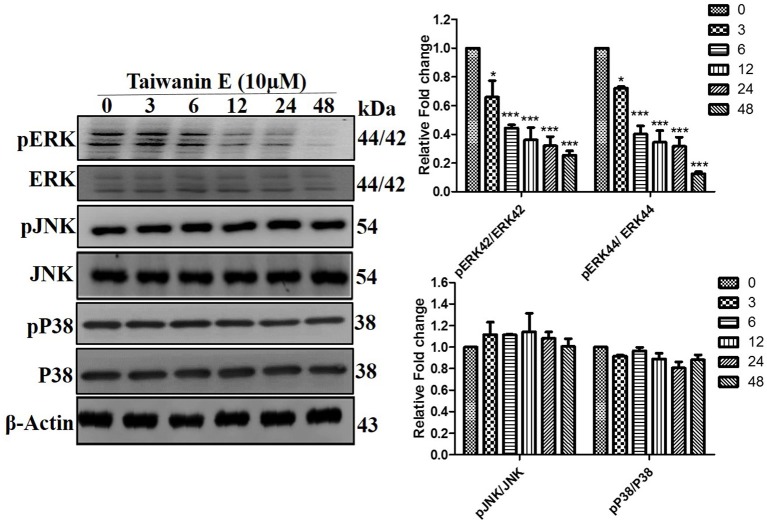
Taiwanin E is a bioactive compound extracted from Hayata. In this research endeavor, we studied the anti-cancer effect of Taiwanin E against arecoline and 4-nitroquinoline-1-oxide-induced oral squamous cancer cells (OSCC), and elucidated the underlying intricacies. OSCC were treated with Taiwanin E and analyzed through MTT assay, Flow cytometry, TUNEL assay, and Western blotting for their efficacy against OSCC. Interestingly, it was found that Taiwanin E significantly attenuated the cell viability of oral cancer cells (T28); however, no significant cytotoxic effects were found for normal oral cells (N28). Further, Flow cytometry analysis showed that Taiwanin E induced G1cell cycle arrest in T28 oral cancer cells and Western blot analysis suggested that Taiwanin E considerably downregulated cell cycle regulatory proteins and activated p53, p21, and p27 proteins. Further, TUNEL and Western blot studies instigated that it induced cellular apoptosis and attenuated the p-PI3K/p-Akt survival mechanism in T28 oral cancer cells seemingly through modulation of the ERK signaling cascade. Collectively, the present study highlights the prospective therapeutic efficacy of Taiwanin E against arecoline and 4-nitroquinoline-1-oxide-induced oral cancer.
台湾相思素E是从玉山柯中提取的一种生物活性化合物。在本研究中,我们研究了台湾相思素E对槟榔碱和4-硝基喹啉-1-氧化物诱导的口腔鳞状癌细胞(OSCC)的抗癌作用,并阐明了其潜在的复杂机制。用台湾相思素E处理OSCC,并通过MTT法、流式细胞术、TUNEL法和蛋白质免疫印迹法分析其对OSCC的疗效。有趣的是,发现台湾相思素E显著降低了口腔癌细胞(T28)的细胞活力;然而,未发现对正常口腔细胞(N28)有明显的细胞毒性作用。此外,流式细胞术分析表明,台湾相思素E诱导T28口腔癌细胞的G1期细胞周期阻滞,蛋白质免疫印迹分析表明,台湾相思素E显著下调细胞周期调节蛋白,并激活p53、p21和p27蛋白。此外,TUNEL和蛋白质免疫印迹研究表明,它诱导细胞凋亡,并似乎通过调节ERK信号级联减弱T28口腔癌细胞中的p-PI3K/p-Akt存活机制。总的来说,本研究突出了台湾相思素E对槟榔碱和4-硝基喹啉-1-氧化物诱导的口腔癌的潜在治疗效果。