Amundsen Kristine Rabben, Evensen Kari Anne I
Unit for Physiotherapy Services, Trondheim Municipality, Norway.
Department of Clinical and Molecular Medicine, Norwegian University of Science and Technology, Trondheim, Norway.
Child Neurol Open. 2020 Jan 6;7:2329048X19896190. doi: 10.1177/2329048X19896190. eCollection 2020 Jan-Dec.
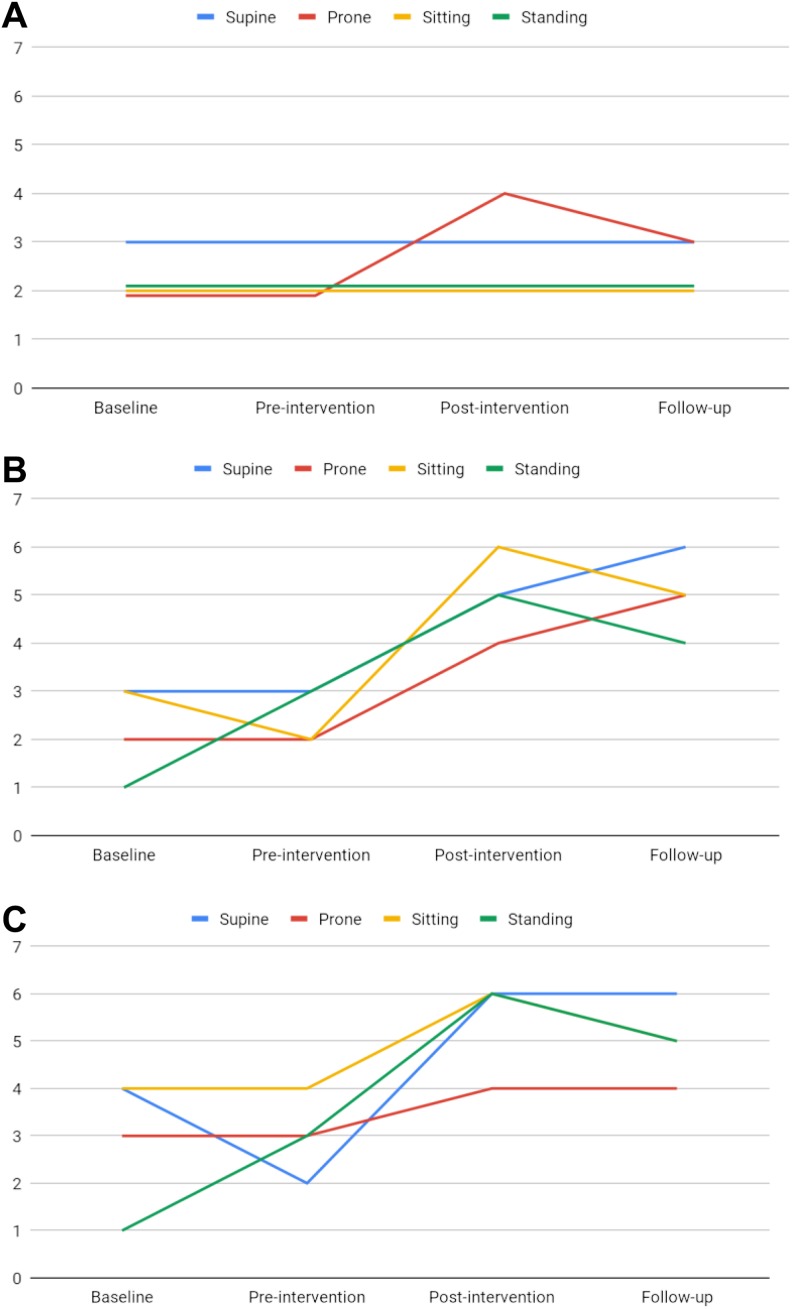
No studies have described physical therapy treatment for children with congenital Zika virus syndrome. In this case report, the authors aimed to improve postural control, mobility, and social skills in a 17- to 18-month-old child with congenital Zika virus syndrome through a period of 6-week home-based, intensive physical therapy intervention. Outcome measures were the Posture and Postural Ability Scale, Pediatric Evaluation of Disability Inventory, and Caregiver Priorities and Child Health Index of Life With Disabilities. From pre- to postintervention, the child's Posture and Postural Ability Scale scores increased for level of postural ability in the prone position and postural alignment in all 4 positions (prone, supine, sitting, and standing). The authors saw an overall improvement in mobility and social skills from preintervention to follow-up 3 weeks after intervention. In conclusion, postural control, mobility, and social skills improved for a child with congenital Zika virus syndrome after physical therapy intervention, but future studies are required to confirm these findings.
尚无研究描述针对先天性寨卡病毒综合征患儿的物理治疗。在本病例报告中,作者旨在通过为期6周的家庭强化物理治疗干预,改善一名17至18个月大的先天性寨卡病毒综合征患儿的姿势控制、运动能力和社交技能。结果测量指标为姿势与姿势能力量表、儿童残疾评估量表以及照顾者优先事项和儿童残疾生活健康指数。从干预前到干预后,患儿在俯卧位姿势能力水平以及所有4种姿势(俯卧、仰卧、坐和站立)的姿势对齐方面,姿势与姿势能力量表得分均有所提高。作者观察到,从干预前到干预后3周的随访期间,患儿的运动能力和社交技能总体有所改善。总之,物理治疗干预后,先天性寨卡病毒综合征患儿的姿势控制、运动能力和社交技能有所改善,但需要未来的研究来证实这些发现。