Department of Medical Genetics and Molecular Biology, Faculty of Medicine, Iran University of Medical Sciences (IUMS), Shahid Hemmat Highway, Tehran, Iran.
Department of Medical Genetics, Ali-Asghar Children's Hospital, Zafar St., Shahid Modarres Highway, Tehran, Iran.
Orphanet J Rare Dis. 2020 Jan 14;15(1):14. doi: 10.1186/s13023-020-1296-x.
Limb-girdle muscular dystrophies are a group of genetically heterogeneous diseases that are inherited in both autosomal dominant (LGMDD) and autosomal recessive forms (LGMDR), the latter is more common especially in populations with high consanguineous marriages like Iran. In the present study, we aimed to investigate the genetic basis of patients who are suspicious of being affected by LGMDR. DNA samples of 60 families suspected of LGMD were extracted from their whole blood. Four short tandem repeat (STR) markers for each candidate genes related to LGMD R1 (calpain3 related)- R6 (δ-sarcoglycan-related) were selected, and all these 24 STRs were applied in two sets of multiplex PCR. After autozygosity mapping, Sanger sequencing and variant analysis were done. Predicting identified variants' effect was performed using in-silico tools, and they were interpreted according to the American College of Medical Genomics and Genetics (ACMG) guideline. MLPA was used for those patients who had large deletions. Fresh muscle specimens were taken from subjects and were evaluated using the conventional panel of histochemical stains.
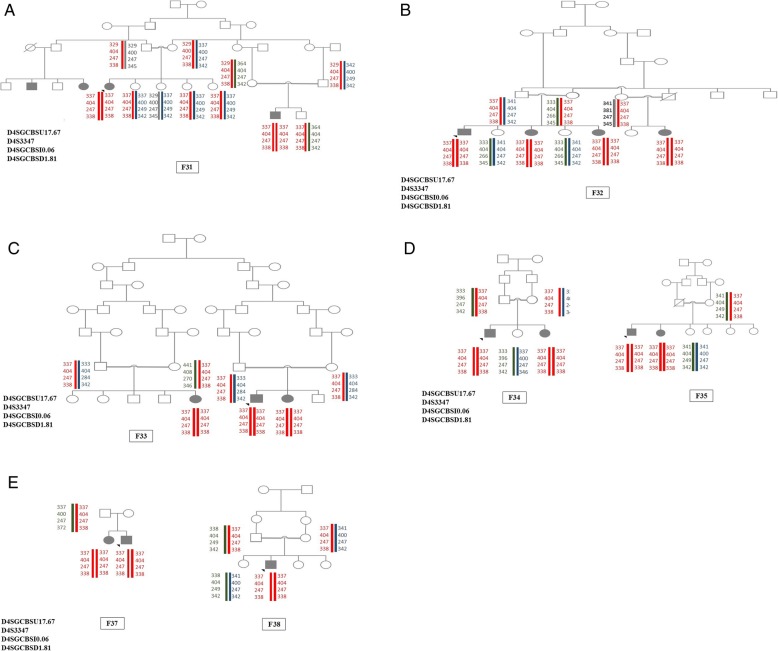
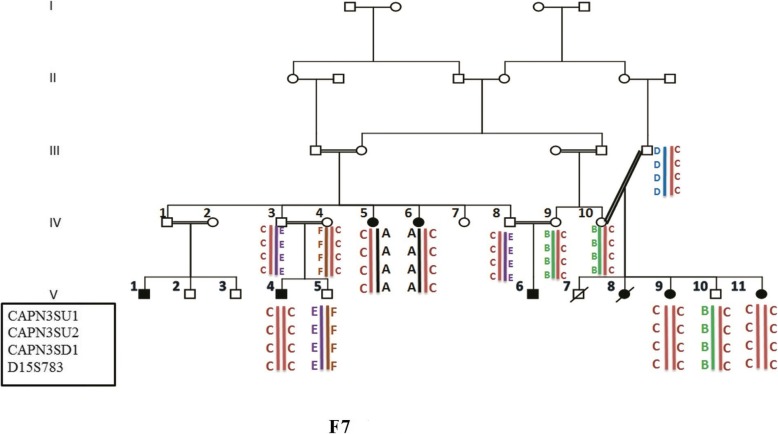
forty out of sixty families showed homozygote haplotypes in CAPN3, DYSF, SGCA, and SGCB genes. The exons and intron-exon boundaries of the relevant genes were sequenced and totally 38 mutations including CAPN3 (n = 15), DYSF (n = 9), SGCB (n = 11), and SGCA (n = 3) were identified. Five out of them were novel. The most prevalent form of LGMDs in our study was calpainopathy followed by sarcoglycanopathy in which beta-sarcoglycanopathy was the most common form amongst them. Exon 2 deletion in the SGCB gene was the most frequent mutation in this study. We also reported evidence of a possible founder effect in families with mutations in DYSF and SGCB genes. We also detected a large consanguineous family suffered from calpainopathy who showed allelic heterogeneity.
This study can expand our knowledge about the genetic spectrum of LGMD in Iran, and also suggest the probable founder effects in some Iranian subpopulations which confirming it with more sample size can facilitate our genetic diagnosis and genetic counseling.
肢带型肌营养不良症是一组具有遗传异质性的疾病,包括常染色体显性遗传(LGMD)和常染色体隐性遗传(LGMD),后者在像伊朗这样高近亲结婚的人群中更为常见。在本研究中,我们旨在探讨疑似 LGMD 隐性遗传患者的遗传基础。从 60 个疑似 LGMD 的家系的全血中提取 DNA 样本。选择与 LGMD R1(钙蛋白酶 3 相关)-R6(δ-肌聚糖相关)相关的候选基因的四个短串联重复(STR)标记,所有这 24 个 STR 都应用于两组多重 PCR。在进行自交分析后,进行 Sanger 测序和变异分析。使用计算机工具预测鉴定出的变异的影响,并根据美国医学遗传学与基因组学学院(ACMG)指南进行解释。对于有大片段缺失的患者,使用 MLPA。从受检者身上取新鲜肌肉标本,并用常规组化染色进行评估。
在 60 个家系中,有 40 个家系显示 CAPN3、DYSF、SGCA 和 SGCB 基因的纯合子单倍型。对相关基因的外显子和内含子-外显子边界进行测序,共鉴定出 38 种突变,包括 CAPN3(n=15)、DYSF(n=9)、SGCB(n=11)和 SGCA(n=3)。其中 5 种为新突变。在本研究中,最常见的 LGMD 类型是钙蛋白酶病,其次是肌聚糖病,其中β-肌聚糖病最为常见。在本研究中,SGCB 基因外显子 2 缺失是最常见的突变。我们还报告了在 DYSF 和 SGCB 基因突变的家系中存在可能的创始人效应的证据。我们还检测到一个大型近亲结婚的家系患有钙蛋白酶病,表现出等位基因异质性。
本研究可以扩展我们对伊朗 LGMD 遗传谱的认识,并且还提示在一些伊朗亚群中可能存在创始人效应,通过增加样本量进行确认可以促进我们的遗传诊断和遗传咨询。