Strafella Claudia, Campoli Giulia, Galota Rosaria Maria, Caputo Valerio, Pagliaroli Giulia, Carboni Stefania, Zampatti Stefania, Peconi Cristina, Mela Julia, Sancricca Cristina, Primiano Guido, Minozzi Giulietta, Servidei Serenella, Cascella Raffaella, Giardina Emiliano
Molecular Genetics Laboratory Unione Italiana Lotta Distrofia Muscolare (UILDM), Santa Lucia Foundation, Rome, Italy.
Department of Biomedicine and Prevention, Tor Vergata University, Rome, Italy.
Front Neurol. 2019 Jun 13;10:619. doi: 10.3389/fneur.2019.00619. eCollection 2019.
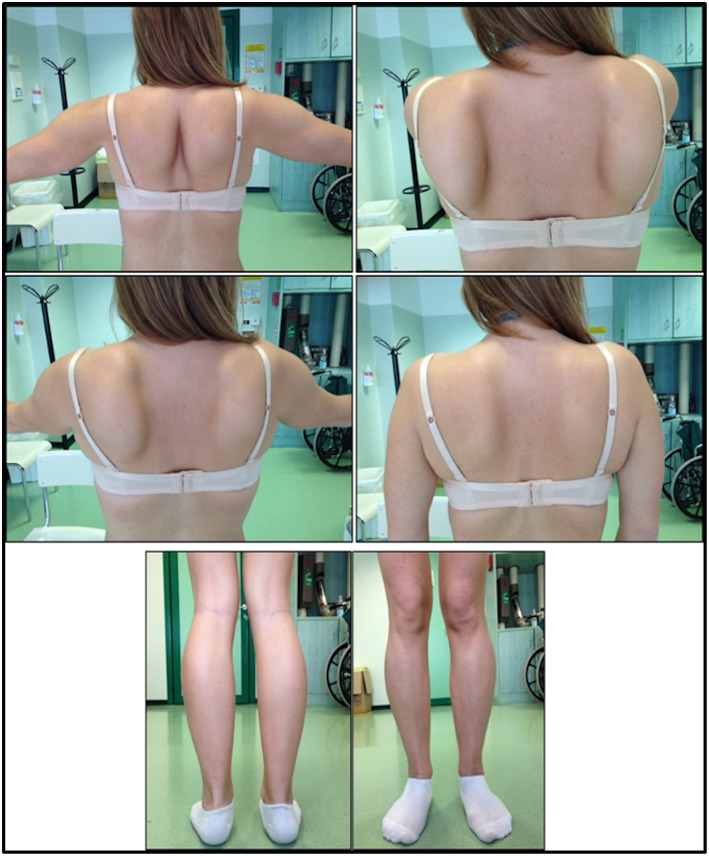
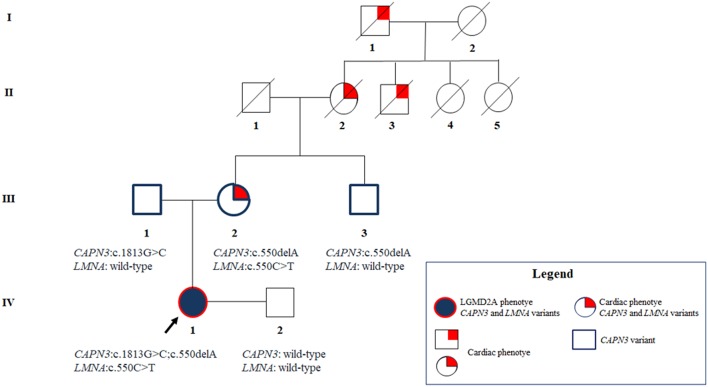
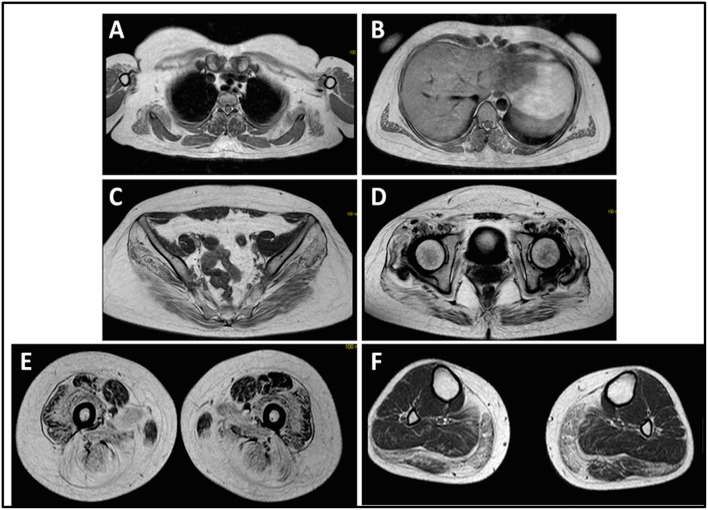
The diagnosis of LGMD2A (calpainopathy) can be challenging due to genetic heterogeneity and to high similarity with other LGMDs or neuromuscular disorders. In this setting, NGS panels are highly recommended to perform differential diagnosis, identify new causative mutations and enable genotype-phenotype correlations. In this manuscript, the case of a patient affected by LGMD2A is reported, for which the application of a defined custom designed NGS panel allowed to confirm the diagnosis of calpainopathy linked with two heterozygous variants in , namely c.550delA and c.1813G>C. The first variant has been extensively described in relation to calpainopathy. The second variant c.1813G>C, instead, is novel and has been predicted to be probably damaging. In addition, NGS analysis on the proband revealed a heterozygous variant (c.550C>T) in the gene, which is associated with dilated cardiomyopathy. The variant is novel and has been predicted to be deleterious by subsequent bioinformatic analysis. Successively, segregation analysis was performed on family members. Interestingly, none of them showed neuromuscular symptoms but the mother was diagnosed with bradycardia and syncopal episodes and showed a positive family history for cardiomyopathy. The segregation analysis reported that the proband inherited the c.1813G>C () from the father who was a healthy carrier. The mother was positive for c.550delA () and c.550C>T (), suggesting thereby a possible genetic explanation for her cardiovascular problems. Segregation analysis, therefore, confirmed the inheritance pattern of the variants carried by the proband and highlighted a familiarity for cardiomyopathy which should not be neglected. The NGS analysis was further performed on the partner of the proband, to estimate the reproductive risk of the couple. The partner was negative to NGS screening, suggesting thereby a low risk to have an affected child with calpainopathy and 50% probability to inherit the variant. This case report showed the clinical utility of the NGS panel in providing accurate LGMD2A diagnosis and identifying complex phenotypes originating from mutations in multiple genes. However, NGS results should always be accomplished by a dedicated genetic counseling, not only to evaluate the recurrence and reproductive risks but also to uncover unexpected findings which can be clinically significant.
由于基因异质性以及与其他肢带型肌营养不良症(LGMD)或神经肌肉疾病高度相似,LGMD2A(钙蛋白酶病)的诊断可能具有挑战性。在这种情况下,强烈建议使用二代测序(NGS)panel进行鉴别诊断,识别新的致病突变,并实现基因型与表型的关联。在本手稿中,报告了一名受LGMD2A影响的患者病例,应用定制设计的特定NGS panel确认了与两个杂合变异相关的钙蛋白酶病诊断,这两个变异分别为c.550delA和c.1813G>C。第一个变异已被广泛描述与钙蛋白酶病相关。相反,第二个变异c.1813G>C是新发现的,预计可能具有损害性。此外,对先证者的NGS分析揭示了在 基因中的一个杂合变异(c.550C>T),其与扩张型心肌病相关。该变异是新发现的,后续的生物信息学分析预计其具有有害性。随后,对家庭成员进行了分离分析。有趣的是,他们中没有人表现出神经肌肉症状,但母亲被诊断为心动过缓和晕厥发作,并且有心肌病的家族史阳性。分离分析报告称,先证者从健康携带者父亲那里遗传了c.1813G>C( )。母亲c.550delA( )和c.550C>T( )呈阳性,从而提示了她心血管问题的可能遗传解释。因此,分离分析证实了先证者携带变异的遗传模式,并突出了不应被忽视的心肌病家族倾向。对先证者的伴侣进一步进行了NGS分析,以评估这对夫妇的生殖风险。伴侣的NGS筛查为阴性,从而提示生育患钙蛋白酶病孩子的风险较低,并且有50%的概率遗传该 变异。本病例报告显示了NGS panel在提供准确的LGMD2A诊断以及识别源自多个基因突变的复杂表型方面的临床效用。然而,NGS结果始终应由专业的遗传咨询来完善,这不仅是为了评估复发和生殖风险,也是为了发现可能具有临床意义的意外发现。