Chen Nai-Chen, Yang Tsanyao Frank, Hong Wei-Li, Yu Tsai-Luen, Lin In-Tian, Wang Pei-Ling, Lin Saulwood, Su Chih-Chieh, Shen Chuan-Chou, Wang Yunshuen, Lin Li-Hung
Department of Geoscience, National Taiwan University, Taipei, Taiwan.
Geological Survey of Norway, Trondheim, Norway.
Sci Rep. 2020 Jan 15;10(1):381. doi: 10.1038/s41598-019-57250-9.
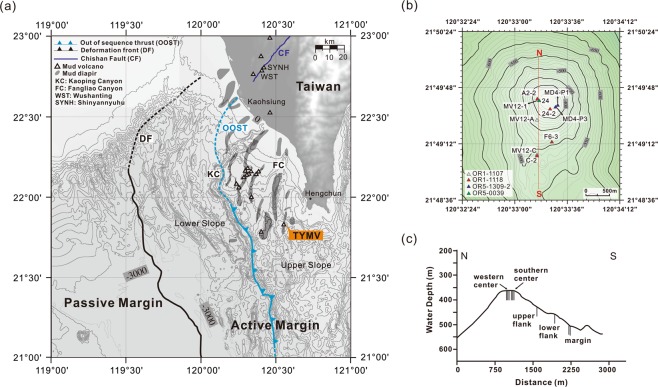
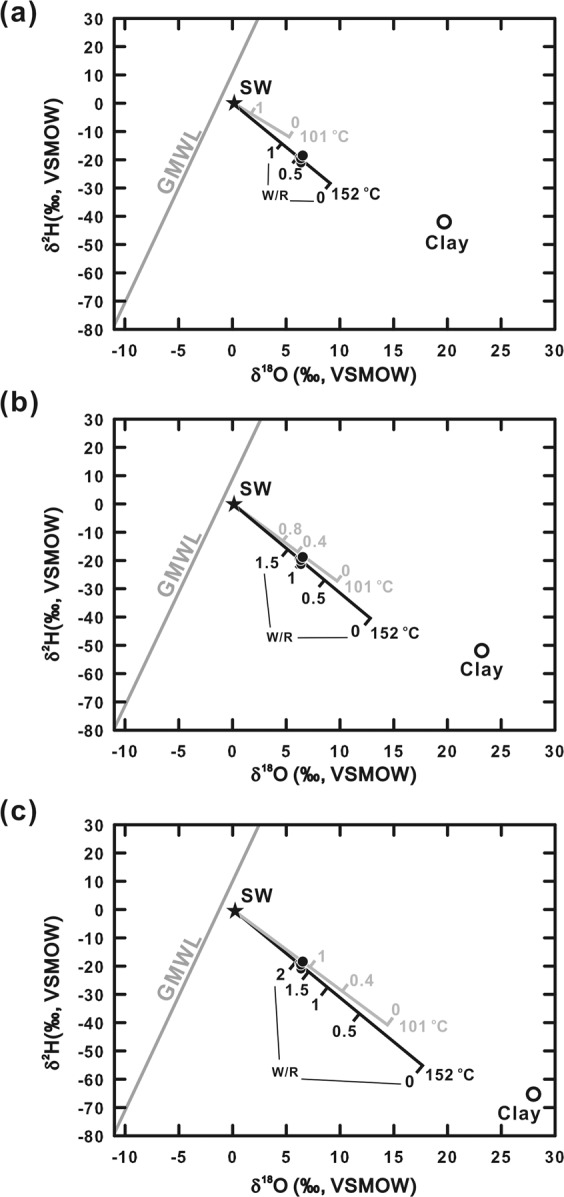
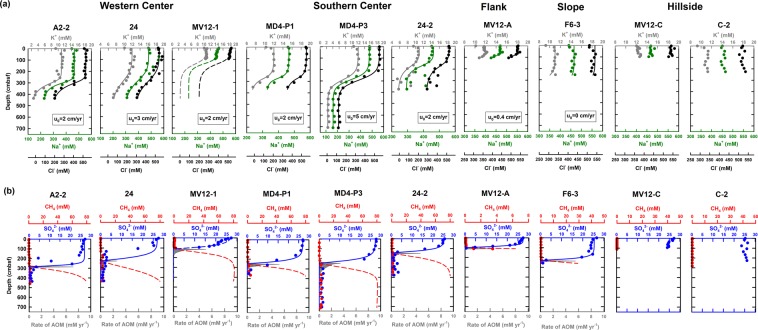
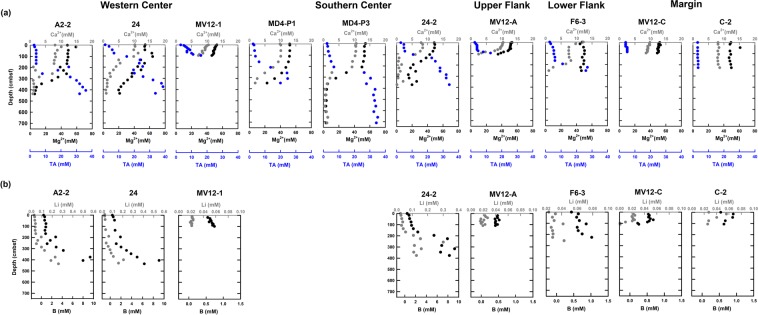
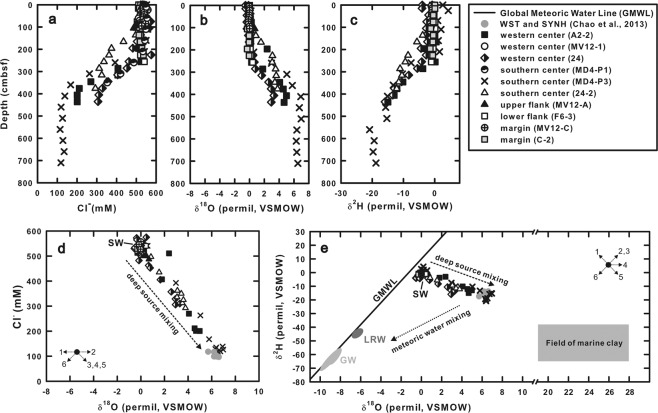
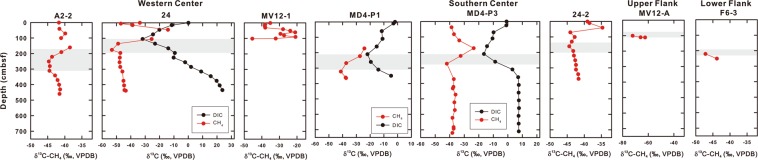
Qualitative and quantitative assessments of fluid cycling are essential to address the role and transport of deeply sourced fluids in subduction systems. In this study, sediment cores distributed across a submarine mud volcano (SMV) offshore southwestern Taiwan were investigated to determine the characteristics of fluids generated through the convergence between the Eurasian and Phillippine Sea Plates. The low dissolved chloride concentration combined with the enrichment of O, and depletion of H of pore fluids suggest the discharge of deep freshwater formed by smectite dehydration at an equilibrium temperature of 100 to 150 °C. The upward fluid velocities, decreasing from 2.0 to 5.0 cm yr at the center to a negligible value at margin sites, varied with the rate and efficiency of anaerobic methanotrophy, demonstrating the impact of fluid migration on biogeochemical processes and carbon cycling. By extrapolating the velocity pattern, the flux of fluids exported from 13 SMVs into seawater amounted up to 1.3-2.5 × 10 kg yr, a quantity accounting for 1.1-28.6% of the smectite-bound water originally stored in the incoming sediments. Our results imply that SMVs could act as a conduit to channel the fluids produced from great depth/temperature into seafloor environments in a subduction system of the western Pacific Ocean.
对流体循环进行定性和定量评估对于阐明深部来源流体在俯冲系统中的作用和运移至关重要。在本研究中,我们调查了分布于台湾西南部近海一座海底泥火山(SMV)的沉积物岩芯,以确定欧亚板块与菲律宾海板块汇聚过程中产生的流体特征。孔隙流体中低溶解氯化物浓度以及氧的富集和氢的亏损表明,在100至150 °C的平衡温度下,由蒙脱石脱水形成的深部淡水发生了排放。向上的流体速度从中心处的2.0至5.0 cm/年向边缘部位递减至可忽略不计的值,其随厌氧甲烷氧化的速率和效率而变化,这表明流体运移对生物地球化学过程和碳循环产生了影响。通过外推速度模式,从13座海底泥火山向海水中输出的流体通量高达1.3 - 2.5×10⁶ kg/年,这一数量占最初储存在输入沉积物中蒙脱石结合水的1.1 - 28.6%。我们的结果表明,在西太平洋俯冲系统中,海底泥火山可作为一个管道,将来自极深处/高温的流体输送到海底环境中。