Turon-Lagot Vincent, Saviano Antonio, Schuster Catherine, Baumert Thomas F, Verrier Eloi R
Université de Strasbourg, Inserm, Institut de Recherche sur les Maladies Virales et Hépatiques UMR_S1110, F-67000 Strasbourg, France.
Institut Hospitalo-Universitaire, Pôle Hépato-Digestif, Nouvel Hôpital Civil, F-67000 Strasbourg, France.
J Clin Med. 2020 Jan 14;9(1):222. doi: 10.3390/jcm9010222.
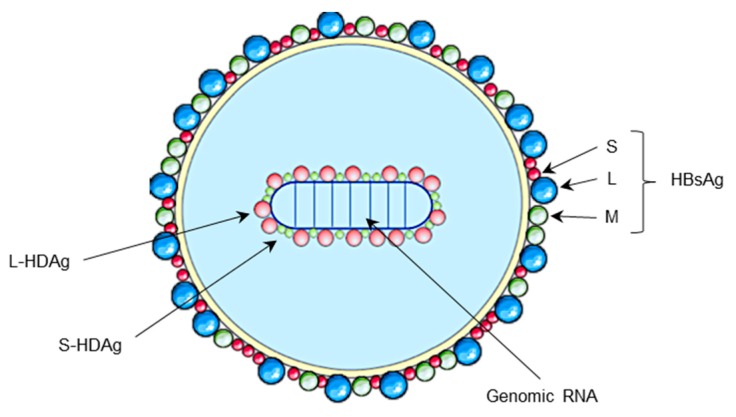
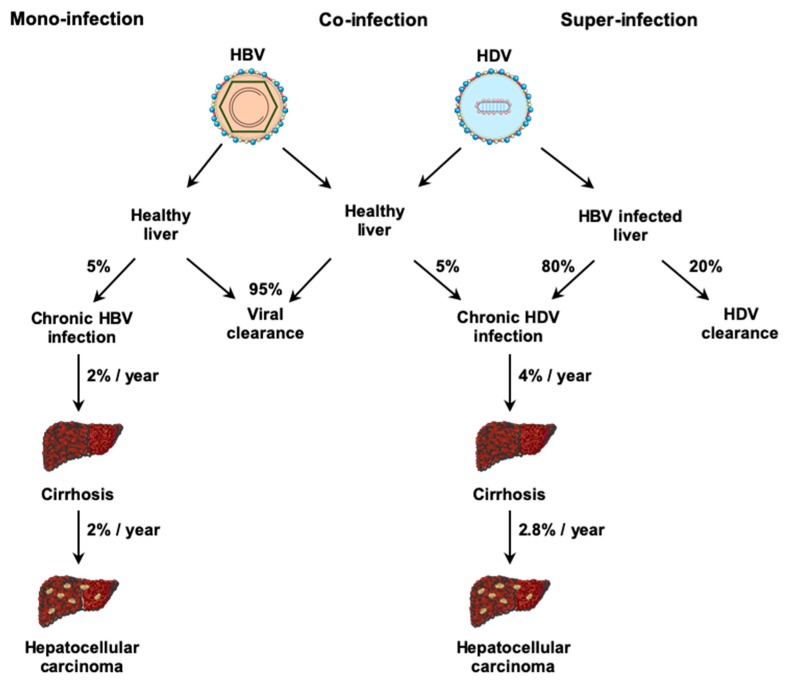
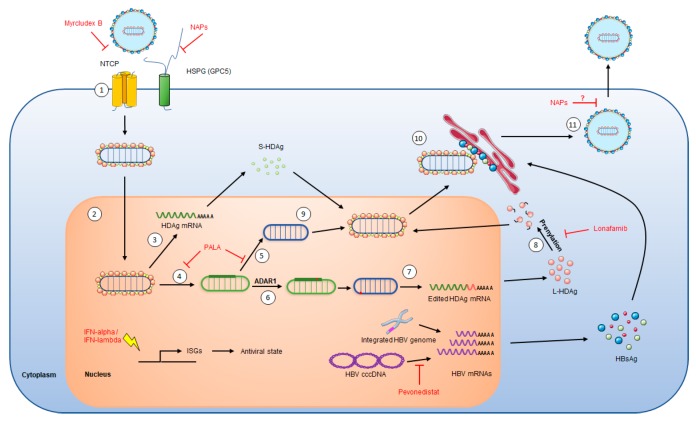
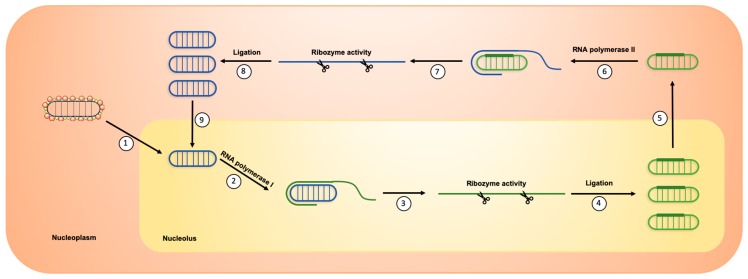
Hepatitis D virus (HDV) is a small satellite virus of hepatitis B virus (HBV) requiring HBV infection to complete its life cycle. It has been recently estimated that 13% of chronic HBV infected patients (60 million) are co-infected with HDV. Chronic hepatitis D is the most severe form of viral hepatitis with the highest risk to develop cirrhosis and liver cancer. Current treatment is based on pegylated-interferon-alpha which rarely controls HDV infection and is complicated by serious side effects. The development of novel antiviral strategies based on host targeting agents has shown promising results in phase I/II clinical trials. This review summarizes HDV molecular virology and physiopathology as well as new therapeutic approaches targeting HDV host factors.
丁型肝炎病毒(HDV)是乙型肝炎病毒(HBV)的一种小型卫星病毒,需要HBV感染才能完成其生命周期。最近估计,13%的慢性HBV感染患者(6000万)同时感染了HDV。慢性丁型肝炎是最严重的病毒性肝炎形式,发展为肝硬化和肝癌的风险最高。目前的治疗方法是基于聚乙二醇化干扰素-α,这种方法很少能控制HDV感染,且伴有严重的副作用。基于宿主靶向药物的新型抗病毒策略在I/II期临床试验中已显示出有前景的结果。本综述总结了HDV分子病毒学和病理生理学,以及针对HDV宿主因子的新治疗方法。