Department of Physiology, Anatomy, and Genetics, University of Oxford, Oxford, OX1 3PT, UK.
Nat Commun. 2020 Jan 16;11(1):324. doi: 10.1038/s41467-019-14163-5.
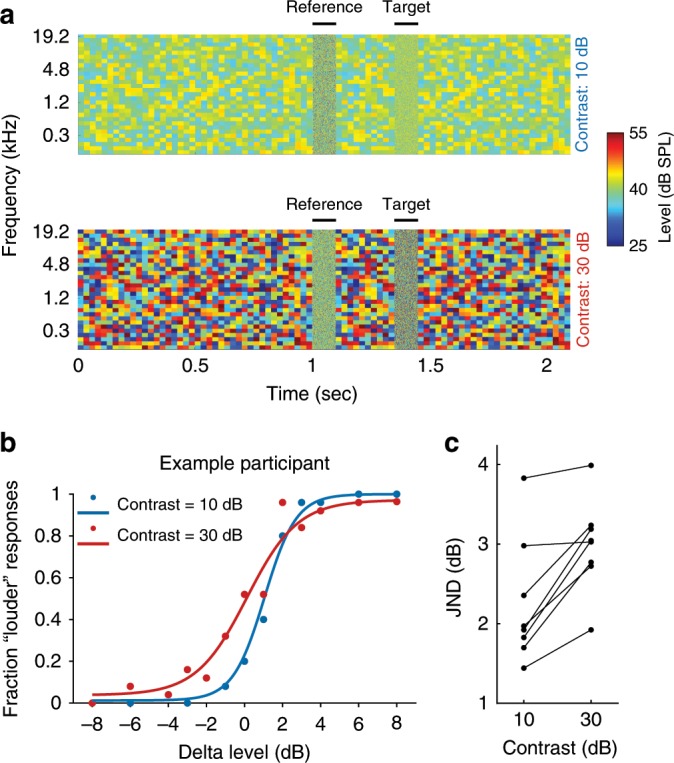
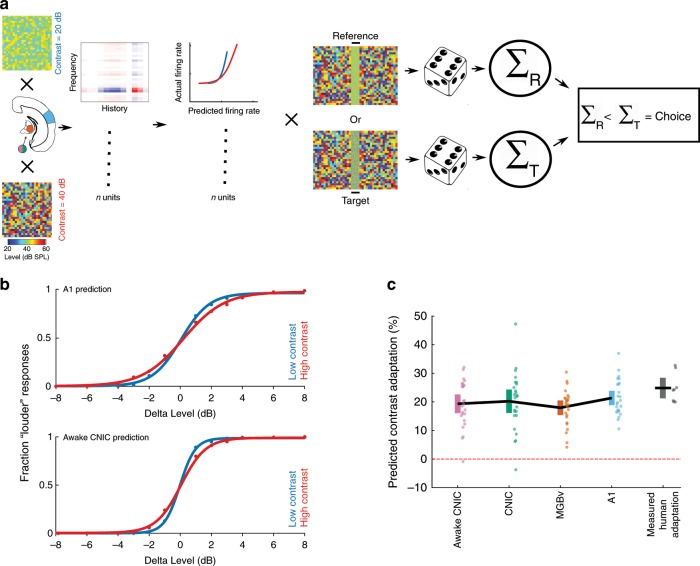
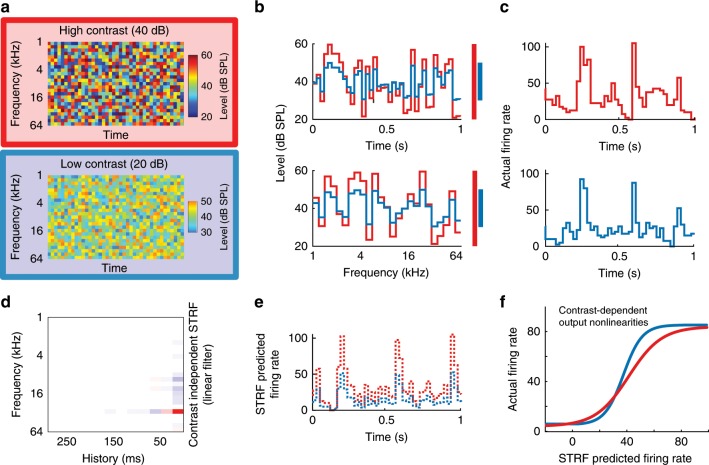
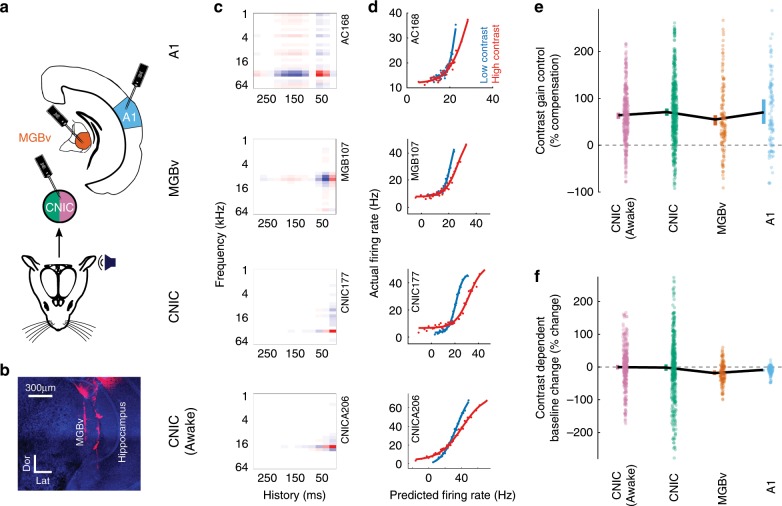
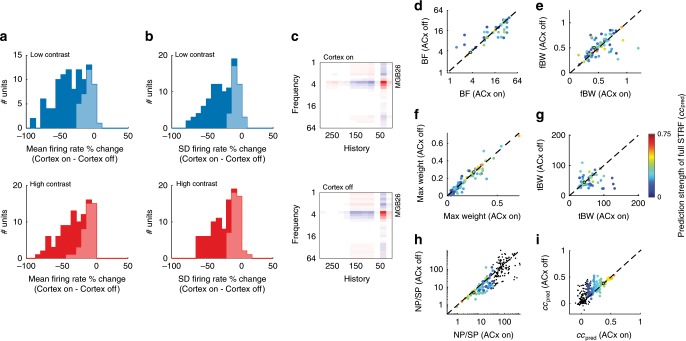
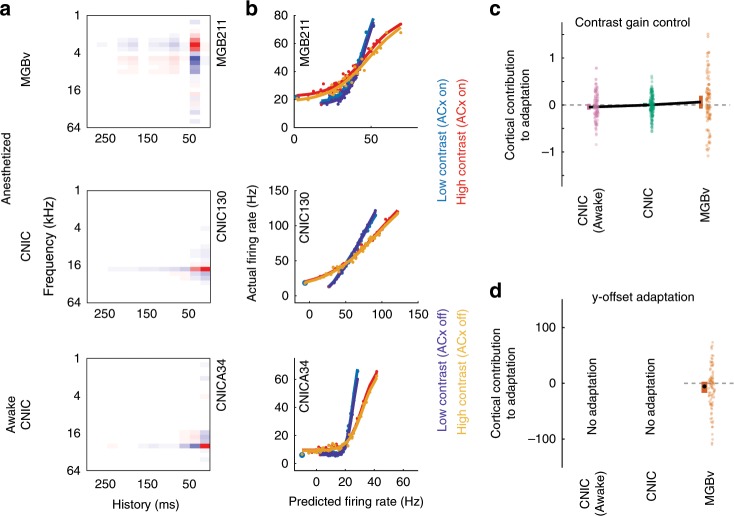
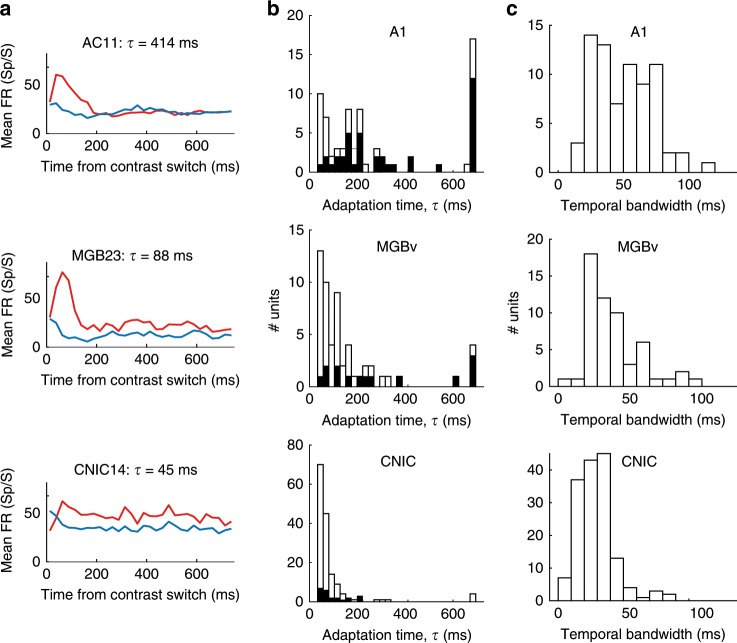
Neural adaptation enables sensory information to be represented optimally in the brain despite large fluctuations over time in the statistics of the environment. Auditory contrast gain control represents an important example, which is thought to arise primarily from cortical processing. Here we show that neurons in the auditory thalamus and midbrain of mice show robust contrast gain control, and that this is implemented independently of cortical activity. Although neurons at each level exhibit contrast gain control to similar degrees, adaptation time constants become longer at later stages of the processing hierarchy, resulting in progressively more stable representations. We also show that auditory discrimination thresholds in human listeners compensate for changes in contrast, and that the strength of this perceptual adaptation can be predicted from physiological measurements. Contrast adaptation is therefore a robust property of both the subcortical and cortical auditory system and accounts for the short-term adaptability of perceptual judgments.
神经适应使感官信息在大脑中得到最佳表示,尽管环境的统计数据随时间有很大波动。听觉对比增益控制就是一个重要的例子,它被认为主要来自皮质处理。本文作者表明,小鼠的听觉丘脑和中脑神经元表现出强烈的对比增益控制,并且这种控制独立于皮质活动。尽管每个水平的神经元都表现出相似程度的对比增益控制,但在处理层次结构的后期阶段,适应时间常数变得更长,导致表示更加稳定。作者还表明,人类听众的听觉辨别阈值会随对比度的变化而变化,并且这种感知适应的强度可以从生理测量中预测。因此,对比适应是皮质和皮质下听觉系统的一个稳健特性,解释了感知判断的短期适应性。