Department of Neuroscience, Baylor College of Medicine, Houston, United States.
Janelia Research Campus, Ashburn, United States.
Elife. 2019 Nov 18;8:e48622. doi: 10.7554/eLife.48622.
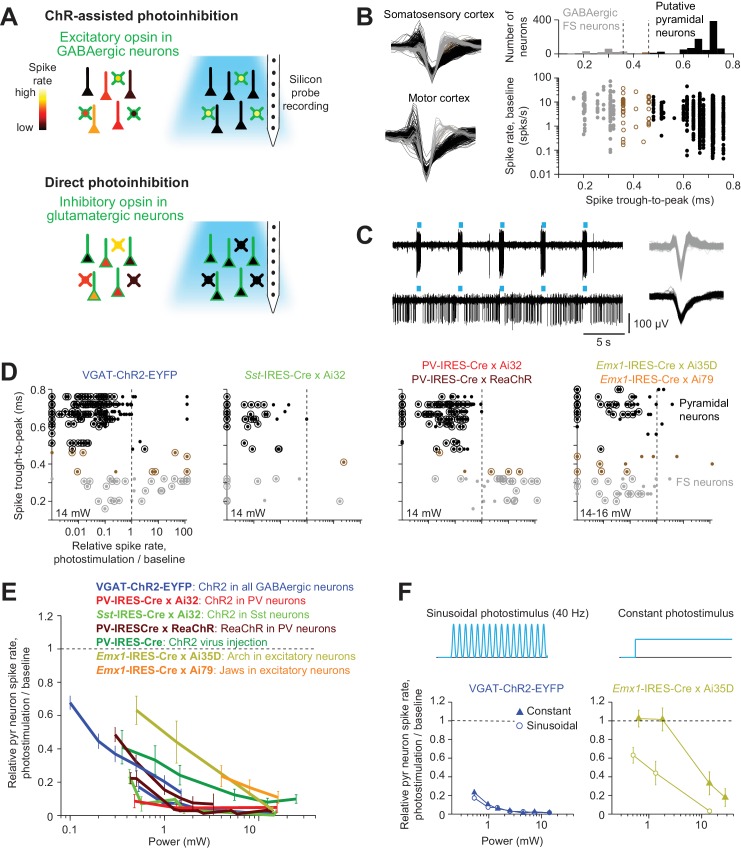
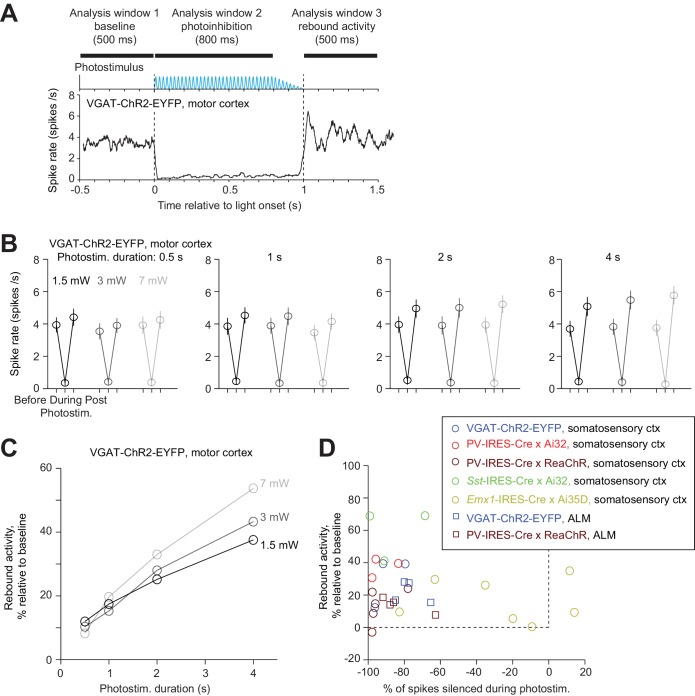
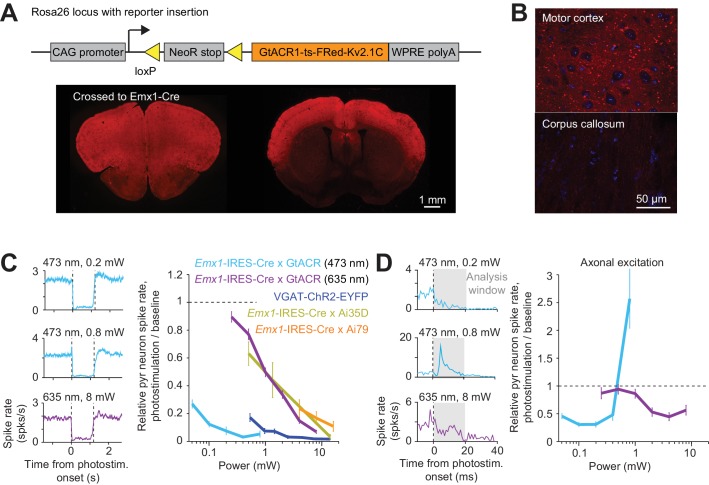
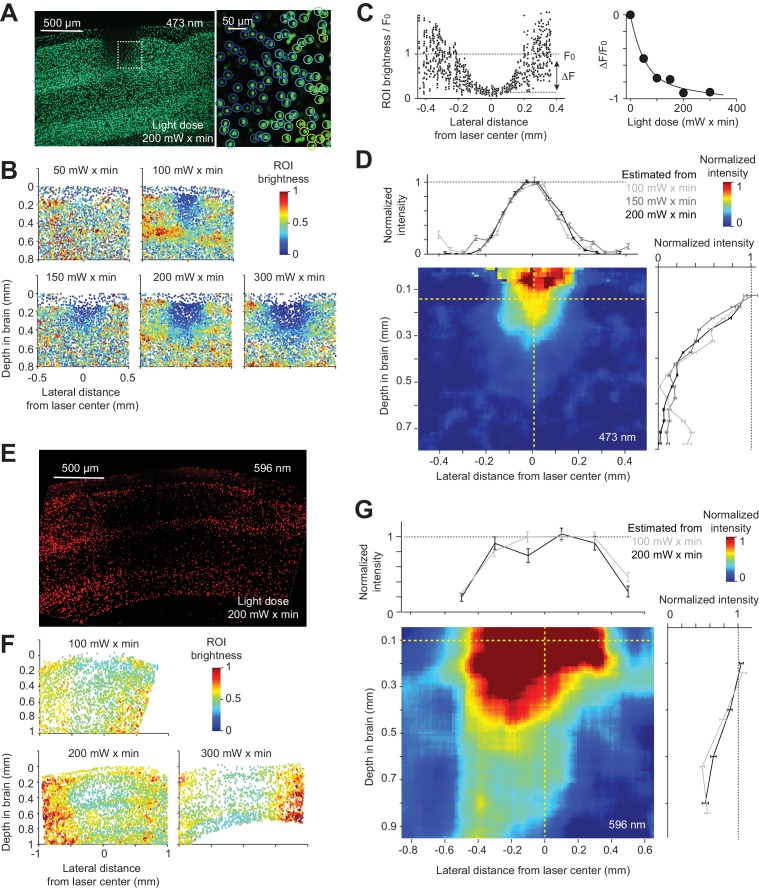
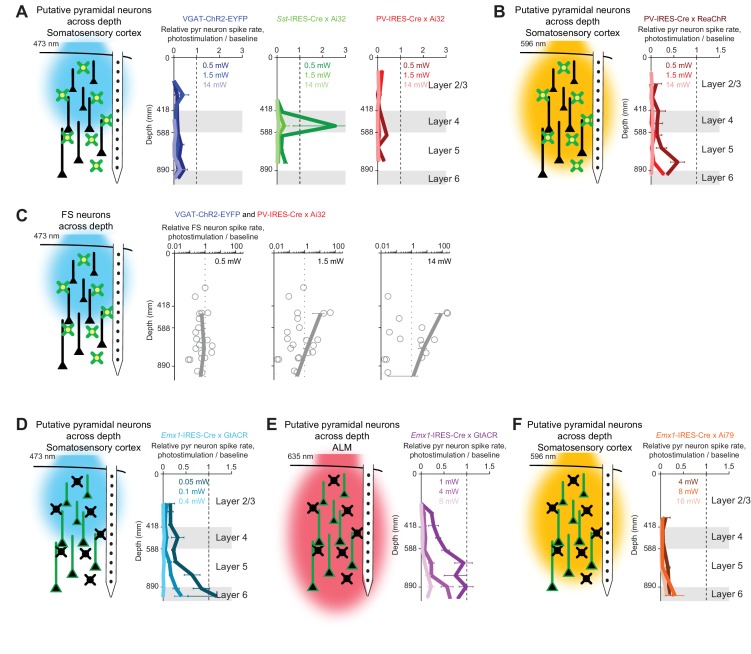
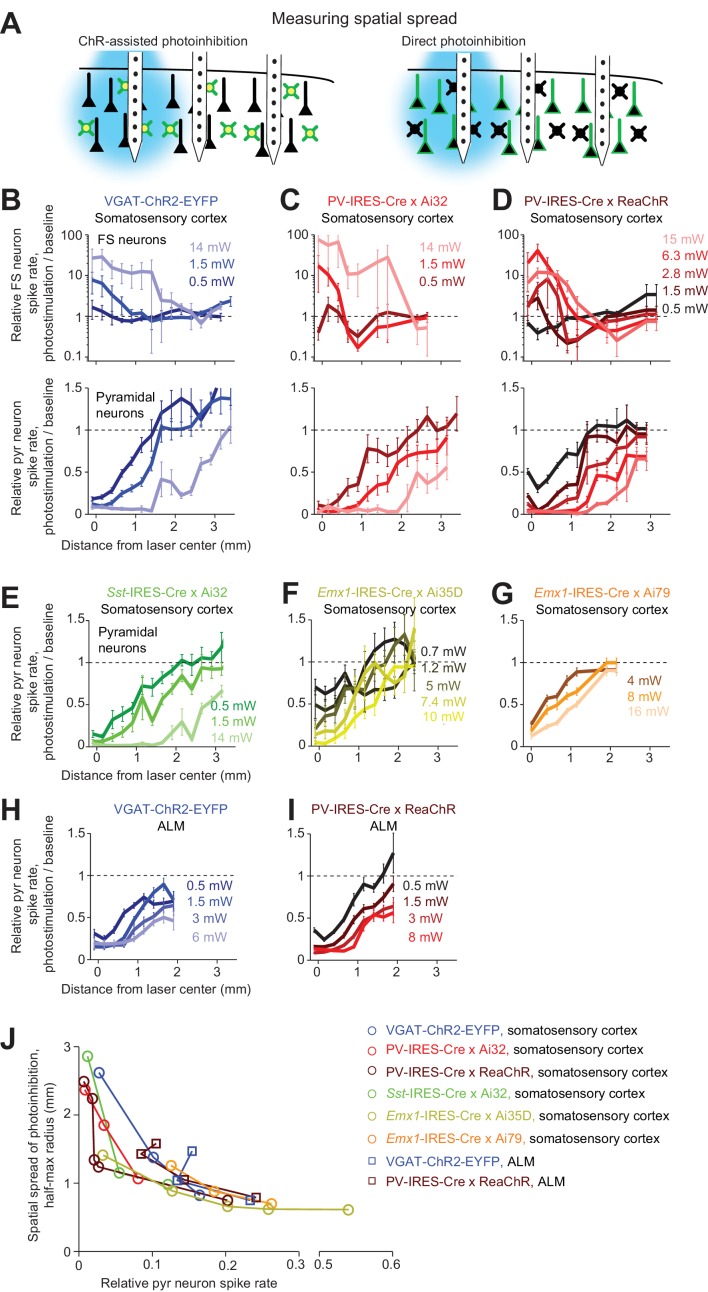
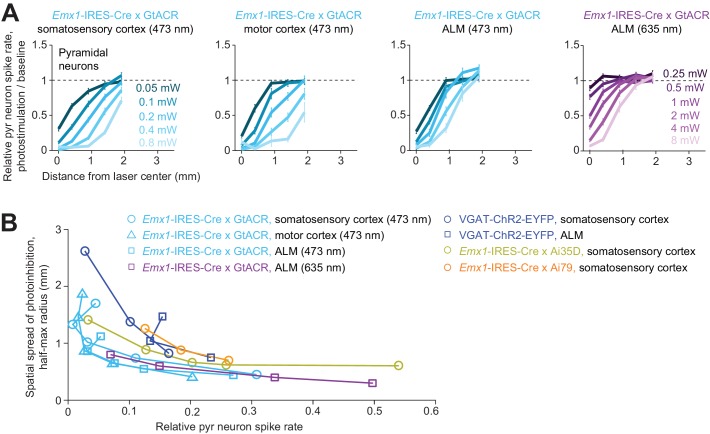
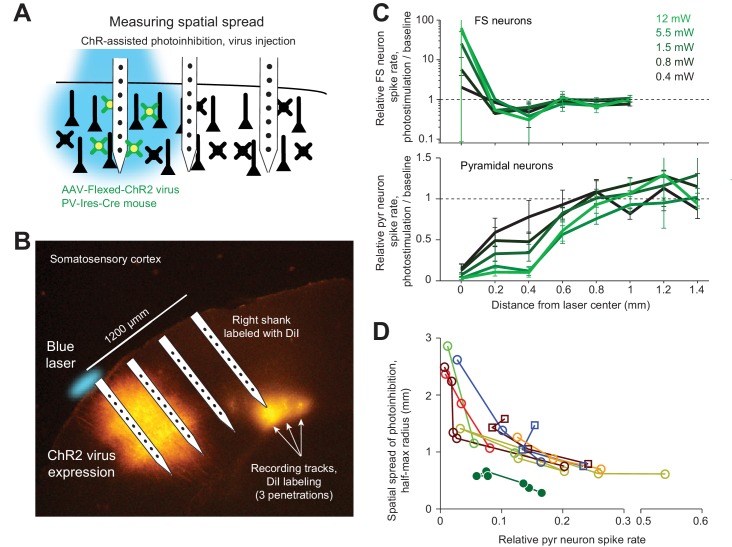
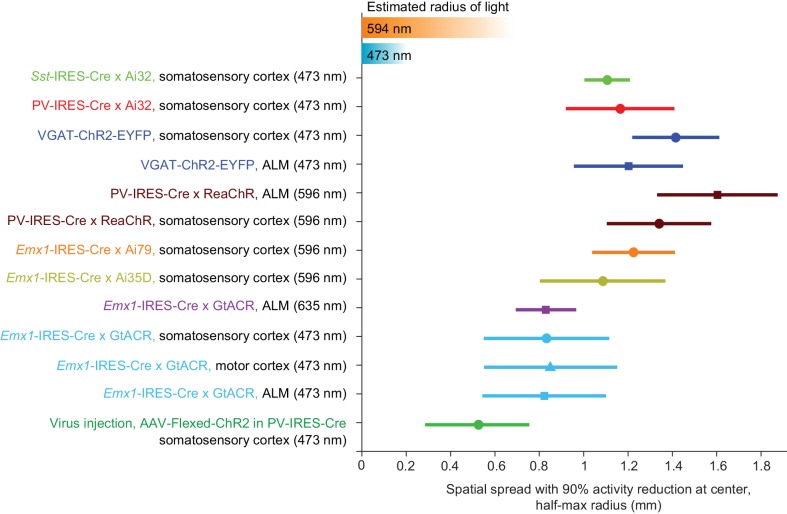
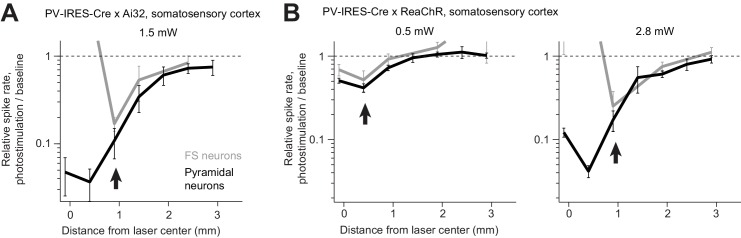
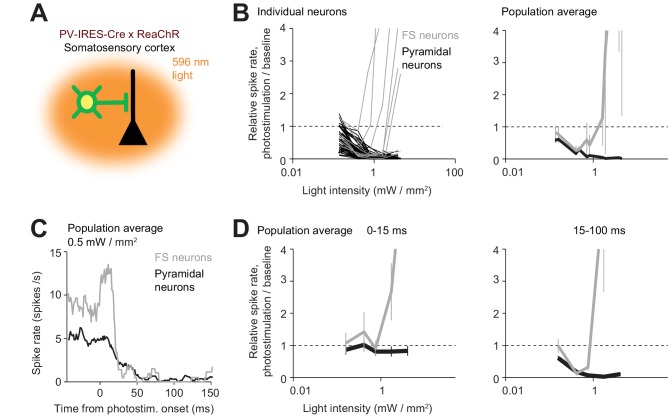
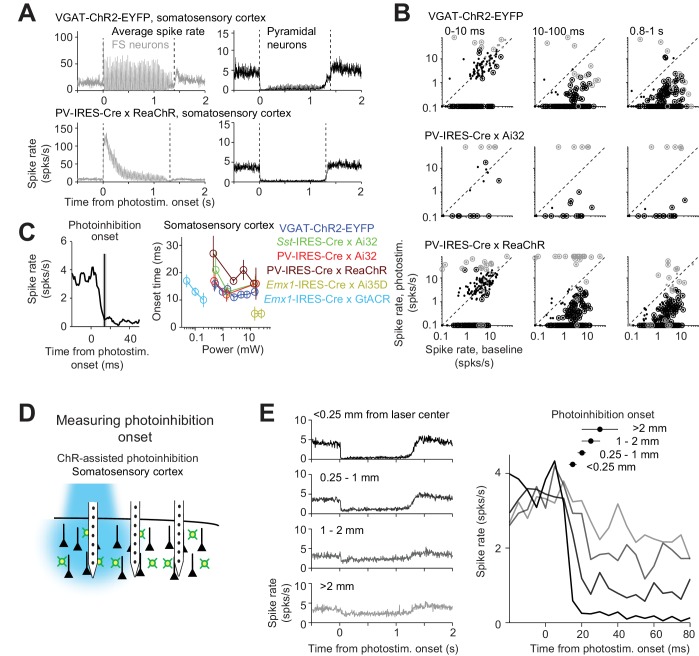
Optogenetics allows manipulations of genetically and spatially defined neuronal populations with excellent temporal control. However, neurons are coupled with other neurons over multiple length scales, and the effects of localized manipulations thus spread beyond the targeted neurons. We benchmarked several optogenetic methods to inactivate small regions of neocortex. Optogenetic excitation of GABAergic neurons produced more effective inactivation than light-gated ion pumps. Transgenic mice expressing the light-dependent chloride channel GtACR1 produced the most potent inactivation. Generally, inactivation spread substantially beyond the photostimulation light, caused by strong coupling between cortical neurons. Over some range of light intensity, optogenetic excitation of inhibitory neurons reduced activity in these neurons, together with pyramidal neurons, a signature of inhibition-stabilized neural networks ('paradoxical effect'). The offset of optogenetic inactivation was followed by rebound excitation in a light dose-dependent manner, limiting temporal resolution. Our data offer guidance for the design of in vivo optogenetics experiments.
光遗传学允许以优异的时间控制对遗传和空间定义的神经元群体进行操作。然而,神经元在多个长度尺度上与其他神经元耦合,因此局部操作的效果会超出靶向神经元。我们对几种光遗传学方法进行了基准测试,以失活新皮层的小区域。光遗传学兴奋 GABA 能神经元比光门控离子泵产生更有效的失活。表达光依赖性氯离子通道 GtACR1 的转基因小鼠产生了最有效的失活。一般来说,由于皮质神经元之间的强耦合,失活会大大超出光刺激光的范围。在一定强度范围内,抑制性神经元的光遗传学兴奋会降低这些神经元以及锥体神经元的活性,这是抑制稳定神经网络的特征(“反常效应”)。光遗传学失活的消除以光剂量依赖的方式伴随着反弹兴奋,限制了时间分辨率。我们的数据为体内光遗传学实验的设计提供了指导。