He Qi-da, Huang Miao-Sen, Zhang Long-Bin, Shen Jia-Cheng, Lian Lin-Yu, Zhang Yuan, Chen Bao-Hua, Liu Cai-Chun, Qian Lin-Chao, Liu Mi, Yang Zong-Bao
Cancer Research Center, School of Medicine, Xiamen University, Xiamen 361005, China.
College of Acupuncture and Moxibustion, Fujian University of Traditional Chinese Medicine, Fuzhou 350122, China.
Evid Based Complement Alternat Med. 2019 Dec 18;2019:6184205. doi: 10.1155/2019/6184205. eCollection 2019.
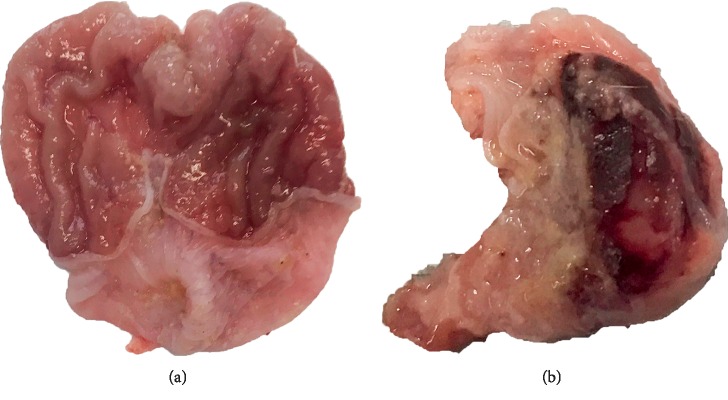
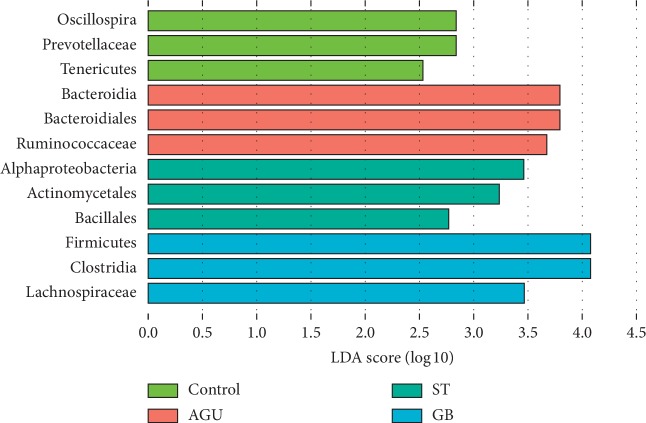
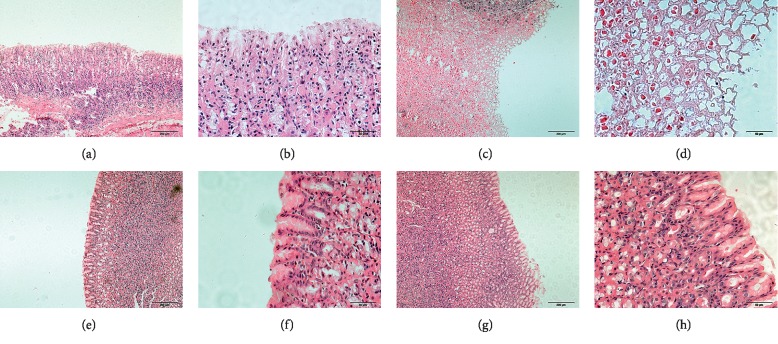
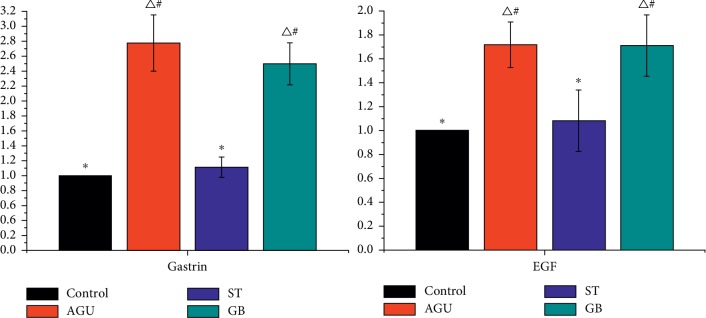
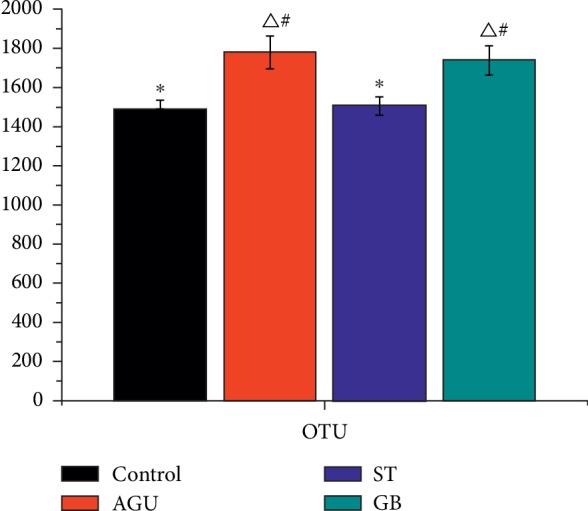
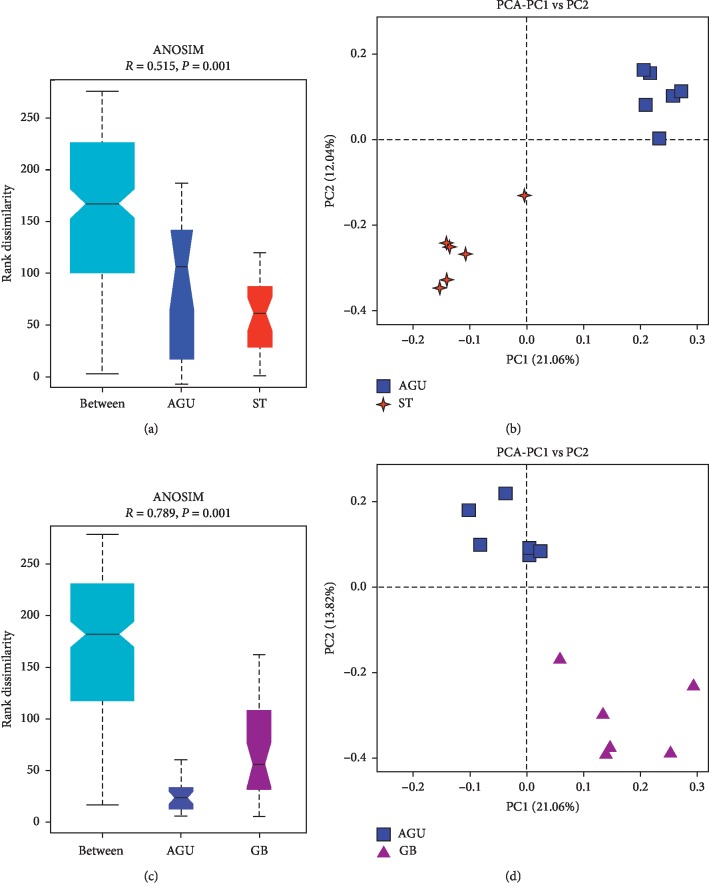
In Traditional Chinese Medicine (TCM), moxibustion had been used for thousands of years. Many clinical case reports and scientific studies had proved that moxibustion had a good effect in treating acute gastric ulcer (AGU). Some studies had shown that the relative content and species of bacteria in the intestinal would be changed when gastric mucosal injury happened. However, there was little research on the effect of intestinal microbiome with AGU rats that were treating by moxibustion. This study is aimed at analyzing the effect of fecal microbiome in rats with AGU by the 16S rDNA sequencing technology. Male SD rats were established by orally feeding once with 70% ethanol at 4 ml/kg except the control group, then treated by moxibustion in the stomach meridian group ("Liangmen," "Zusanli") and the gallbladder meridian group ("Riyue," "Yanglingquan") for 5 days. The 16S rDNA sequencing technology analysis of feces combined with histopathological methods and molecular biological detection methods was used to evaluate the therapeutic mechanism of moxibustion on AGU. AGU brought cause changes in the number and species of intestinal bacteria. Moxibustion on stomach meridian group could reduce the area of gastric mucosal injury and regulate the relative content of GAS and EGF. Moreover, moxibustion on the stomach meridian group could increase the relative content and species of beneficial bacteria in the intestine of rats with AGU. The relative abundance of intestinal probiotics was significantly upregulated in Alphaproteobacteria, Actinomycetales, and Bacillales. In addition, moxibustion might promote the repair of gastric mucosal injury by increasing the number and species of beneficial bacteria in the intestine.
在传统中医(TCM)中,艾灸已被使用了数千年。许多临床病例报告和科学研究已证明,艾灸在治疗急性胃溃疡(AGU)方面有良好效果。一些研究表明,当胃黏膜损伤发生时,肠道中细菌的相对含量和种类会发生变化。然而,关于艾灸治疗AGU大鼠对肠道微生物群影响的研究很少。本研究旨在通过16S rDNA测序技术分析AGU大鼠粪便微生物群的影响。除对照组外,雄性SD大鼠通过一次性口服4 ml/kg的70%乙醇建立模型,然后在胃经组(“梁门”、“足三里”)和胆经组(“日月”、“阳陵泉”)进行艾灸治疗5天。采用粪便16S rDNA测序技术分析,结合组织病理学方法和分子生物学检测方法,评估艾灸对AGU的治疗机制。AGU会导致肠道细菌数量和种类的变化。胃经组艾灸可减少胃黏膜损伤面积,调节胃泌素(GAS)和表皮生长因子(EGF)的相对含量。此外,胃经组艾灸可增加AGU大鼠肠道中有益菌的相对含量和种类。在α-变形菌纲、放线菌目和芽孢杆菌目中,肠道益生菌的相对丰度显著上调。此外,艾灸可能通过增加肠道中有益菌的数量和种类来促进胃黏膜损伤的修复。