Soybean Research Institute, Shenyang Agricultural University, Shenyang 110866, China.
Soybean Research Institute of Heilongjiang Academy of Agricultural Sciences, Key Laboratory of Soybean Cultivation of Ministry of Agriculture P. R. China, Harbin 150086, China.
Int J Mol Sci. 2020 Jan 17;21(2):618. doi: 10.3390/ijms21020618.
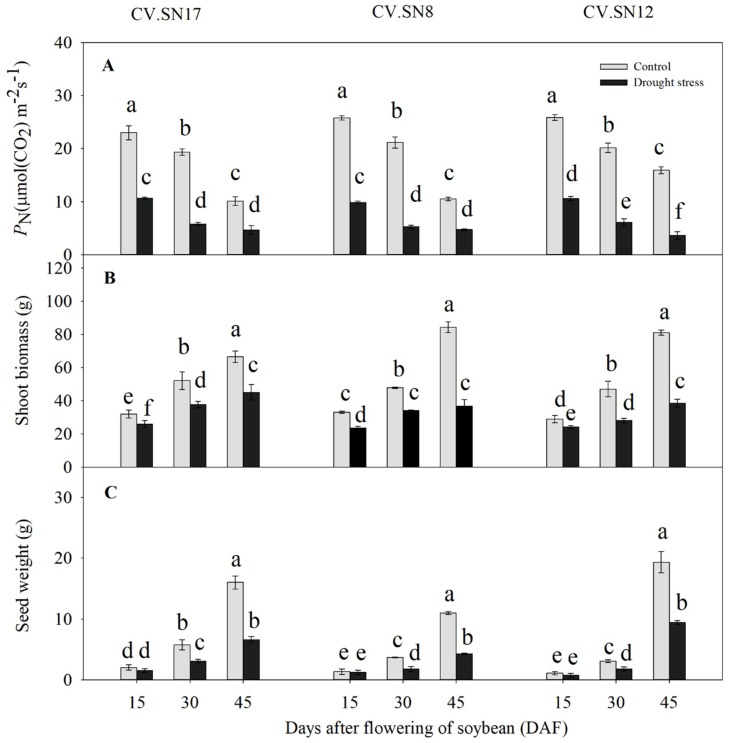
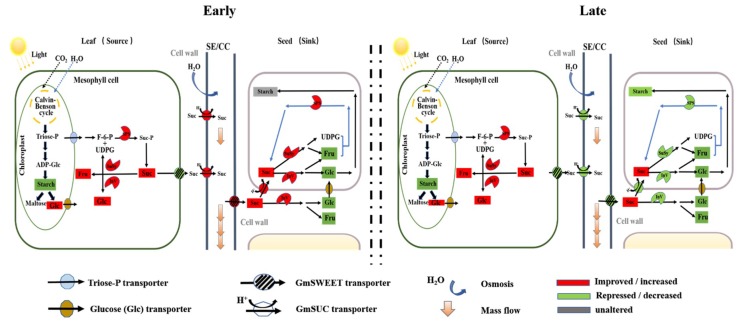
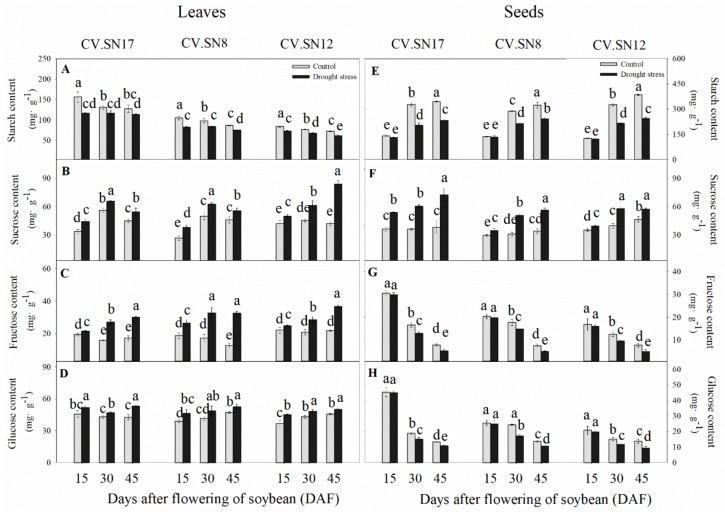
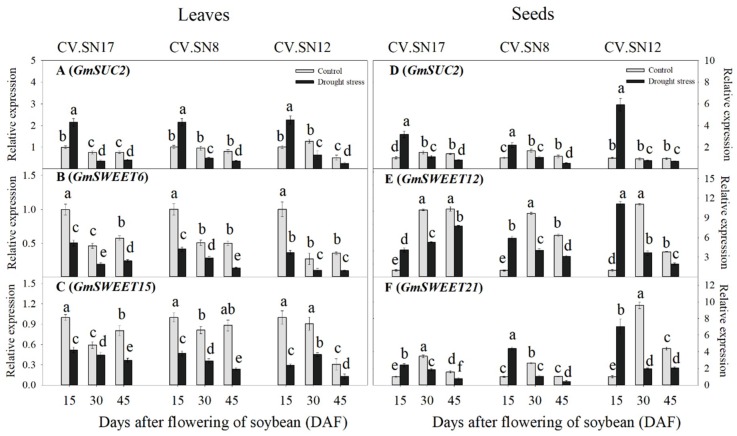
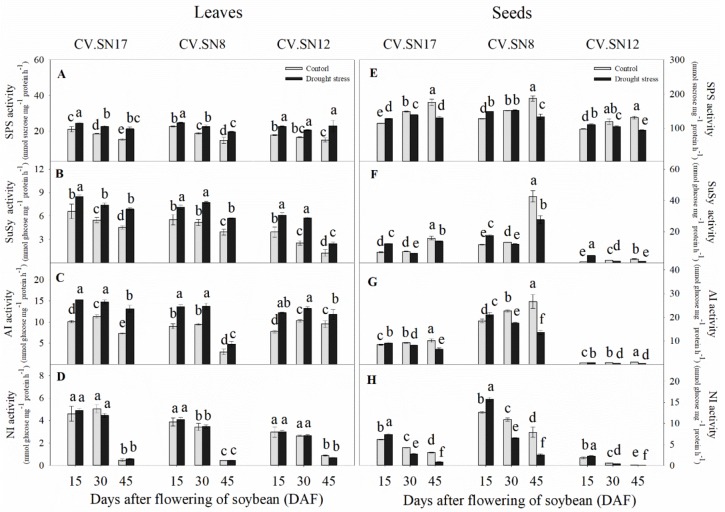
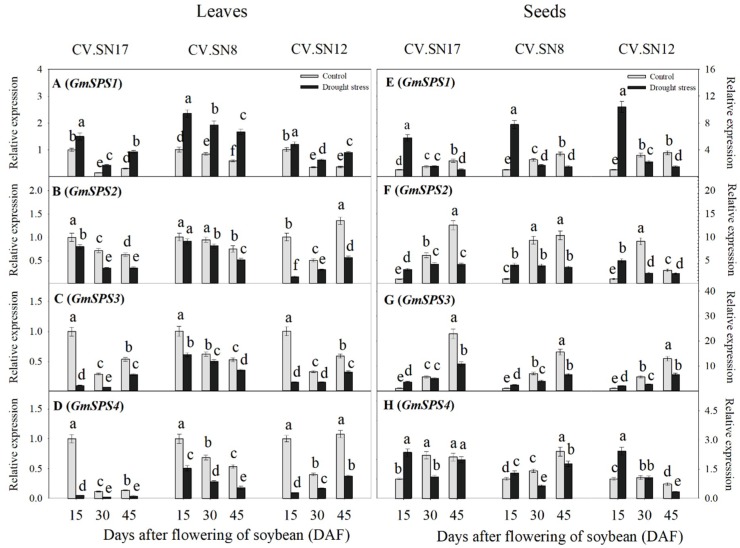
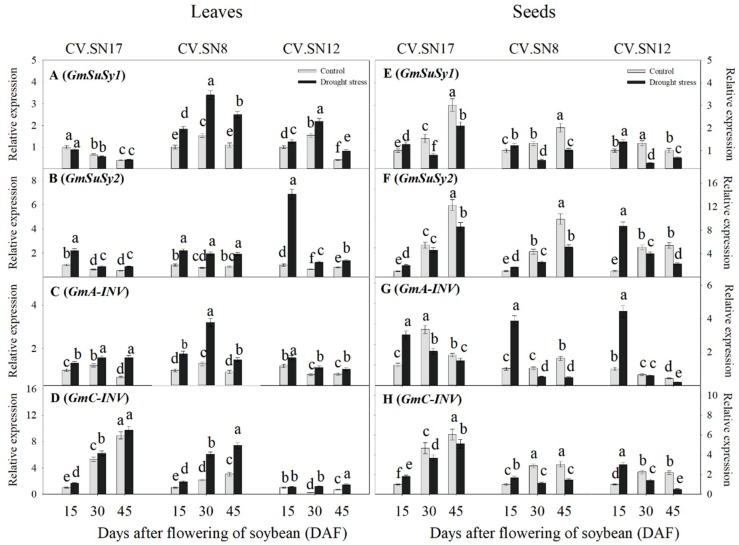
Sucrose is the main photosynthesis product of plants and the fundamental carbon skeleton monomer and energy supply for seed formation and development. Drought stress induces decreased photosynthetic carbon assimilation capacity, and seriously affects seed weight in soybean. However, little is known about the relationship between decreases in soybean seed yield and disruption of sucrose metabolism and transport balance in leaves and seeds during the reproductive stages of crop growth. Three soybean cultivars with similar growth periods, "Shennong17", "Shennong8", and "Shennong12", were subjected to drought stress during reproductive growth for 45 days. Drought stress significantly reduced leaf photosynthetic rate, shoot biomass, and seed weight by 63.93, 33.53, and 41.65%, respectively. Drought stress increased soluble sugar contents, the activities of sucrose phosphate synthase, sucrose synthase, and acid invertase enzymes, and up-regulated the expression levels of , , and , but decreased starch content by 15.13% in leaves. Drought stress decreased the contents of starch, fructose, and glucose in seeds during the late seed filling stages, while it induced sucrose accumulation, which resulted in a decreased hexose-to-sucrose ratio. In developing seeds, the activities of sucrose synthesis and degradation enzymes, the expression levels of genes related to metabolism, and the expression levels of sucrose transporter genes were enhanced during early seed development under drought stress; however, under prolonged drought stress, all of them decreased. These results demonstrated that drought stress enhances the capacity for unloading sucrose into seeds and activated sucrose metabolism during early seed development. At the middle and late seed filling stages, sucrose flow from leaves to seeds was diminished, and the balance of sucrose metabolism was impaired in seeds, resulting in seed mass reduction. The different regulation strategies in sucrose allocation, metabolism, and transport during different seed development stages may be one of the physiological mechanisms for soybean plants to resist drought stress.
蔗糖是植物光合作用的主要产物,也是种子形成和发育的基本碳骨架单体和能量供应物质。干旱胁迫会降低植物的光合碳同化能力,严重影响大豆的种子重量。然而,关于作物生长生殖阶段叶片和种子中蔗糖代谢和运输平衡破坏与大豆种子产量下降之间的关系,人们知之甚少。选用生育期相近的 3 个大豆品种‘神豆 17’、‘神豆 8’和‘神豆 12’,在生殖生长阶段进行 45 天干旱胁迫处理。干旱胁迫显著降低了叶片的光合速率、地上部生物量和种子重量,降幅分别为 63.93%、33.53%和 41.65%。干旱胁迫增加了叶片中可溶性糖含量,蔗糖磷酸合成酶、蔗糖合酶和酸性转化酶的活性,并上调了 、 和 基因的表达水平,但淀粉含量降低了 15.13%。在种子晚期灌浆阶段,干旱胁迫降低了种子中淀粉、果糖和葡萄糖的含量,同时诱导蔗糖积累,导致己糖与蔗糖的比例降低。在发育中的种子中,干旱胁迫下早期种子发育过程中蔗糖合成和降解酶的活性、与代谢相关的基因表达水平以及蔗糖转运体基因的表达水平均增强;但在持续干旱胁迫下,所有这些都降低了。这些结果表明,干旱胁迫增强了蔗糖向种子卸载的能力,并在早期种子发育过程中激活了蔗糖代谢。在种子中期和后期灌浆阶段,叶片到种子的蔗糖流减少,种子中蔗糖代谢平衡受损,导致种子质量下降。不同种子发育阶段蔗糖分配、代谢和运输的不同调控策略可能是大豆植株抗旱的生理机制之一。