Wesfarmers Centre of Vaccines and Infectious Diseases, Telethon Kids Institute, Perth, Australia.
Section Pediatric Infectious Diseases, Laboratory of Medical Immunology, Radboud Institute for Molecular Life Sciences, Radboudumc, Nijmegen, The Netherlands.
Infect Immun. 2020 Mar 23;88(4). doi: 10.1128/IAI.00685-19.
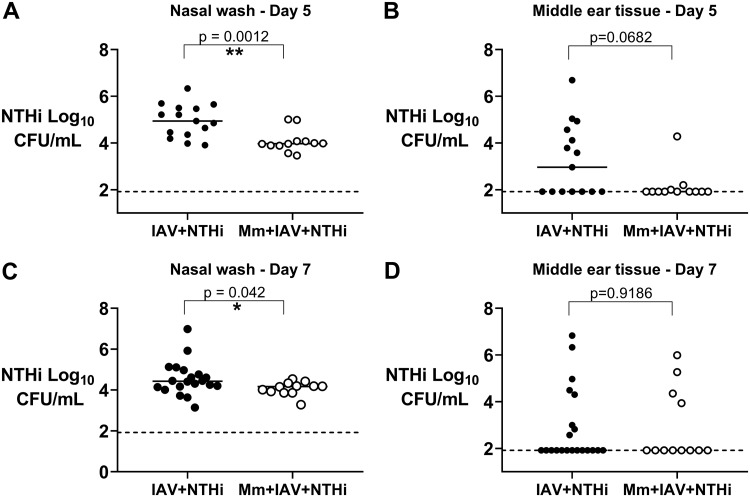
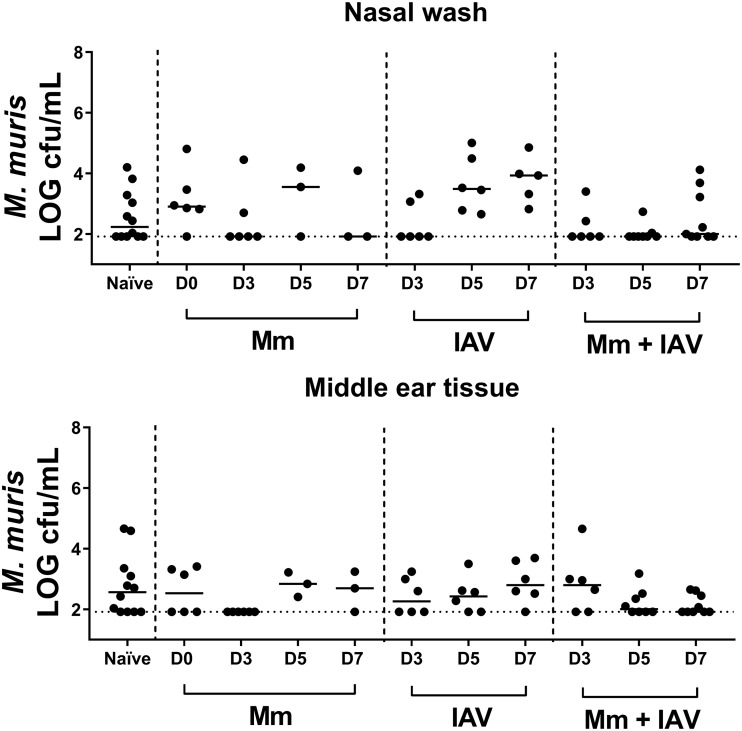
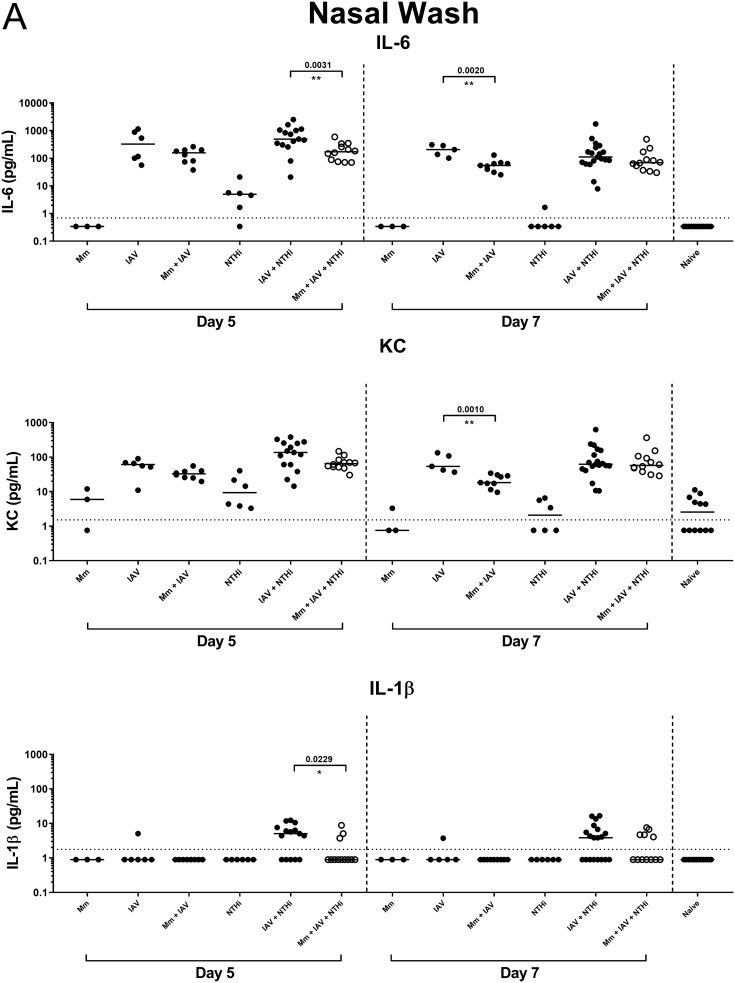
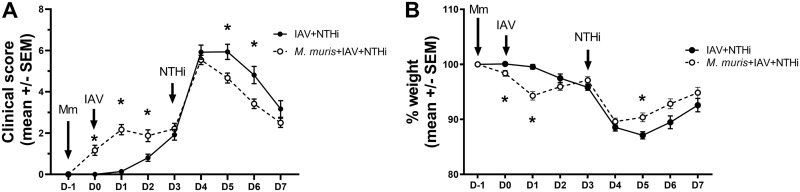
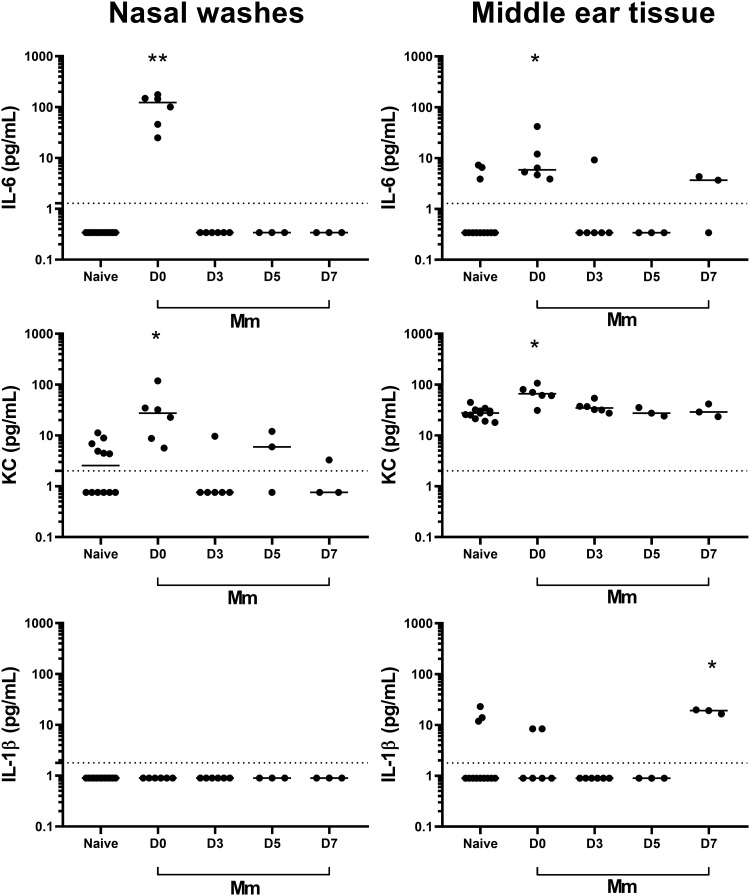
Nasopharyngeal colonization with nontypeable (NTHi) is a prerequisite for developing NTHi-associated infections, including otitis media. Therapies that block NTHi colonization may prevent disease development. We previously demonstrated that , a closely related human commensal, can inhibit NTHi colonization and infection of human respiratory epithelium We have now assessed whether (a rodent commensal from the same family) can prevent NTHi colonization and disease using a murine NTHi otitis media model. Otitis media was modeled in BALB/c mice using coinfection with 1 × 10 PFU of influenza A virus MEM H3N2, followed by intranasal challenge with 5 × 10 CFU of NTHi R2866 Spec Mice were pretreated or not with an intranasal inoculation of 5 × 10 CFU 24 h before coinfection. NTHi and viable counts and inflammatory mediators (gamma interferon [IFN-γ], interleukin-1β [IL-1β], IL-6, keratinocyte chemoattractant [KC], and IL-10) were measured in nasal washes and middle ear tissue homogenate. pretreatment decreased the median colonization density of NTHi from 6 × 10 CFU/ml to 9 × 10 CFU/ml ( = 0.0004). Only 1/12 -pretreated mice developed otitis media on day 5 compared to 8/15 mice with no pretreatment (8% versus 53%, = 0.0192). Inflammation, clinical score, and weight loss were also lower in -pretreated mice. We have demonstrated that a single dose of a closely related commensal can delay onset of NTHi otitis media Human challenge studies investigating prevention of NTHi colonization are warranted to reduce the global burden of otitis media and other NTHi diseases.
鼻咽定植非典型 (NTHi) 是发生 NTHi 相关感染的前提条件,包括中耳炎。阻断 NTHi 定植的疗法可能会预防疾病的发生。我们之前证明, 一种密切相关的人类共生菌,可以抑制 NTHi 定植和人呼吸道上皮感染 我们现在评估了 是否 (一种来自同一科的啮齿动物共生菌) 可以预防 NTHi 定植和疾病 使用鼠 NTHi 中耳炎模型。在 BALB/c 小鼠中,通过用 1×10 PFU 的流感 A 病毒 MEM H3N2 共感染,然后用 5×10 CFU 的 NTHi R2866 鼻内攻击来建立中耳炎模型。在共感染前 24 小时,用 5×10 CFU 的 进行鼻内接种预处理或不预处理。测量鼻冲洗液和中耳组织匀浆中的 NTHi 和 活菌计数和炎症介质(γ干扰素 [IFN-γ]、白细胞介素-1β [IL-1β]、IL-6、角质细胞趋化因子 [KC] 和 IL-10)。 预处理使 NTHi 的中位定植密度从 6×10 CFU/ml 降低到 9×10 CFU/ml( = 0.0004)。与未预处理的 15 只小鼠中的 8 只(8%比 53%, = 0.0192)相比,只有 1/12 预处理的小鼠在第 5 天发生中耳炎。预处理的小鼠炎症、临床评分和体重减轻也较低。我们已经证明,单次给予密切相关的共生菌可以延迟 NTHi 中耳炎的发病。需要进行人类挑战研究以调查 NTHi 定植的预防,以降低中耳炎和其他 NTHi 疾病的全球负担。