Department of Biochemistry, University of Utah, Salt Lake City, UT 84112, USA; Center for Infectious Disease Research, Seattle, WA 98109, USA.
Flatiron Institute, Center for Computational Biology, Simons Foundation, New York, NY 10010, USA.
Cell Rep. 2020 Jan 21;30(3):914-931.e9. doi: 10.1016/j.celrep.2019.12.054.
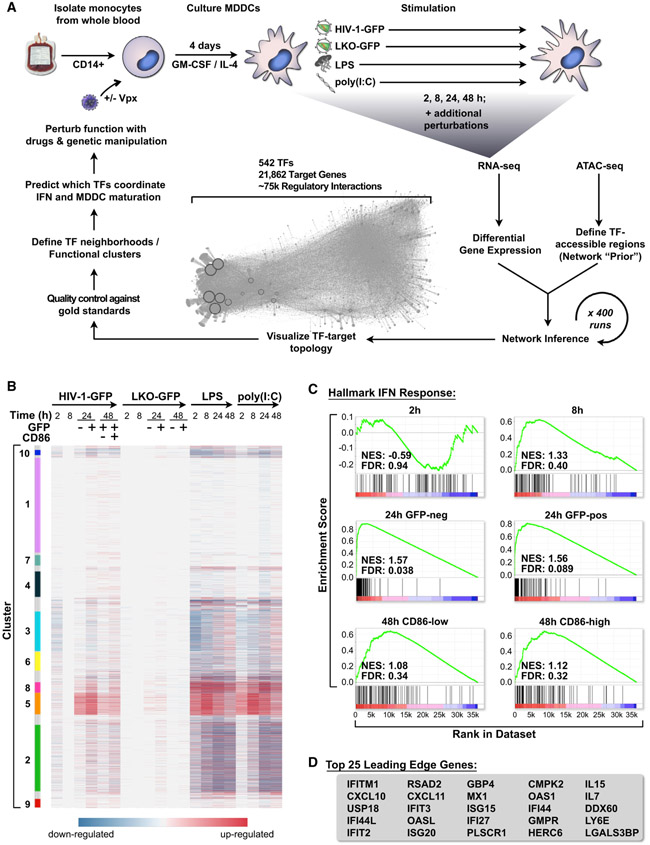
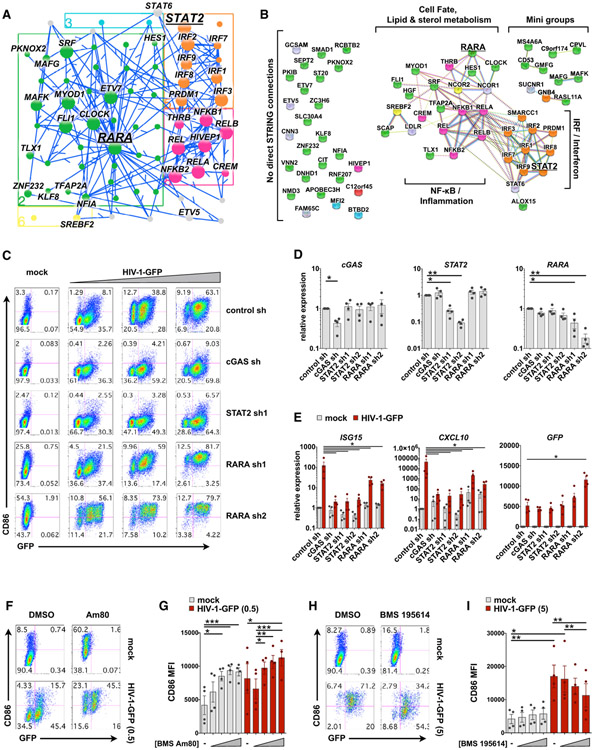
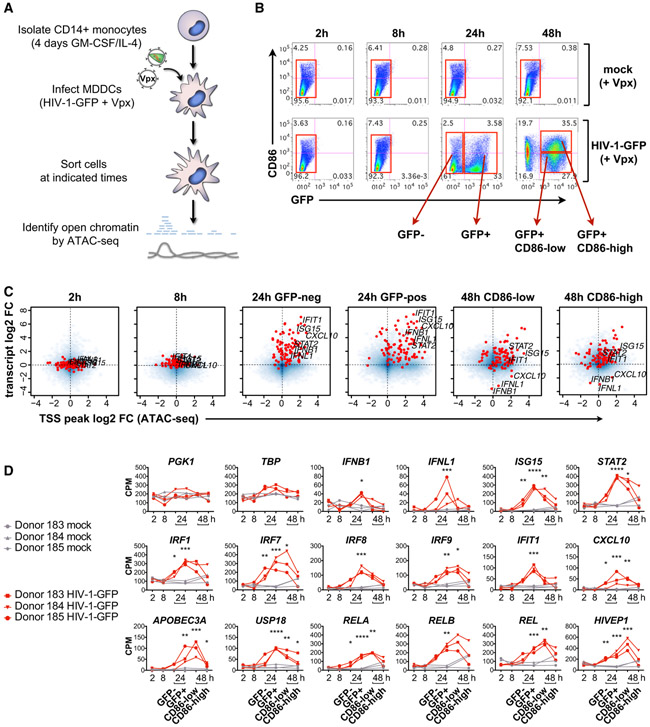
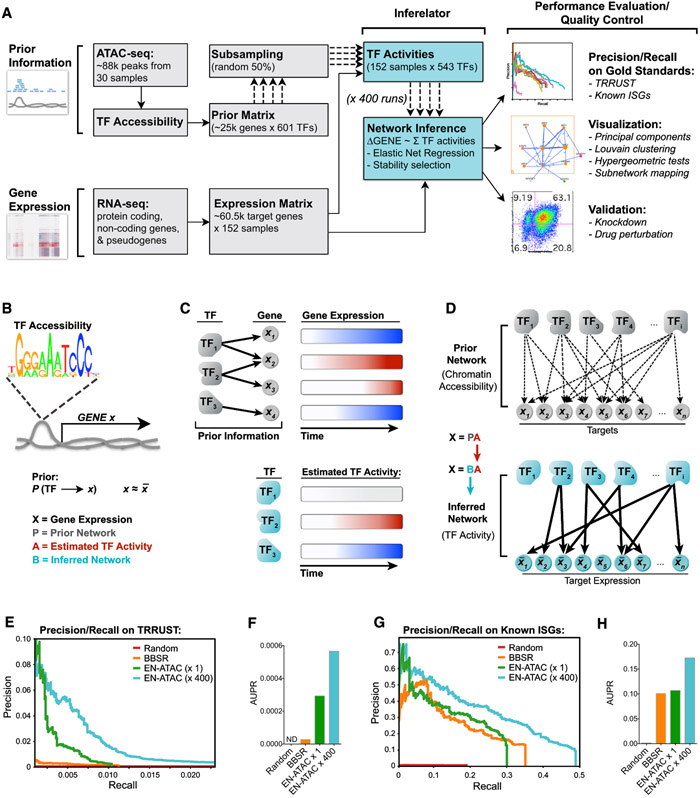
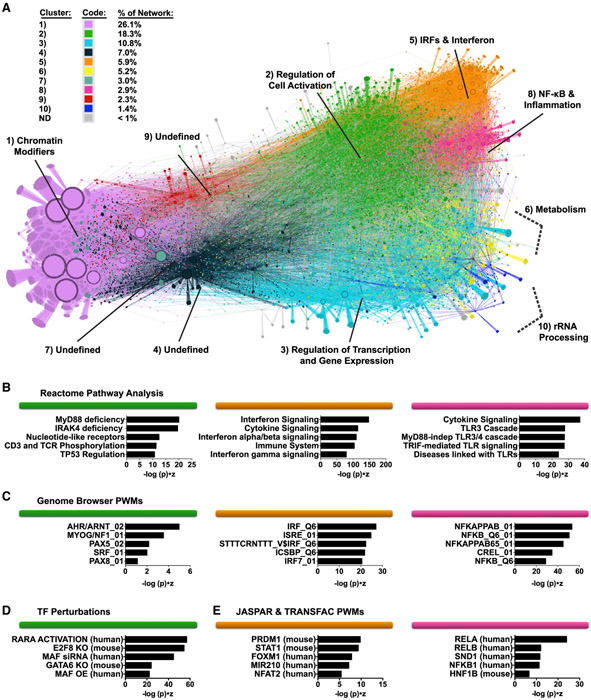
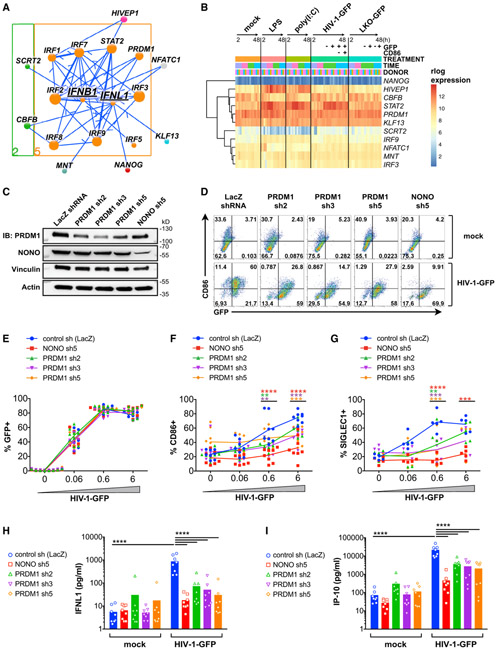
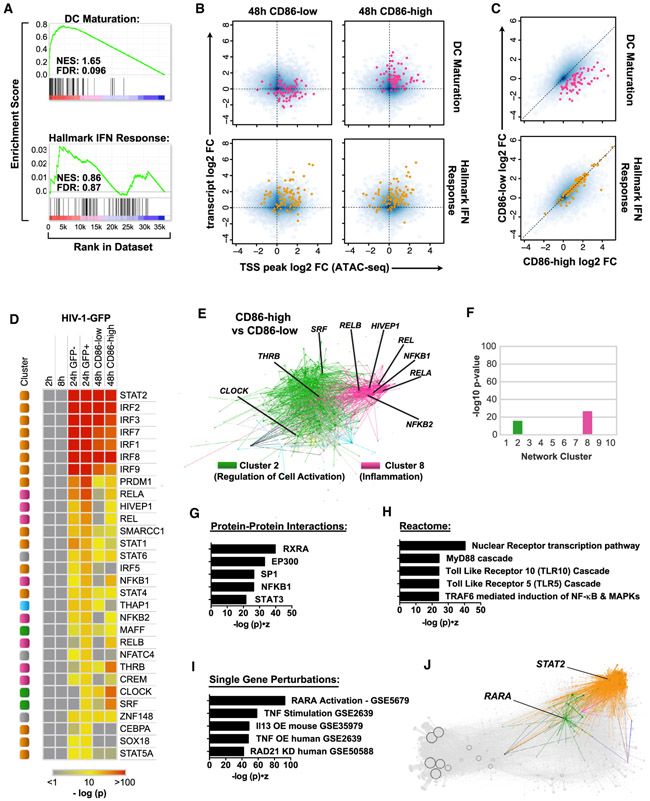
Transcriptional programming of the innate immune response is pivotal for host protection. However, the transcriptional mechanisms that link pathogen sensing with innate activation remain poorly understood. During HIV-1 infection, human dendritic cells (DCs) can detect the virus through an innate sensing pathway, leading to antiviral interferon and DC maturation. Here, we develop an iterative experimental and computational approach to map the HIV-1 innate response circuitry in monocyte-derived DCs (MDDCs). By integrating genome-wide chromatin accessibility with expression kinetics, we infer a gene regulatory network that links 542 transcription factors with 21,862 target genes. We observe that an interferon response is required, yet insufficient, to drive MDDC maturation and identify PRDM1 and RARA as essential regulators of the interferon response and MDDC maturation, respectively. Our work provides a resource for interrogation of regulators of HIV replication and innate immunity, highlighting complexity and cooperativity in the regulatory circuit controlling the response to infection.
先天免疫反应的转录编程对于宿主保护至关重要。然而,将病原体感应与先天激活联系起来的转录机制仍知之甚少。在 HIV-1 感染期间,人类树突状细胞(DCs)可以通过先天感应途径检测到病毒,从而引发抗病毒干扰素和 DC 成熟。在这里,我们开发了一种迭代的实验和计算方法来绘制单核细胞衍生的 DC(MDDC)中的 HIV-1 先天反应电路。通过将全基因组染色质可及性与表达动力学相结合,我们推断出一个基因调控网络,该网络将 542 个转录因子与 21,862 个靶基因联系起来。我们观察到干扰素反应是驱动 MDDC 成熟所必需的,但还不够,并确定 PRDM1 和 RARA 分别是干扰素反应和 MDDC 成熟的必需调节因子。我们的工作为探究 HIV 复制和先天免疫的调节因子提供了资源,突出了控制感染反应的调节回路的复杂性和协同性。