
一款用于生成和表征运动习惯的手机应用程序。
A Mobile Phone App for the Generation and Characterization of Motor Habits.
作者信息
Banca Paula, McNamee Daniel, Piercy Thomas, Luo Qiang, Robbins Trevor W
机构信息
Department of Psychology, Behavioural and Clinical Neuroscience Institute, University of Cambridge, Cambridge, United Kingdom.
Wellcome Centre for Human Neuroimaging, Institute of Neurology, University College London, London, United Kingdom.
出版信息
Front Psychol. 2020 Jan 8;10:2850. doi: 10.3389/fpsyg.2019.02850. eCollection 2019.
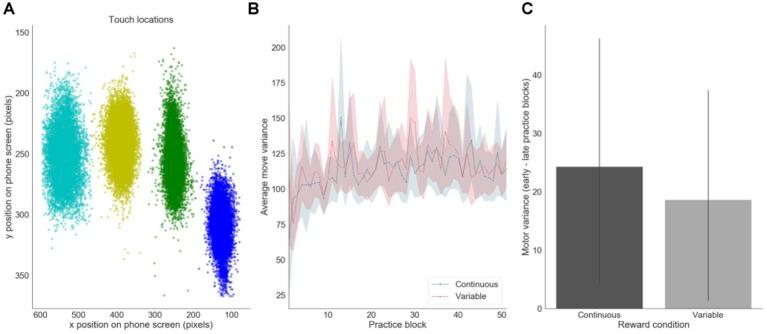
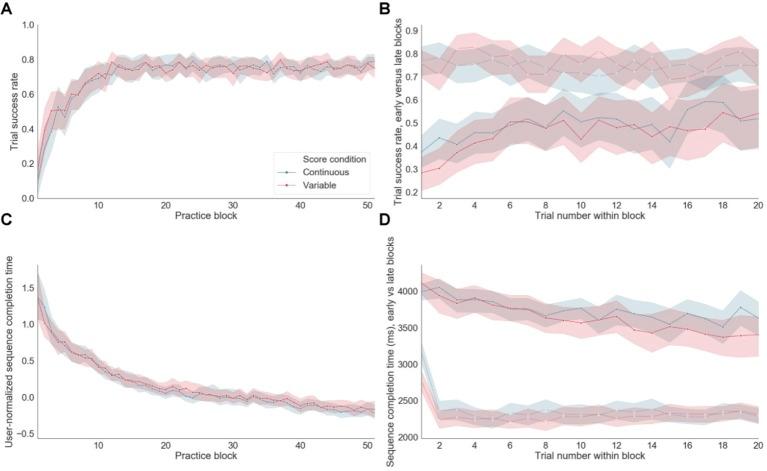
Habits are a powerful route to efficiency; the ability to constantly shift between goal-directed and habitual strategies, as well as integrate them into behavioral output, is key to optimal performance in everyday life. When such ability is impaired, it may lead to loss of control and to compulsive behavior. Habits have successfully been induced and investigated in rats using methods such as overtraining stimulus-response associations and outcome devaluation, respectively. However, such methods have ineffectively measured habits in humans because (1) human habits usually involve more complex sequences of actions than in rats and (2) of pragmatic impediments posed by the extensive time (weeks or even months), it may take for routine habits to develop. We present here a novel behavioral paradigm-a mobile-phone app methodology-for inducing and measuring habits in humans during their everyday schedule and environment. It assumes that practice is key to achieve automaticity and proficiency and that the use of a hierarchical sequence of actions is the best strategy for capturing the cognitive mechanisms involved in habit formation (including "chunking") and consolidation. The task is a gamified self-instructed and self-paced app on a mobile phone that enables subjects to learn and practice two sequences of finger movements, composed of chords and single presses. It involves a step-wise learning procedure in which subjects begin responding to a visual and auditory cued sequence by generating responses on the screen using four fingers. Such cues progressively disappear throughout 1 month of training, enabling the subject ultimately to master the motor skill involved. We present preliminary data for the acquisition of motor sequence learning in 29 healthy individuals, each trained over a month period. We demonstrate an asymptotic improvement in performance, as well as its automatic nature. We also report how people integrate the task into their daily routine, the development of motor precision throughout training, and the effect of intermittent reinforcement and reward extinction in habit preservation. The findings help to validate this "real world" app for measuring human habits.
习惯是通向高效的有力途径;能够在目标导向策略和习惯策略之间持续切换,并将它们整合到行为输出中,是日常生活中实现最佳表现的关键。当这种能力受损时,可能会导致失控和强迫行为。在大鼠中,分别使用过度训练刺激-反应关联和结果贬值等方法成功诱导并研究了习惯。然而,这些方法在测量人类习惯方面效果不佳,原因如下:(1)人类习惯通常涉及比大鼠更复杂的动作序列;(2)日常习惯的形成可能需要很长时间(数周甚至数月),这带来了实际操作上的阻碍。我们在此介绍一种新颖的行为范式——手机应用程序方法——用于在人类的日常安排和环境中诱导和测量习惯。该方法认为,练习是实现自动化和熟练程度的关键,使用分层动作序列是捕捉习惯形成(包括“组块化”)和巩固过程中涉及的认知机制的最佳策略。该任务是一款手机上的游戏化、自我指导且自主节奏的应用程序,它使受试者能够学习和练习由和弦和单按组成的两组手指动作序列。它涉及一个逐步学习的过程,在此过程中,受试者开始通过用四根手指在屏幕上做出反应,来对视觉和听觉提示的序列做出回应。在为期1个月的训练过程中,此类提示会逐渐消失,最终使受试者掌握相关运动技能。我们展示了29名健康个体进行运动序列学习的初步数据,他们每人都接受了为期1个月的训练。我们证明了表现的渐进性提高及其自动性。我们还报告了人们如何将该任务融入日常生活、整个训练过程中运动精度的发展,以及间歇性强化和奖励消退对习惯保持的影响。这些发现有助于验证这款用于测量人类习惯的“现实世界”应用程序。



 Zotero 插件