Xiao Ping, Zhong Tao, Liu Zhanfa, Ding Yangyang, Guan Weijun, He Xiaohong, Pu Yabin, Jiang Lin, Ma Yuehui, Zhao Qianjun
Key Laboratory of Animal (Poultry) Genetics Breeding and Reproduction, Ministry of Agriculture and Rural Affairs, Institute of Animal Sciences, Chinese Academy of Agricultural Sciences, Beijing, China.
Farm Animal Genetic Resources Exploration and Innovation Key Laboratory of Sichuan Province, College of Animal Science and Technology, Sichuan Agricultural University, Chengdu, China.
Front Genet. 2020 Jan 8;10:1263. doi: 10.3389/fgene.2019.01263. eCollection 2019.
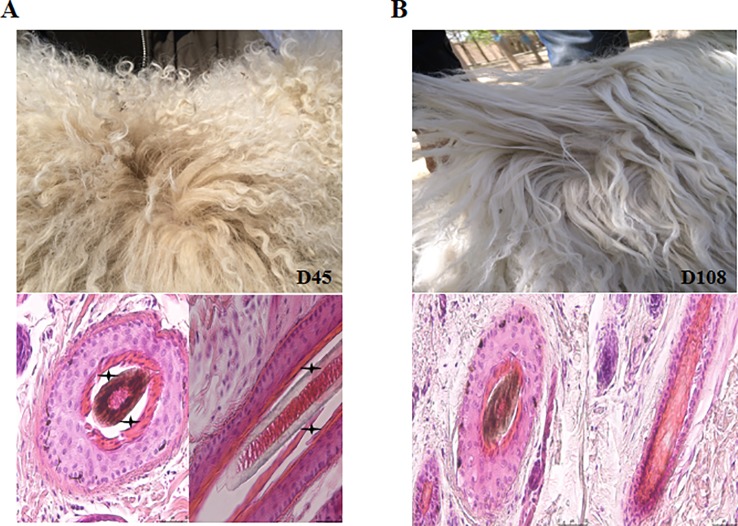
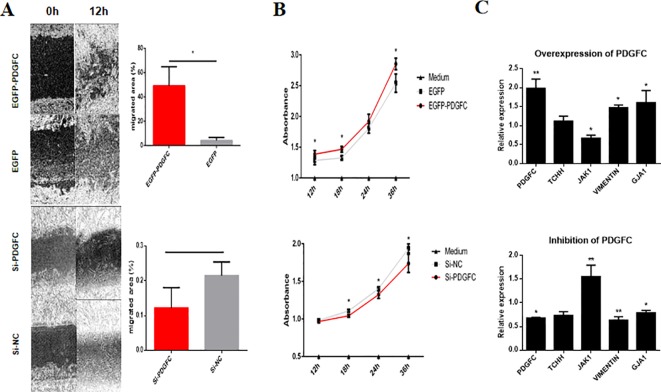
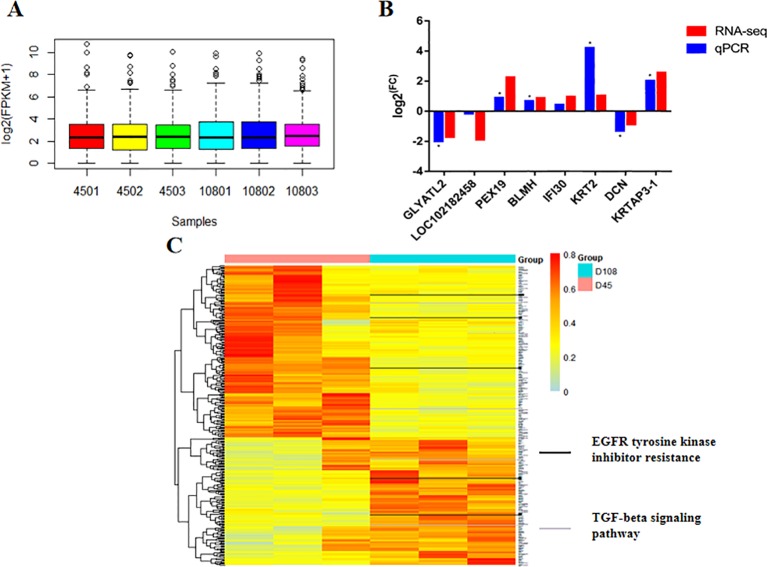
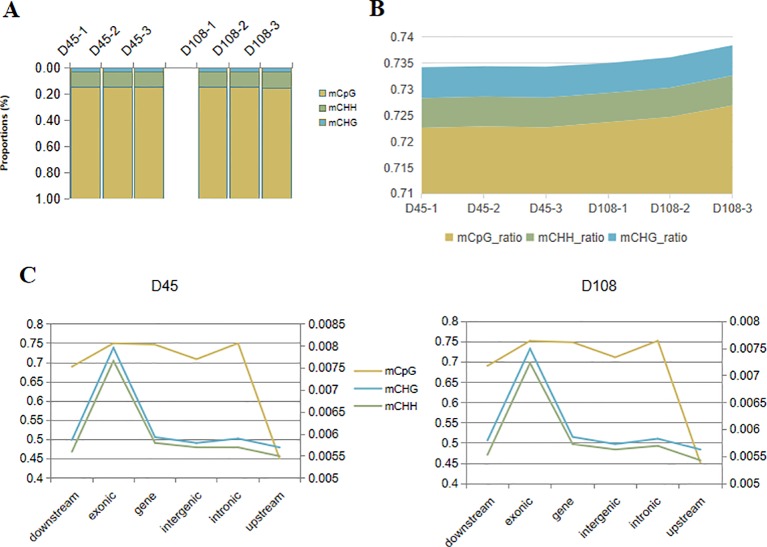
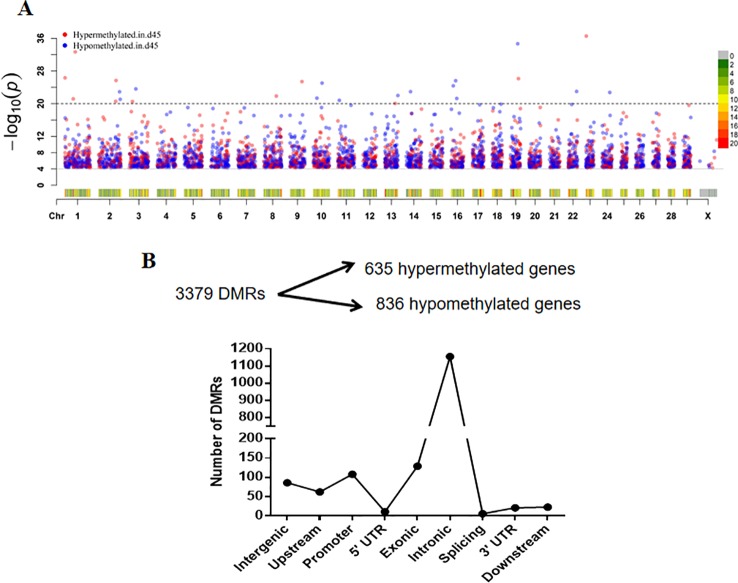
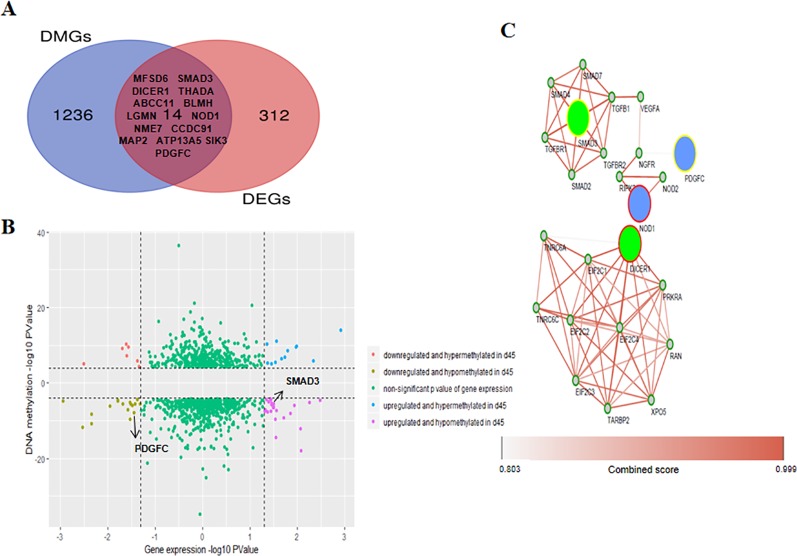
The Zhongwei goat is kept primarily for its beautiful white, curly pelt that appears when the kid is approximately 1 month old; however, this representative phenotype often changes to a less curly phenotype during postnatal development in a process that may be mediated by multiple molecular signals. DNA methylation plays important roles in mammalian cellular processes and is essential for the initiation of hair follicle (HF) development. Here, we sought to investigate the effects of genome-wide DNA methylation by combining expression profiles of the underlying curly fleece dynamics. Genome-wide DNA methylation maps and transcriptomes of skin tissues collected from 45- to 108-day-old goats were used for whole-genome bisulfite sequencing (WGBS) and RNA sequencing, respectively. Between the two developmental stages, 1,250 of 3,379 differentially methylated regions (DMRs) were annotated in differentially methylated genes (DMGs), and these regions were mainly related to intercellular communication and the cytoskeleton. Integrated analysis of the methylome and transcriptome data led to the identification of 14 overlapping genes that encode crucial factors for wool fiber development through epigenetic mechanisms. Furthermore, a functional study using human hair inner root sheath cells (HHIRSCs) revealed that, one of the overlapping genes, platelet-derived growth factor C () had a significant effect on the messenger RNA expression of several key HF-related genes that promote cell migration and proliferation. Our study presents an unprecedented analysis that was used to explore the enigma of fleece morphological changes by combining methylome maps and transcriptional expression, and these data revealed stage-specific epigenetic changes that potentially affect fiber development. Furthermore, our functional study highlights a possible role for the overlapping gene in HF cell growth, which may be a predictable biomarker for fur goat selection.
中卫山羊主要因其美丽的白色卷曲皮毛而饲养,这种皮毛在羔羊大约1个月大时出现;然而,这种典型表型在出生后发育过程中通常会转变为卷曲度较低的表型,这一过程可能由多种分子信号介导。DNA甲基化在哺乳动物细胞过程中发挥重要作用,对毛囊(HF)发育的起始至关重要。在这里,我们试图通过结合潜在卷曲羊毛动态的表达谱来研究全基因组DNA甲基化的影响。分别使用从45至108日龄山羊收集的皮肤组织的全基因组DNA甲基化图谱和转录组进行全基因组亚硫酸氢盐测序(WGBS)和RNA测序。在两个发育阶段之间,3379个差异甲基化区域(DMR)中的1250个在差异甲基化基因(DMG)中被注释,这些区域主要与细胞间通讯和细胞骨架有关。甲基化组和转录组数据的综合分析导致鉴定出14个重叠基因,这些基因通过表观遗传机制编码羊毛纤维发育的关键因子。此外,使用人毛内根鞘细胞(HHIRSCs)的功能研究表明,重叠基因之一血小板衍生生长因子C()对几个促进细胞迁移和增殖的关键HF相关基因的信使RNA表达有显著影响。我们的研究提供了一项前所未有的分析,通过结合甲基化组图谱和转录表达来探索羊毛形态变化之谜,这些数据揭示了可能影响纤维发育的阶段特异性表观遗传变化。此外,我们的功能研究突出了重叠基因在HF细胞生长中的可能作用,这可能是毛用山羊选择的一个可预测生物标志物。