Key laboratory of Carcinogenesis and Translational Research (Ministry of Education), Department of Biochemistry and Molecular Biology, School of Basic Medical Sciences, Peking University Health Science Center, Beijing 100191, China.
Guangdong Key Laboratory of Genome Instability and Human Disease Prevention, International Cancer Center, Department of Biochemistry and Molecular Biology, Shenzhen University School of Medicine, Shenzhen 518055, China.
Nucleic Acids Res. 2020 Apr 6;48(6):2982-3000. doi: 10.1093/nar/gkaa006.
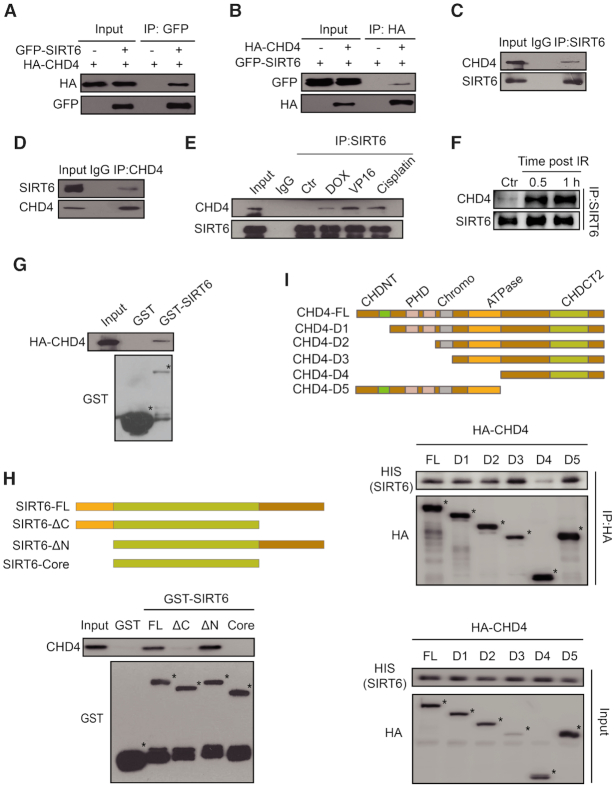
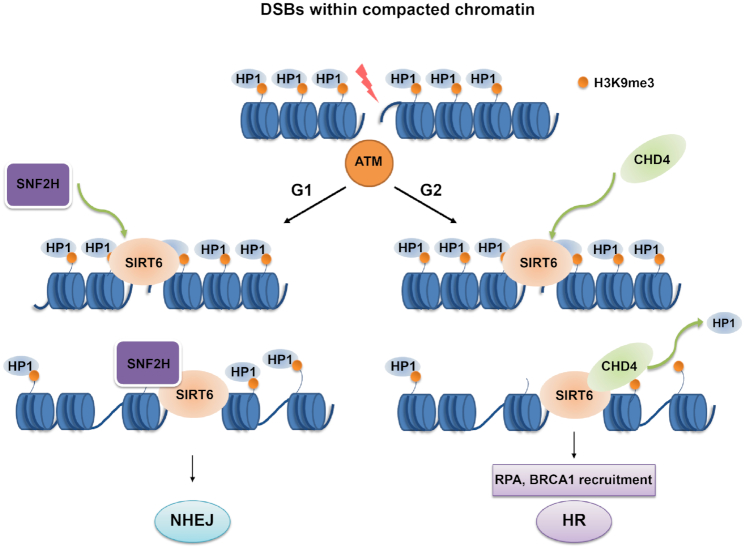
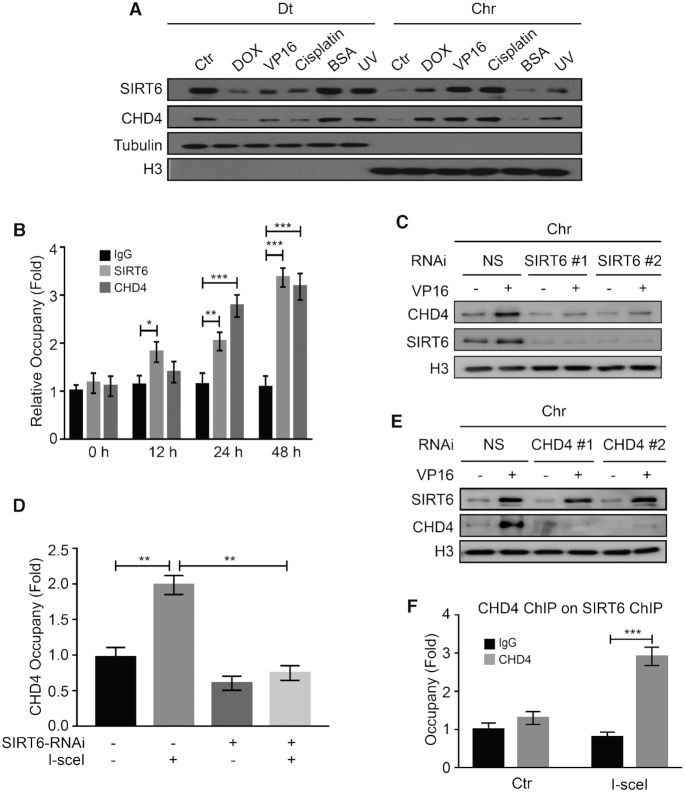
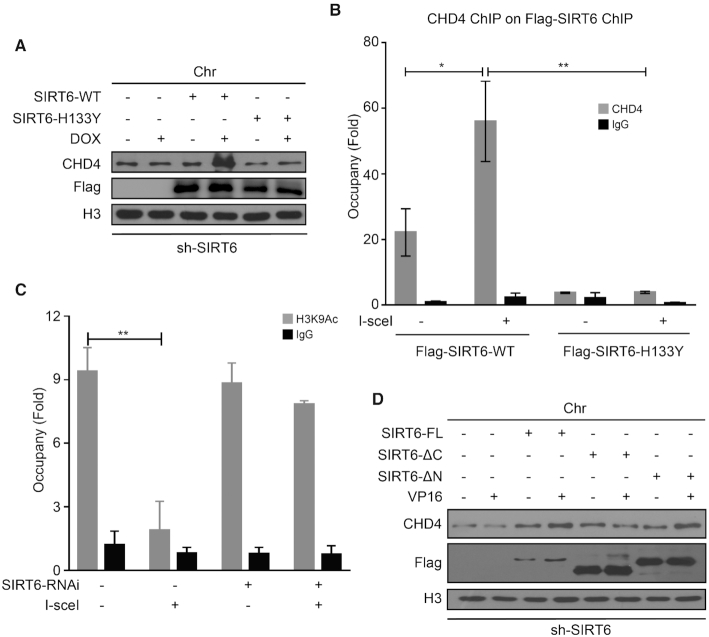
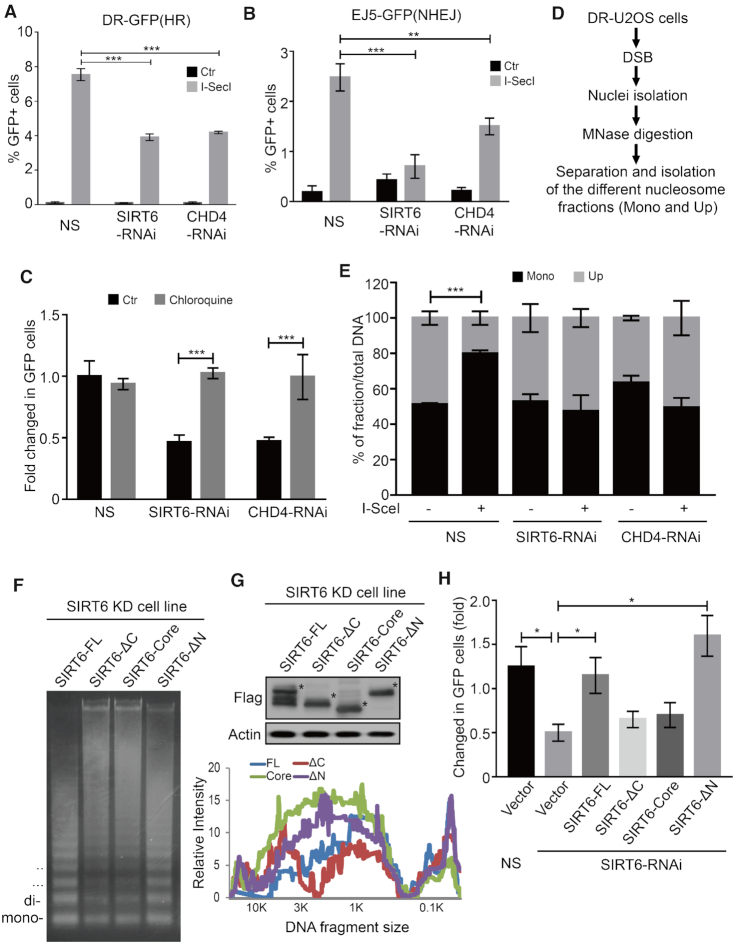
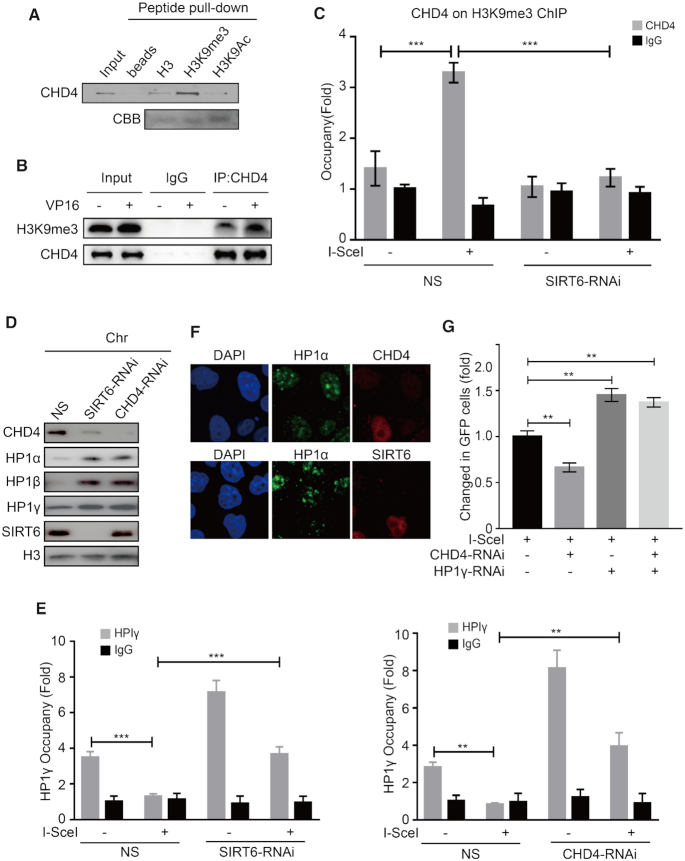
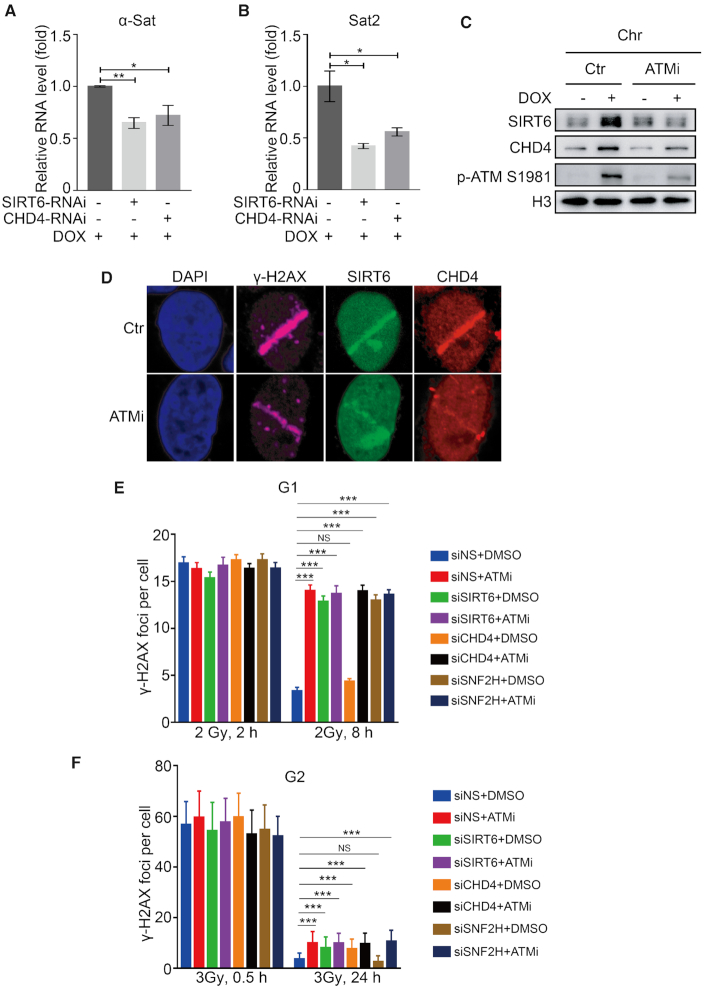
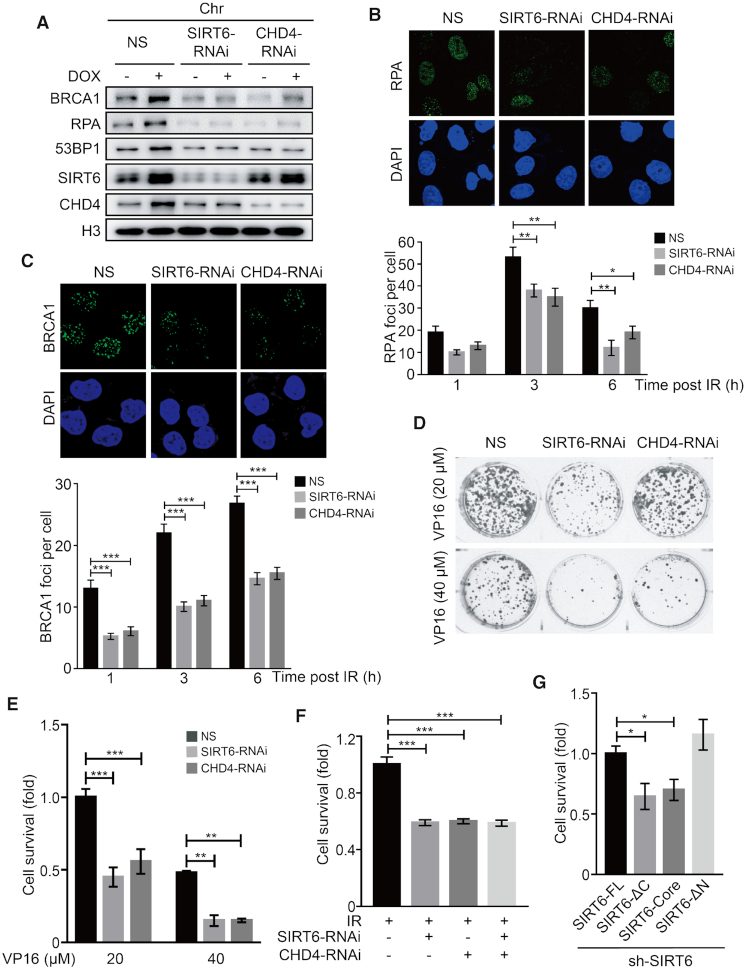
Genomic instability is an underlying hallmark of cancer and is closely associated with defects in DNA damage repair (DDR). Chromatin relaxation is a prerequisite for DDR, but how chromatin accessibility is regulated remains elusive. Here we report that the histone deacetylase SIRT6 coordinates with the chromatin remodeler CHD4 to promote chromatin relaxation in response to DNA damage. Upon DNA damage, SIRT6 rapidly translocates to DNA damage sites, where it interacts with and recruits CHD4. Once at the damage sites, CHD4 displaces heterochromatin protein 1 (HP1) from histone H3 lysine 9 trimethylation (H3K9me3). Notably, loss of SIRT6 or CHD4 leads to impaired chromatin relaxation and disrupted DNA repair protein recruitment. These molecular changes, in-turn, lead to defective homologous recombination (HR) and cancer cell hypersensitivity to DNA damaging agents. Furthermore, we show that SIRT6-mediated CHD4 recruitment has a specific role in DDR within compacted chromatin by HR in G2 phase, which is an ataxia telangiectasia mutated (ATM)-dependent process. Taken together, our results identify a novel function for SIRT6 in recruiting CHD4 onto DNA double-strand breaks. This newly identified novel molecular mechanism involves CHD4-dependent chromatin relaxation and competitive release of HP1 from H3K9me3 within the damaged chromatin, which are both essential for accurate HR.
基因组不稳定性是癌症的一个基本特征,与 DNA 损伤修复 (DDR) 缺陷密切相关。染色质松弛是 DDR 的先决条件,但染色质可及性如何调节仍然难以捉摸。在这里,我们报告组蛋白去乙酰化酶 SIRT6 与染色质重塑酶 CHD4 协调,以响应 DNA 损伤促进染色质松弛。在 DNA 损伤后,SIRT6 迅速易位到 DNA 损伤部位,在那里它与 CHD4 相互作用并招募 CHD4。一旦到达损伤部位,CHD4 就会将异染色质蛋白 1 (HP1) 从组蛋白 H3 赖氨酸 9 三甲基化 (H3K9me3) 上置换下来。值得注意的是,SIRT6 或 CHD4 的缺失会导致染色质松弛受损和 DNA 修复蛋白募集受损。这些分子变化反过来又导致同源重组 (HR) 缺陷和癌细胞对 DNA 损伤剂的敏感性增加。此外,我们表明,SIRT6 介导的 CHD4 募集在 G2 期 HR 中在致密染色质内的 DDR 中具有特定作用,这是一个共济失调毛细血管扩张突变 (ATM) 依赖的过程。总之,我们的结果确定了 SIRT6 在招募 CHD4 到 DNA 双链断裂中的新功能。这个新发现的分子机制涉及 CHD4 依赖性染色质松弛和受损染色质中 HP1 从 H3K9me3 的竞争性释放,这两者对于准确的 HR 都是必不可少的。