Institute of Cardiology, University of Pisa, Pisa, Italy.
Center of Excellence on Aging and Regenerative Medicine (CeSI-Met), "G. d'Annunzio" University Chieti, Chieti, Italy.
J Cell Mol Med. 2020 Mar;24(5):2857-2865. doi: 10.1111/jcmm.14843. Epub 2020 Jan 22.
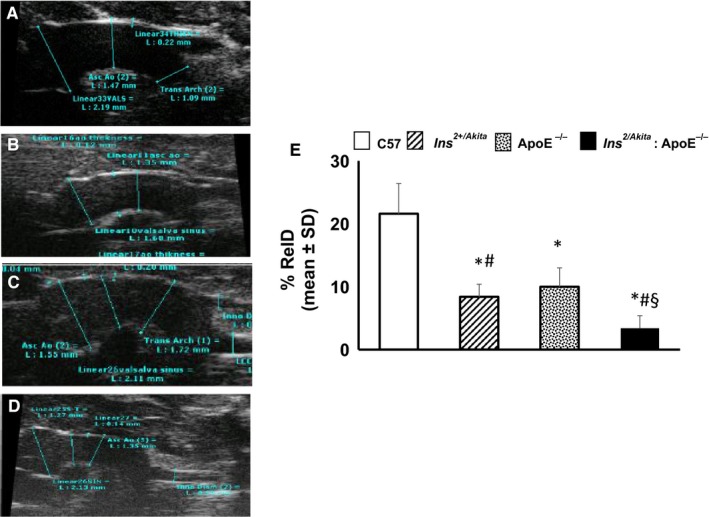
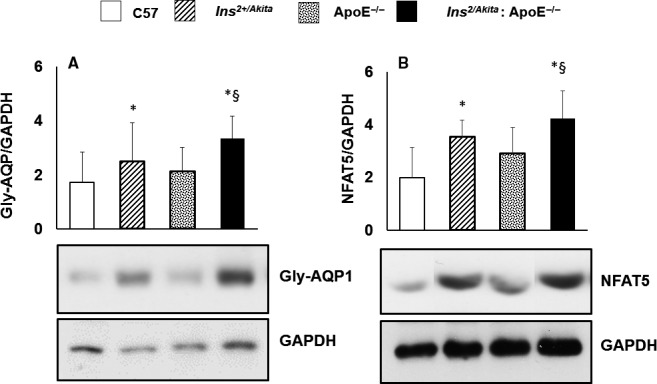
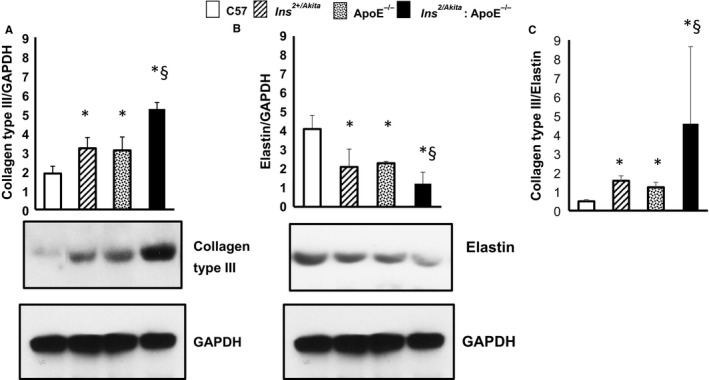
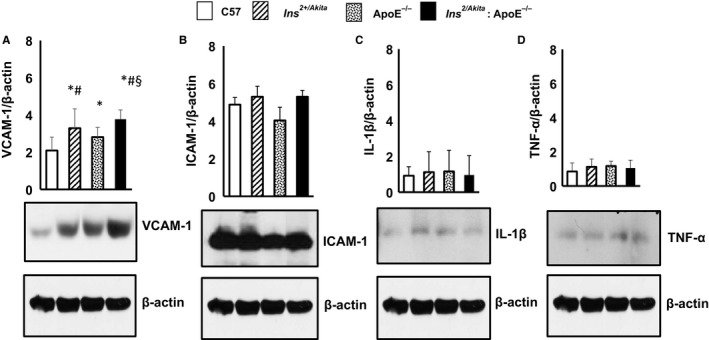
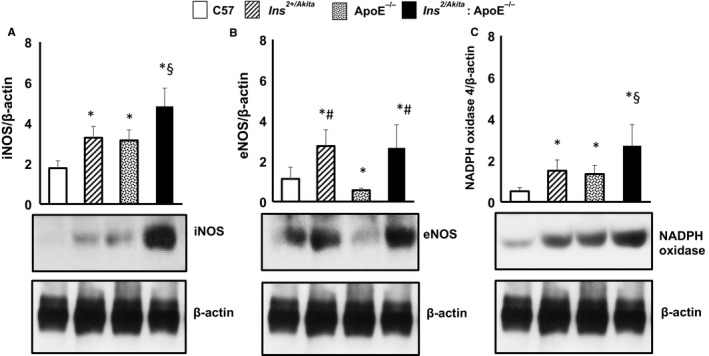
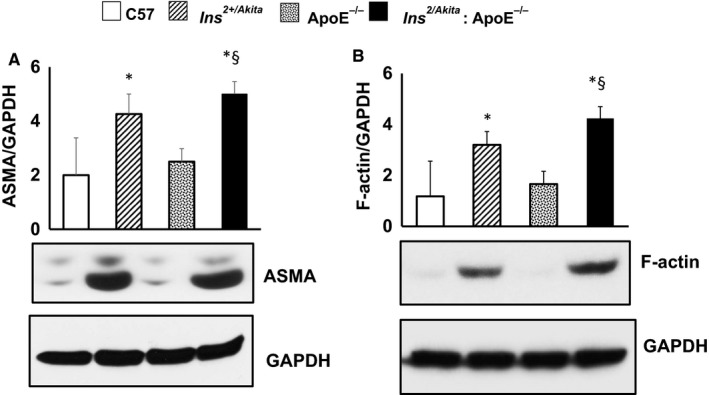
Increased stiffness characterizes the early change in the arterial wall with subclinical atherosclerosis. Proteins inducing arterial stiffness in diabetes and hypercholesterolaemia are largely unknown. This study aimed at determining the pattern of protein expression in stiffening aorta of diabetic and hypercholesterolaemic mice. Male Ins mice were crossbred with ApoE (Ins : ApoE ) mice. Relative aortic distension (relD) values were determined by ultrasound analysis and arterial stiffness modulators by immunoblotting. Compared with age- and sex-matched C57/BL6 control mice, the aortas of Ins , ApoE and Ins :ApoE mice showed increased aortic stiffness. The aortas of Ins , ApoE and Ins :ApoE mice showed greater expression of VCAM-1, collagen type III, NADPH oxidase and iNOS, as well as reduced elastin, with increased collagen type III-to-elastin ratio. The aorta of Ins and Ins :ApoE mice showed higher expression of eNOS and cytoskeletal remodelling proteins, such as F-actin and α-smooth muscle actin, in addition to increased glycosylated aquaporin (AQP)-1 and transcription factor NFAT5, which control the expression of genes activated by high glucose-induced hyperosmotic stress. Diabetic and hypercholesterolaemic mice have increased aortic stiffness. The association of AQP1 and NFAT5 co-expression with aortic stiffness in diabetes and hypercholesterolaemia may represent a novel molecular pathway or therapeutic target.
动脉壁的早期亚临床动脉粥样硬化表现为僵硬度增加。在糖尿病和高胆固醇血症中诱导动脉僵硬度的蛋白质在很大程度上是未知的。本研究旨在确定糖尿病和高胆固醇血症小鼠僵硬度主动脉中蛋白质表达的模式。雄性 Ins 小鼠与 ApoE (Ins:ApoE)小鼠杂交。通过超声分析确定相对主动脉扩张(relD)值,并通过免疫印迹测定动脉僵硬度调节剂。与年龄和性别匹配的 C57/BL6 对照小鼠相比,Ins、ApoE 和 Ins:ApoE 小鼠的主动脉显示出增加的主动脉僵硬度。Ins、ApoE 和 Ins:ApoE 小鼠的主动脉表现出 VCAM-1、III 型胶原、NADPH 氧化酶和 iNOS 的表达增加,以及弹性蛋白减少,III 型胶原与弹性蛋白的比例增加。Ins 和 Ins:ApoE 小鼠的主动脉表现出更高的 eNOS 和细胞骨架重塑蛋白,如 F-肌动蛋白和α-平滑肌肌动蛋白的表达,以及增加的糖基化水通道蛋白(AQP)-1 和转录因子 NFAT5,其控制高葡萄糖诱导的高渗应激激活的基因的表达。糖尿病和高胆固醇血症小鼠的主动脉僵硬度增加。AQP1 和 NFAT5 共表达与糖尿病和高胆固醇血症中主动脉僵硬度的关联可能代表一种新的分子途径或治疗靶点。