Meroni Gabriele, Soares Filipe Joel F, Martino Piera A
Department of Veterinary Medicine, Università degli Studi di Milano, 26900 Lodi, Italy.
Department of Biomedical Sciences for Health, Università degli Studi di Milano, 20133 Milano, Italy.
Vet Sci. 2020 Jan 23;7(1):12. doi: 10.3390/vetsci7010012.
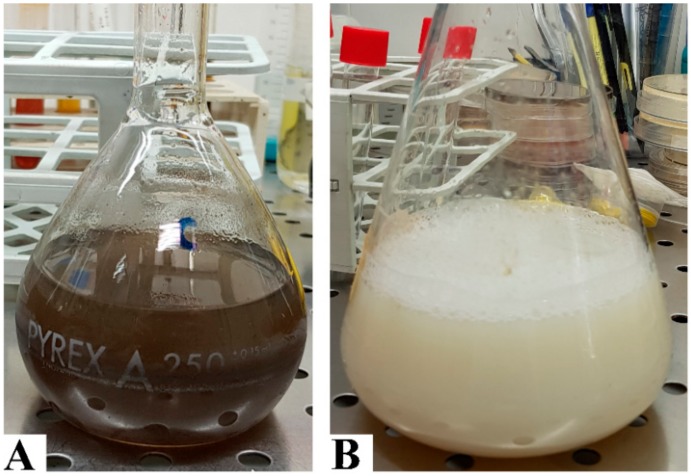
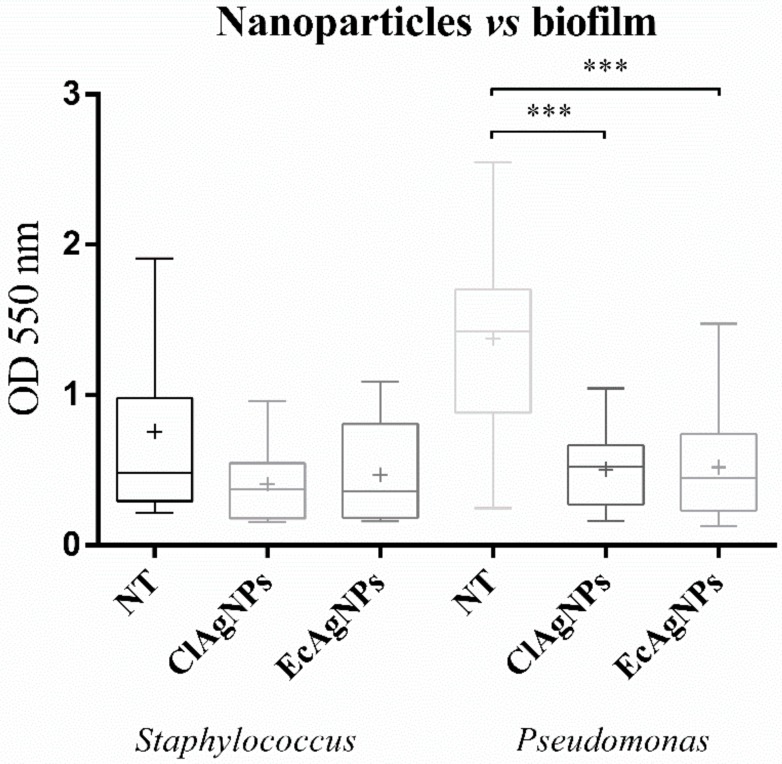
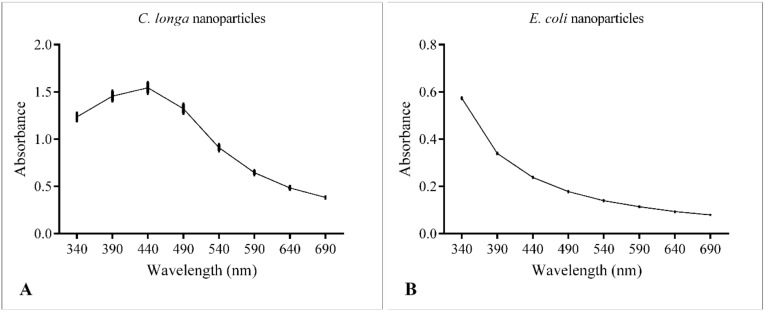
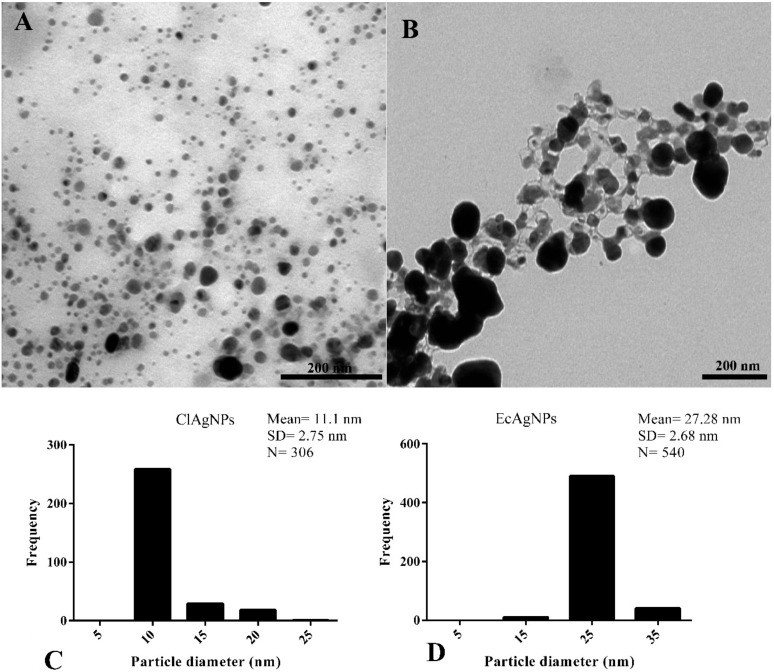
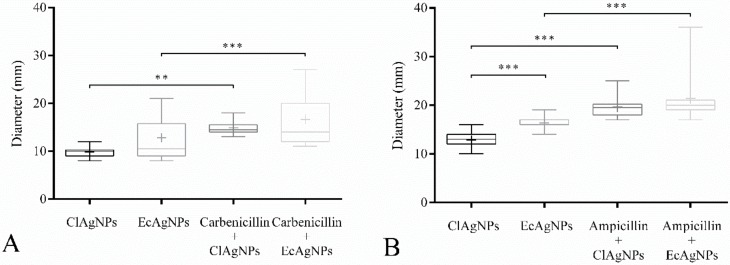
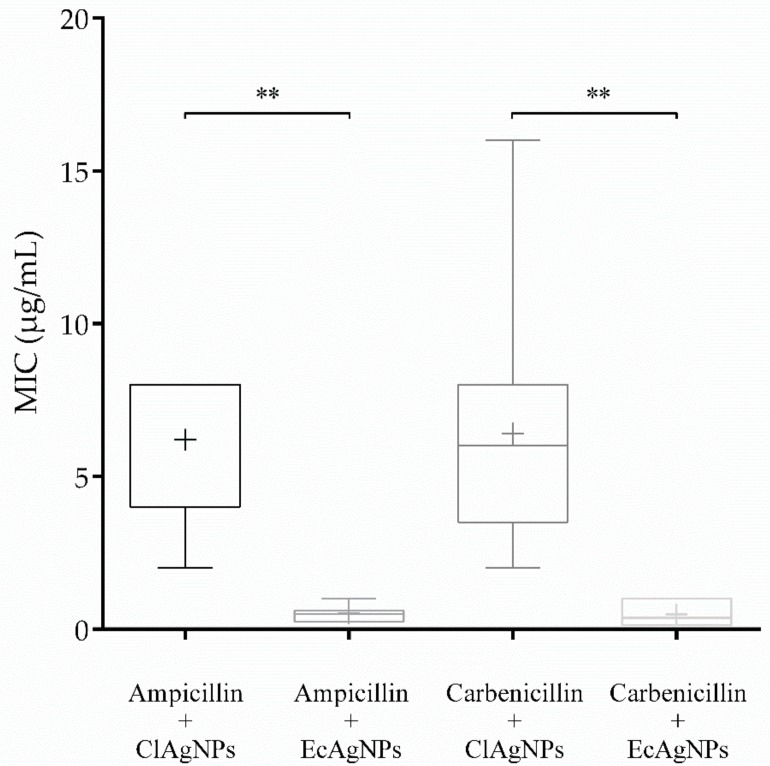
Silver nanoparticles (AgNPs) are promising alternatives to antibiotics. The aims of this study were to produce AgNPs using two biological methods and determine their antibacterial activity against and . AgNPs were biosynthesized from an infusion of (turmeric) and the culture supernatant of . Characterization was achieved by ultraviolet-visible spectroscopy and by Transmission Electron Microscopy (TEM). The antibacterial properties of NPs from (ClAgNPs) and (EcAgNPs), alone and in combination with carbenicillin and ampicillin, were investigated through the Kirby-Bauer disk diffusion assay and the minimum inhibitory concentration (MIC). Dimensions of NPs ranged from 11.107 ± 2.705 nm (ClAgNPs) to 27.282 ± 2.68 nm (EcAgNPs). Kirby-Bauer and MIC assays showed great antibacterial abilities for both NPs alone and in combination with antibiotics. EcAgNPs alone showed the most powerful antibacterial activities, resulting in MIC values ranging from 0.438 ± 0.18 µM () to 3.75 ± 3.65 µM () compared to those of ClAgNPs: 71.8 ± 0 µM () and 143.7 ± 0 µM (). The antibiofilm abilities were strain-dependent, but no statistical differences were found between the two NPs. These results suggest the antibacterial potential of AgNPs for the treatment of infectious diseases.
银纳米颗粒(AgNPs)是抗生素的有前景的替代品。本研究的目的是使用两种生物学方法制备AgNPs,并确定它们对[具体细菌名称1]和[具体细菌名称2]的抗菌活性。AgNPs由[姜黄]浸液和[具体菌种名称]的培养上清液生物合成。通过紫外可见光谱和透射电子显微镜(TEM)进行表征。通过Kirby-Bauer纸片扩散法和最低抑菌浓度(MIC)研究了来自[具体菌种名称1](ClAgNPs)和[具体菌种名称2](EcAgNPs)的纳米颗粒单独以及与羧苄青霉素和氨苄青霉素联合使用时的抗菌性能。纳米颗粒的尺寸范围从11.107±2.705纳米(ClAgNPs)到27.282±2.68纳米(EcAgNPs)。Kirby-Bauer和MIC试验表明,纳米颗粒单独以及与抗生素联合使用时均具有很强的抗菌能力。单独的EcAgNPs显示出最强大的抗菌活性,其MIC值范围为0.438±0.18微摩尔([具体细菌名称1])至3.75±3.65微摩尔([具体细菌名称2]),而ClAgNPs的MIC值为:71.8±0微摩尔([具体细菌名称1])和143.7±0微摩尔([具体细菌名称2])。抗生物膜能力取决于菌株,但两种纳米颗粒之间未发现统计学差异。这些结果表明AgNPs在治疗传染病方面具有抗菌潜力。