• 文献检索
  • 文档翻译
  • 深度研究
  • 学术资讯
  • Suppr Zotero 插件Zotero 插件
  • 邀请有礼
  • 套餐&价格
  • 历史记录
应用&插件
Suppr Zotero 插件Zotero 插件浏览器插件Mac 客户端Windows 客户端微信小程序
定价
高级版会员购买积分包购买API积分包
服务
文献检索文档翻译深度研究API 文档MCP 服务
关于我们
关于 Suppr公司介绍联系我们用户协议隐私条款
关注我们

Suppr 超能文献

核心技术专利:CN118964589B侵权必究
粤ICP备2023148730 号-1Suppr @ 2026

文献检索

告别复杂PubMed语法,用中文像聊天一样搜索,搜遍4000万医学文献。AI智能推荐,让科研检索更轻松。

立即免费搜索

文件翻译

保留排版,准确专业,支持PDF/Word/PPT等文件格式,支持 12+语言互译。

免费翻译文档

深度研究

AI帮你快速写综述,25分钟生成高质量综述,智能提取关键信息,辅助科研写作。

立即免费体验

深度学习模型预测胰腺胰岛中的调控变异,并细化 2 型糖尿病关联信号。

Deep learning models predict regulatory variants in pancreatic islets and refine type 2 diabetes association signals.

机构信息

Wellcome Centre for Human Genetics, Oxford, United Kingdom.

Oxford Centre for Diabetes, Endocrinology and Metabolism, University of Oxford, Oxford, United Kingdom.

出版信息

Elife. 2020 Jan 27;9:e51503. doi: 10.7554/eLife.51503.

DOI:10.7554/eLife.51503
PMID:31985400
原文链接:https://pmc.ncbi.nlm.nih.gov/articles/PMC7007221/
Abstract

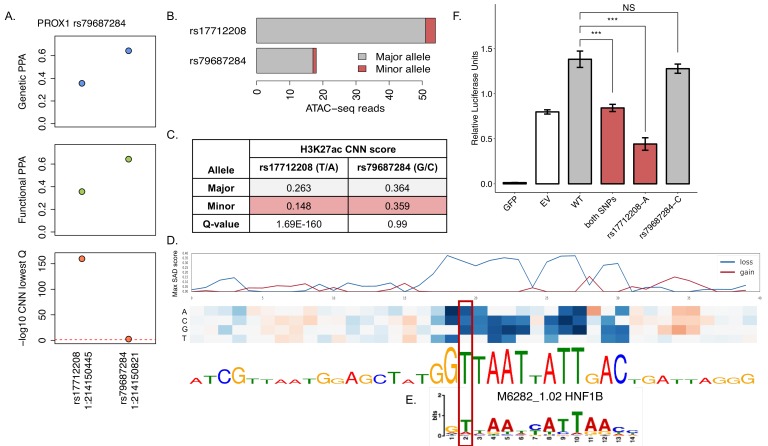
Genome-wide association analyses have uncovered multiple genomic regions associated with T2D, but identification of the causal variants at these remains a challenge. There is growing interest in the potential of deep learning models - which predict epigenome features from DNA sequence - to support inference concerning the regulatory effects of disease-associated variants. Here, we evaluate the advantages of training convolutional neural network (CNN) models on a broad set of epigenomic features collected in a single disease-relevant tissue - pancreatic islets in the case of type 2 diabetes (T2D) - as opposed to models trained on multiple human tissues. We report convergence of CNN-based metrics of regulatory function with conventional approaches to variant prioritization - genetic fine-mapping and regulatory annotation enrichment. We demonstrate that CNN-based analyses can refine association signals at T2D-associated loci and provide experimental validation for one such signal. We anticipate that these approaches will become routine in downstream analyses of GWAS.

摘要

全基因组关联分析已经揭示了多个与 T2D 相关的基因组区域,但鉴定这些区域中的因果变异仍然是一个挑战。深度学习模型在预测 DNA 序列中的表观基因组特征方面具有很大的潜力,这些模型可以支持推断与疾病相关变异的调控效应,这引起了越来越多的关注。在这里,我们评估了在单一与疾病相关的组织(即 2 型糖尿病(T2D)的胰岛)中收集的广泛的表观基因组特征上训练卷积神经网络(CNN)模型的优势,而不是在多个人体组织上训练模型。我们报告了基于 CNN 的调控功能指标与传统的变异优先级排序方法(遗传精细映射和调控注释富集)的收敛性。我们证明,基于 CNN 的分析可以细化 T2D 相关基因座的关联信号,并为其中一个信号提供实验验证。我们预计这些方法将成为 GWAS 下游分析的常规方法。
https://cdn.ncbi.nlm.nih.gov/pmc/blobs/82ab/7007221/b533efd53e67/elife-51503-resp-fig1.jpg
https://cdn.ncbi.nlm.nih.gov/pmc/blobs/82ab/7007221/779f18ad5596/elife-51503-fig1.jpg
https://cdn.ncbi.nlm.nih.gov/pmc/blobs/82ab/7007221/add6bcd89a11/elife-51503-fig1-figsupp1.jpg
https://cdn.ncbi.nlm.nih.gov/pmc/blobs/82ab/7007221/acc3c6395707/elife-51503-fig1-figsupp2.jpg
https://cdn.ncbi.nlm.nih.gov/pmc/blobs/82ab/7007221/567897876bee/elife-51503-fig1-figsupp3.jpg
https://cdn.ncbi.nlm.nih.gov/pmc/blobs/82ab/7007221/183671483a27/elife-51503-fig2.jpg
https://cdn.ncbi.nlm.nih.gov/pmc/blobs/82ab/7007221/180f5e789b1f/elife-51503-fig3.jpg
https://cdn.ncbi.nlm.nih.gov/pmc/blobs/82ab/7007221/eee9bfd2dd37/elife-51503-fig3-figsupp1.jpg
https://cdn.ncbi.nlm.nih.gov/pmc/blobs/82ab/7007221/8aabc917aa6e/elife-51503-fig4.jpg
https://cdn.ncbi.nlm.nih.gov/pmc/blobs/82ab/7007221/9fa41b368687/elife-51503-fig5.jpg
https://cdn.ncbi.nlm.nih.gov/pmc/blobs/82ab/7007221/b533efd53e67/elife-51503-resp-fig1.jpg
https://cdn.ncbi.nlm.nih.gov/pmc/blobs/82ab/7007221/779f18ad5596/elife-51503-fig1.jpg
https://cdn.ncbi.nlm.nih.gov/pmc/blobs/82ab/7007221/add6bcd89a11/elife-51503-fig1-figsupp1.jpg
https://cdn.ncbi.nlm.nih.gov/pmc/blobs/82ab/7007221/acc3c6395707/elife-51503-fig1-figsupp2.jpg
https://cdn.ncbi.nlm.nih.gov/pmc/blobs/82ab/7007221/567897876bee/elife-51503-fig1-figsupp3.jpg
https://cdn.ncbi.nlm.nih.gov/pmc/blobs/82ab/7007221/183671483a27/elife-51503-fig2.jpg
https://cdn.ncbi.nlm.nih.gov/pmc/blobs/82ab/7007221/180f5e789b1f/elife-51503-fig3.jpg
https://cdn.ncbi.nlm.nih.gov/pmc/blobs/82ab/7007221/eee9bfd2dd37/elife-51503-fig3-figsupp1.jpg
https://cdn.ncbi.nlm.nih.gov/pmc/blobs/82ab/7007221/8aabc917aa6e/elife-51503-fig4.jpg
https://cdn.ncbi.nlm.nih.gov/pmc/blobs/82ab/7007221/9fa41b368687/elife-51503-fig5.jpg
https://cdn.ncbi.nlm.nih.gov/pmc/blobs/82ab/7007221/b533efd53e67/elife-51503-resp-fig1.jpg

相似文献

1
Deep learning models predict regulatory variants in pancreatic islets and refine type 2 diabetes association signals.深度学习模型预测胰腺胰岛中的调控变异,并细化 2 型糖尿病关联信号。
Elife. 2020 Jan 27;9:e51503. doi: 10.7554/eLife.51503.
2
A Multi-omic Integrative Scheme Characterizes Tissues of Action at Loci Associated with Type 2 Diabetes.多组学综合分析方案描绘了与 2 型糖尿病相关位点的作用组织。
Am J Hum Genet. 2020 Dec 3;107(6):1011-1028. doi: 10.1016/j.ajhg.2020.10.009. Epub 2020 Nov 12.
3
Single-cell ATAC-Seq in human pancreatic islets and deep learning upscaling of rare cells reveals cell-specific type 2 diabetes regulatory signatures.单细胞 ATAC-Seq 在人胰腺胰岛中的应用和深度学习扩展稀有细胞揭示了细胞特异性 2 型糖尿病调控特征。
Mol Metab. 2020 Feb;32:109-121. doi: 10.1016/j.molmet.2019.12.006. Epub 2019 Dec 20.
4
Predicting regulatory variants using a dense epigenomic mapped CNN model elucidated the molecular basis of trait-tissue associations.使用密集表观基因组映射卷积神经网络模型预测调控变异,阐明了性状-组织关联的分子基础。
Nucleic Acids Res. 2021 Jan 11;49(1):53-66. doi: 10.1093/nar/gkaa1137.
5
From Genetic Association to Molecular Mechanisms for Islet-cell Dysfunction in Type 2 Diabetes.从遗传关联到 2 型糖尿病胰岛细胞功能障碍的分子机制。
J Mol Biol. 2020 Mar 6;432(5):1551-1578. doi: 10.1016/j.jmb.2019.12.045. Epub 2020 Jan 13.
6
Modeling islet enhancers using deep learning identifies candidate causal variants at loci associated with T2D and glycemic traits.利用深度学习对胰岛增强子进行建模,确定与 T2D 和血糖特征相关的位点的候选因果变异。
Proc Natl Acad Sci U S A. 2023 Aug 29;120(35):e2206612120. doi: 10.1073/pnas.2206612120. Epub 2023 Aug 21.
7
Integration of human pancreatic islet genomic data refines regulatory mechanisms at Type 2 Diabetes susceptibility loci.整合人类胰腺胰岛基因组数据可改善 2 型糖尿病易感基因座的调控机制。
Elife. 2018 Feb 7;7:e31977. doi: 10.7554/eLife.31977.
8
Genetic regulatory signatures underlying islet gene expression and type 2 diabetes.胰岛基因表达和2型糖尿病背后的遗传调控特征。
Proc Natl Acad Sci U S A. 2017 Feb 28;114(9):2301-2306. doi: 10.1073/pnas.1621192114. Epub 2017 Feb 13.
9
Genetic variant effects on gene expression in human pancreatic islets and their implications for T2D.遗传变异对人胰腺胰岛中基因表达的影响及其对 T2D 的意义。
Nat Commun. 2020 Sep 30;11(1):4912. doi: 10.1038/s41467-020-18581-8.
10
Type 2 Diabetes-Associated Genetic Variants Regulate Chromatin Accessibility in Human Islets.2 型糖尿病相关遗传变异调控人胰岛中的染色质可及性。
Diabetes. 2018 Nov;67(11):2466-2477. doi: 10.2337/db18-0393. Epub 2018 Sep 4.

引用本文的文献

1
Neur-Ally: a deep learning model for regulatory variant prediction based on genomic and epigenomic features in brain and its validation in certain neurological disorders.神经关联模型(Neur-Ally):一种基于大脑基因组和表观基因组特征的调控变异预测深度学习模型及其在某些神经系统疾病中的验证
NAR Genom Bioinform. 2025 Jun 13;7(2):lqaf080. doi: 10.1093/nargab/lqaf080. eCollection 2025 Jun.
2
An Explainable Deep Learning Classifier of Bovine Mastitis Based on Whole-Genome Sequence Data-Circumventing the p >> n Problem.基于全基因组序列数据的可解释深度学习奶牛乳腺炎分类器——绕过 p >> n 问题。
Int J Mol Sci. 2024 Apr 26;25(9):4715. doi: 10.3390/ijms25094715.
3

本文引用的文献

1
Human pancreatic islet three-dimensional chromatin architecture provides insights into the genetics of type 2 diabetes.人类胰腺胰岛的三维染色质结构为 2 型糖尿病的遗传学研究提供了新视角。
Nat Genet. 2019 Jul;51(7):1137-1148. doi: 10.1038/s41588-019-0457-0. Epub 2019 Jun 28.
2
Biological relevance of computationally predicted pathogenicity of noncoding variants.计算预测的非编码变异的致病性的生物学相关性。
Nat Commun. 2019 Jan 18;10(1):330. doi: 10.1038/s41467-018-08270-y.
3
High-resolution genome-wide functional dissection of transcriptional regulatory regions and nucleotides in human.
Predicting cell population-specific gene expression from genomic sequence.
从基因组序列预测细胞群体特异性基因表达。
Front Bioinform. 2024 Mar 4;4:1347276. doi: 10.3389/fbinf.2024.1347276. eCollection 2024.
4
Modeling islet enhancers using deep learning identifies candidate causal variants at loci associated with T2D and glycemic traits.利用深度学习对胰岛增强子进行建模,确定与 T2D 和血糖特征相关的位点的候选因果变异。
Proc Natl Acad Sci U S A. 2023 Aug 29;120(35):e2206612120. doi: 10.1073/pnas.2206612120. Epub 2023 Aug 21.
5
Predicting molecular mechanisms of hereditary diseases by using their tissue-selective manifestation.利用组织选择性表现预测遗传性疾病的分子机制。
Mol Syst Biol. 2023 Aug 8;19(8):e11407. doi: 10.15252/msb.202211407. Epub 2023 May 26.
6
Using Attribution Sequence Alignment to Interpret Deep Learning Models for miRNA Binding Site Prediction.使用归因序列比对来解释用于miRNA结合位点预测的深度学习模型。
Biology (Basel). 2023 Feb 26;12(3):369. doi: 10.3390/biology12030369.
7
Building integrative functional maps of gene regulation.构建基因调控的综合功能图谱。
Hum Mol Genet. 2022 Oct 20;31(R1):R114-R122. doi: 10.1093/hmg/ddac195.
8
Genomics enters the deep learning era.基因组学进入深度学习时代。
PeerJ. 2022 Jun 24;10:e13613. doi: 10.7717/peerj.13613. eCollection 2022.
9
Annotating functional effects of non-coding variants in neuropsychiatric cell types by deep transfer learning.通过深度迁移学习为神经精神细胞类型中的非编码变体的功能效应进行注释。
PLoS Comput Biol. 2022 May 16;18(5):e1010011. doi: 10.1371/journal.pcbi.1010011. eCollection 2022 May.
10
Multi-ancestry genetic study of type 2 diabetes highlights the power of diverse populations for discovery and translation.2型糖尿病的多血统基因研究凸显了不同人群在发现和转化研究方面的力量。
Nat Genet. 2022 May;54(5):560-572. doi: 10.1038/s41588-022-01058-3. Epub 2022 May 12.
人类转录调控区域和核苷酸的高分辨率全基因组功能剖析。
Nat Commun. 2018 Dec 19;9(1):5380. doi: 10.1038/s41467-018-07746-1.
4
Fine-mapping type 2 diabetes loci to single-variant resolution using high-density imputation and islet-specific epigenome maps.利用高密度基因分型和胰岛特异性表观基因组图谱对 2 型糖尿病位点进行精细映射到单变体分辨率。
Nat Genet. 2018 Nov;50(11):1505-1513. doi: 10.1038/s41588-018-0241-6. Epub 2018 Oct 8.
5
Deep learning sequence-based ab initio prediction of variant effects on expression and disease risk.基于深度学习的序列从头预测变异对表达和疾病风险的影响。
Nat Genet. 2018 Aug;50(8):1171-1179. doi: 10.1038/s41588-018-0160-6. Epub 2018 Jul 16.
6
Patterns of differential gene expression in a cellular model of human islet development, and relationship to type 2 diabetes predisposition.人类胰岛发育细胞模型中的差异基因表达模式,及其与 2 型糖尿病易感性的关系。
Diabetologia. 2018 Jul;61(7):1614-1622. doi: 10.1007/s00125-018-4612-4. Epub 2018 Apr 19.
7
Sequential regulatory activity prediction across chromosomes with convolutional neural networks.基于卷积神经网络的跨染色体顺序调控活性预测
Genome Res. 2018 May;28(5):739-750. doi: 10.1101/gr.227819.117. Epub 2018 Mar 27.
8
Integration of human pancreatic islet genomic data refines regulatory mechanisms at Type 2 Diabetes susceptibility loci.整合人类胰腺胰岛基因组数据可改善 2 型糖尿病易感基因座的调控机制。
Elife. 2018 Feb 7;7:e31977. doi: 10.7554/eLife.31977.
9
Genetic effects on gene expression across human tissues.基因对人体各组织基因表达的影响。
Nature. 2017 Oct 11;550(7675):204-213. doi: 10.1038/nature24277.
10
FGWAS: Functional genome wide association analysis.功能基因组全基因组关联分析(FGWAS)。
Neuroimage. 2017 Oct 1;159:107-121. doi: 10.1016/j.neuroimage.2017.07.030. Epub 2017 Jul 20.