Sanmartín Neus, Pastor Victoria, Pastor-Fernández Julia, Flors Victor, Pozo Maria Jose, Sánchez-Bel Paloma
Metabolic Integration and Cell Signaling Laboratory, Plant Physiology Section, Unidad Asociada al Consejo Superior de Investigaciones Científicas (EEZ-CSIC)-Department of Ciencias Agrarias y del Medio Natural, Universitat Jaume I, Castellón, Spain.
Department of Soil Microbiology and Symbiotic Systems, Estación Experimental del Zaidín (CSIC), Granada, Spain.
J Exp Bot. 2020 May 9;71(9):2769-2781. doi: 10.1093/jxb/eraa030.
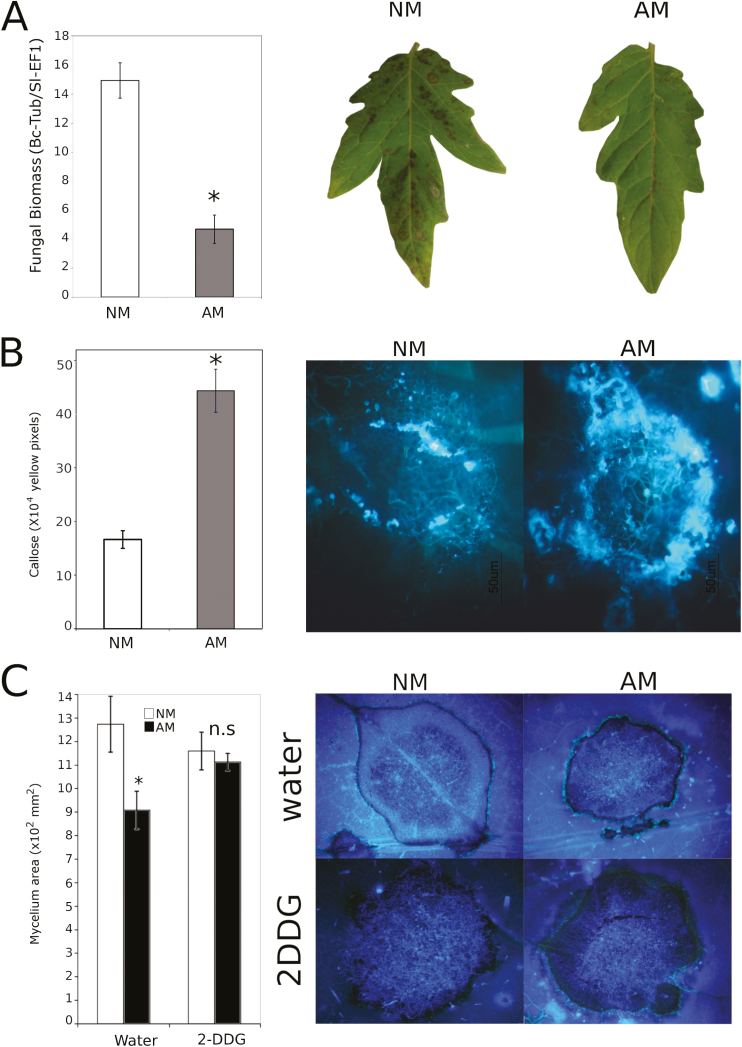
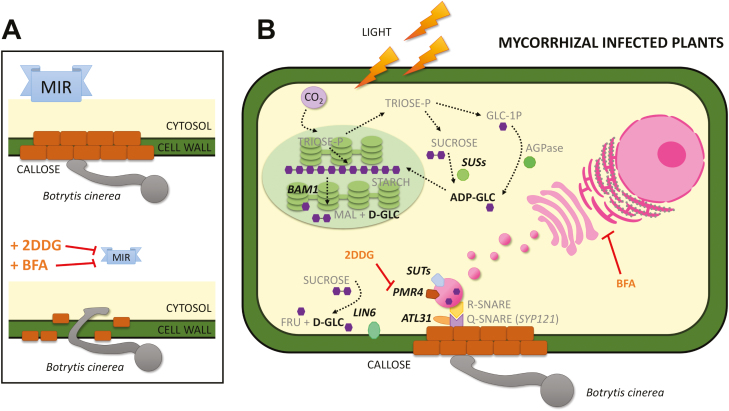
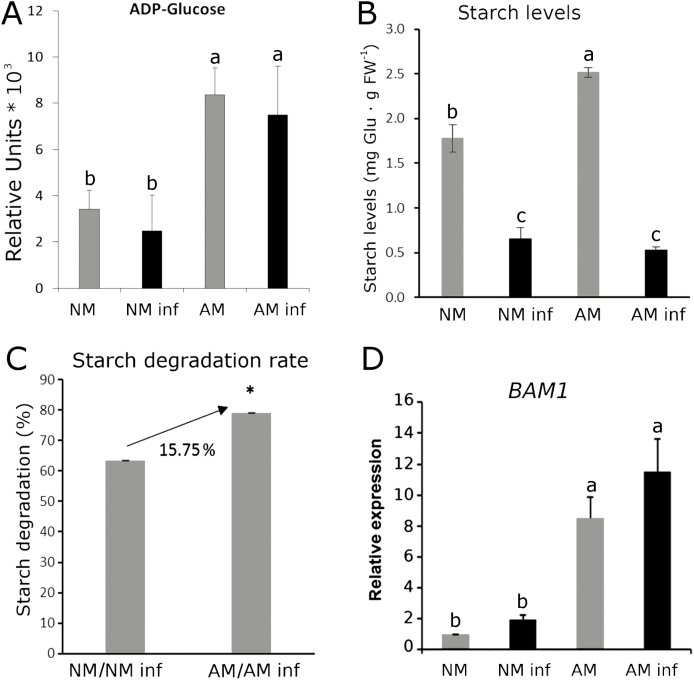
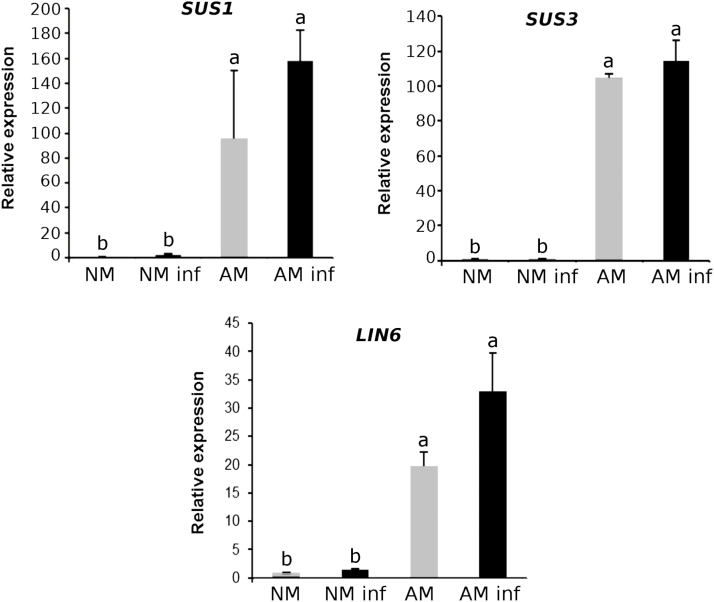
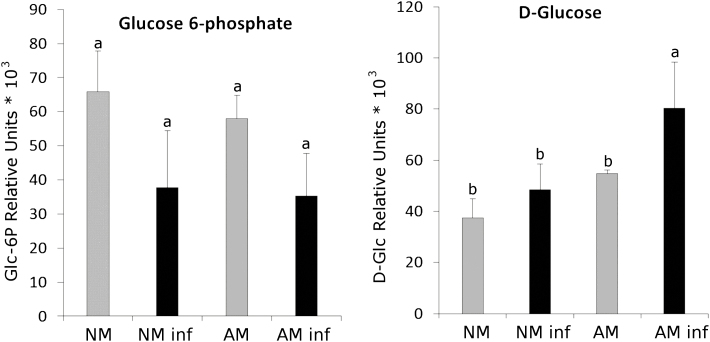
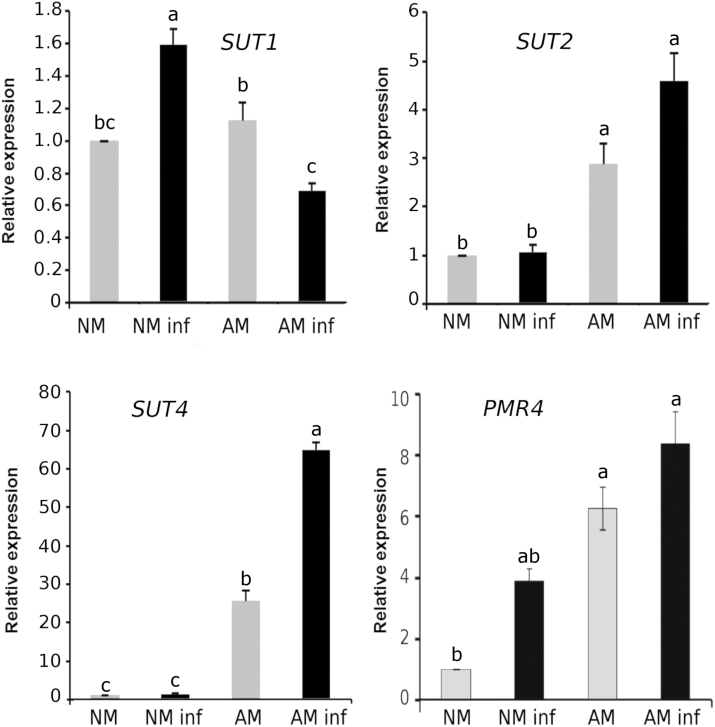
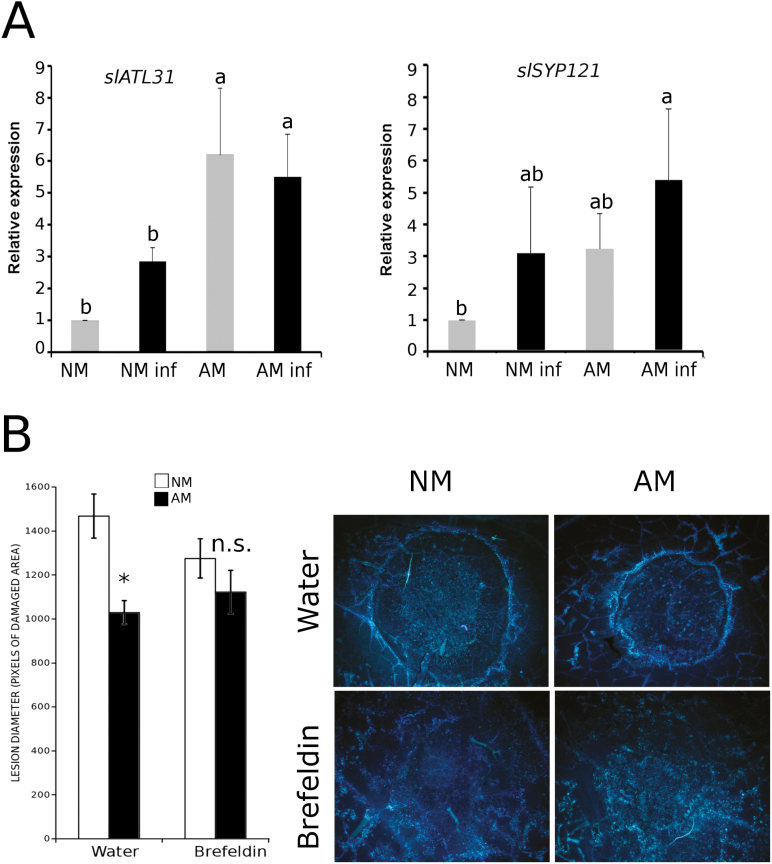
Mycorrhizal plants display enhanced resistance to several pathogens. However, the molecular mechanisms regulating mycorrhiza-induced resistance (MIR) are still elusive. We aim to study the mechanisms underlying MIR against Botrytis cinerea and the role of callose accumulation during this process. Mycorrhizal tomato plants inoculated with Rhizoglomus irregularis displayed callose priming upon B. cinerea infection. The callose inhibitor 2-deoxy-d-glucose abolished MIR, confirming the relevance of callose in the bioprotection phenomena. While studying the mechanisms underlying mycorrhiza-induced callose priming, we found that mycorrhizal plants display an enhanced starch degradation rate that is correlated with increased levels of β-amylase1 transcripts following pathogen infection. Starch mobilization in mycorrhizal plants seems coordinated with the increased transcription of sugar transporter and invertase genes. Moreover, the expression levels of genes encoding the vesicular trafficking proteins ATL31 and SYP121 and callose synthase PMR4 were higher in the mycorrhizal plants and further boosted by subsequent pathogen infection. All these proteins play a key role in the priming of callose accumulation in Arabidopsis, suggesting that callose priming is an induced resistance mechanism conserved in different plant species. This evidence highlights the importance of sugar mobilization and vesicular trafficking in the priming of callose as a defence mechanism in mycorrhiza-induced resistance.
菌根植物对多种病原体表现出更强的抗性。然而,调节菌根诱导抗性(MIR)的分子机制仍不清楚。我们旨在研究MIR抵抗灰葡萄孢的潜在机制以及在此过程中胼胝质积累的作用。接种不规则根际球囊霉的菌根番茄植株在感染灰葡萄孢后出现胼胝质预激发。胼胝质抑制剂2-脱氧-D-葡萄糖消除了MIR,证实了胼胝质在生物保护现象中的相关性。在研究菌根诱导的胼胝质预激发的潜在机制时,我们发现菌根植物淀粉降解速率增强,这与病原体感染后β-淀粉酶1转录本水平的增加相关。菌根植物中的淀粉动员似乎与糖转运蛋白和转化酶基因转录的增加相协调。此外,编码囊泡运输蛋白ATL31和SYP121以及胼胝质合酶PMR4的基因在菌根植物中的表达水平更高,并在随后的病原体感染后进一步提高。所有这些蛋白在拟南芥胼胝质积累的预激发中起关键作用,表明胼胝质预激发是不同植物物种中保守的诱导抗性机制。这一证据突出了糖动员和囊泡运输在胼胝质预激发作为菌根诱导抗性防御机制中的重要性。