Department of Medical Biochemistry and Microbiology, Uppsala University, Uppsala, Sweden.
PLoS Biol. 2020 Jan 27;18(1):e3000612. doi: 10.1371/journal.pbio.3000612. eCollection 2020 Jan.
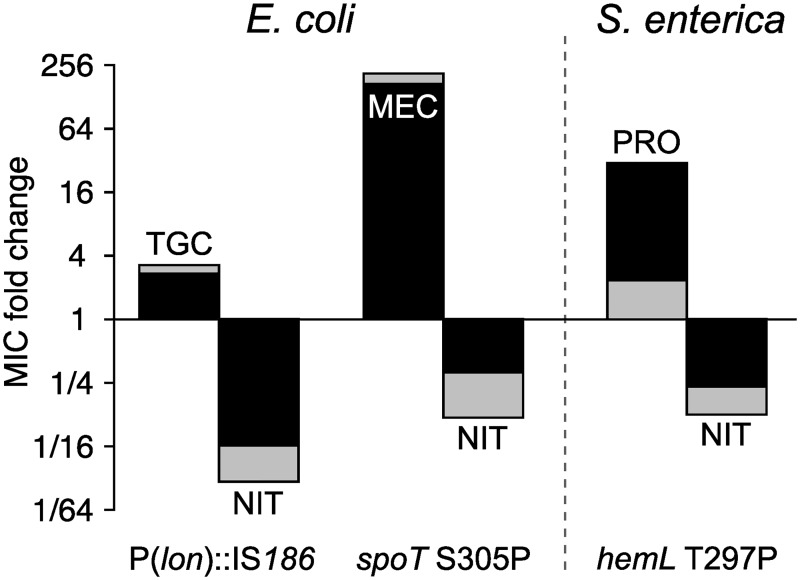
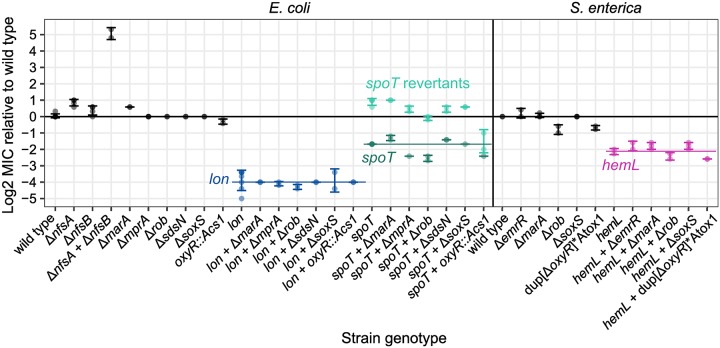
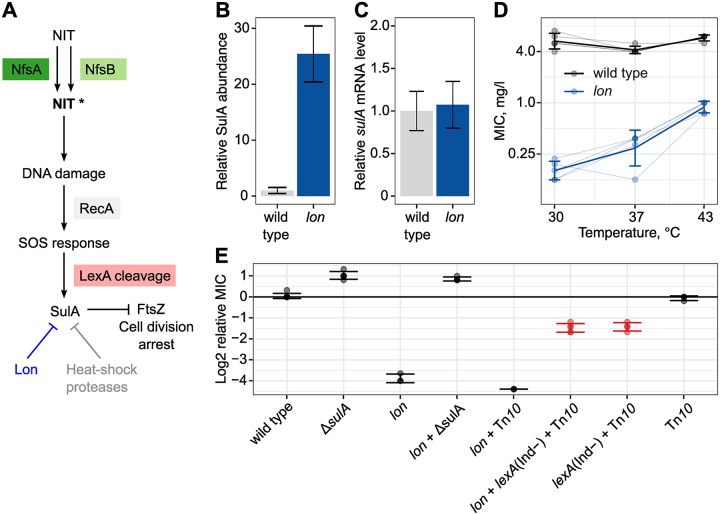
Antibiotic resistance increasingly limits the success of antibiotic treatments, and physicians require new ways to achieve efficient treatment despite resistance. Resistance mechanisms against a specific antibiotic class frequently confer increased susceptibility to other antibiotic classes, a phenomenon designated collateral sensitivity (CS). An informed switch of antibiotic may thus enable the efficient treatment of resistant strains. CS occurs in many pathogens, but the mechanisms that generate hypersusceptibility are largely unknown. We identified several molecular mechanisms of CS against the antibiotic nitrofurantoin (NIT). Mutants that are resistant against tigecycline (tetracycline), mecillinam (β-lactam), and protamine (antimicrobial peptide) all show CS against NIT. Their hypersusceptibility is explained by the overexpression of nitroreductase enzymes combined with increased drug uptake rates, or increased drug toxicity. Increased toxicity occurs through interference of the native drug-response system for NIT, the SOS response, with growth. A mechanistic understanding of CS will help to develop drug switches that combat resistance.
抗生素耐药性日益限制了抗生素治疗的成功,医生需要寻找新的方法来实现有效的治疗,尽管存在耐药性。针对特定抗生素类别的耐药机制经常导致对其他抗生素类别的敏感性增加,这种现象称为交叉敏感性(CS)。因此,明智地更换抗生素可能使耐药菌株的治疗变得有效。CS 发生在许多病原体中,但产生超敏性的机制在很大程度上尚不清楚。我们确定了几种针对抗生素呋喃妥因(NIT)的 CS 分子机制。对替加环素(四环素)、美西林(β-内酰胺)和鱼精蛋白(抗菌肽)耐药的突变体对 NIT 均表现出 CS。它们的超敏性是通过过度表达硝基还原酶酶与增加的药物摄取率或增加的药物毒性来解释的。毒性增加是通过干扰 NIT 的天然药物反应系统,即 SOS 反应,与生长的相互作用来实现的。对 CS 的机制理解将有助于开发对抗耐药性的药物转换。