II Department of Radiology - Faculty of Health Sciences, Medical University of Gdansk, Gdansk, Poland.
Department of Biology and Pharmaceutical Botany, Faculty of Pharmacy, Medical University of Gdansk, Gdansk, Poland.
PLoS One. 2020 Jan 27;15(1):e0226889. doi: 10.1371/journal.pone.0226889. eCollection 2020.
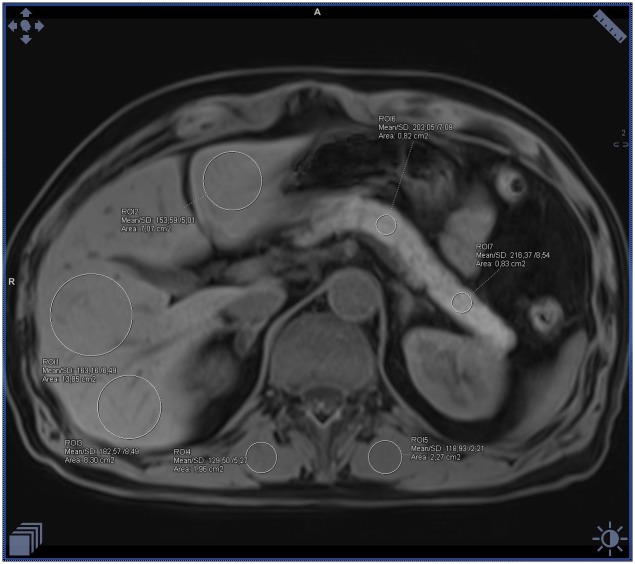
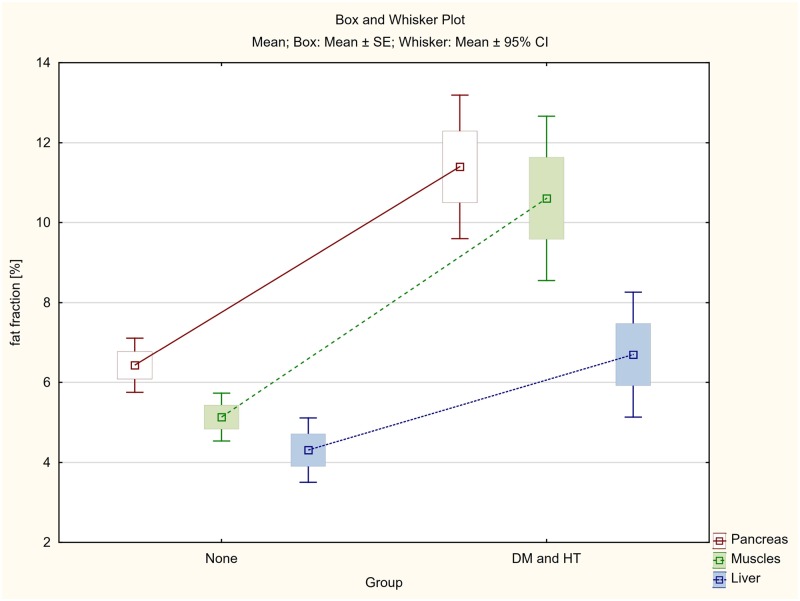
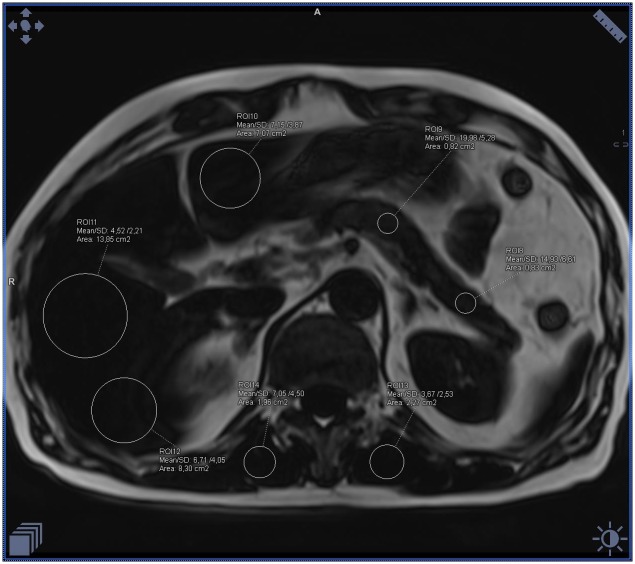
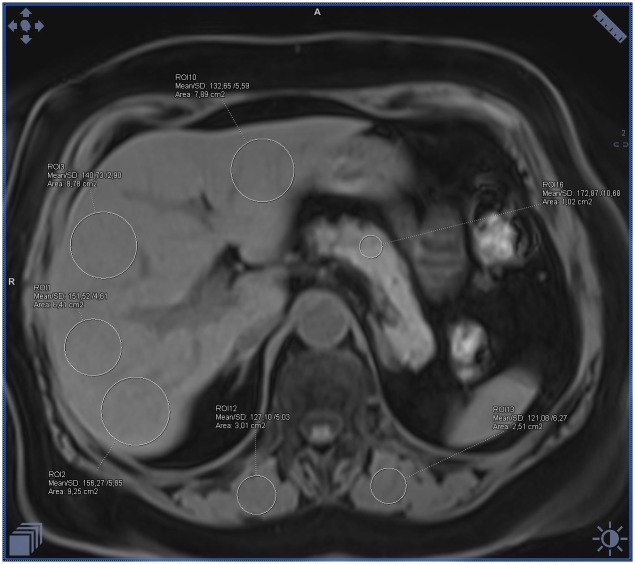
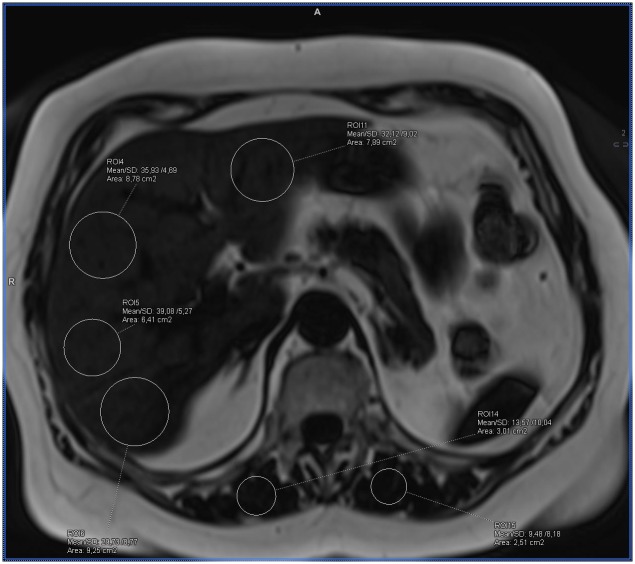
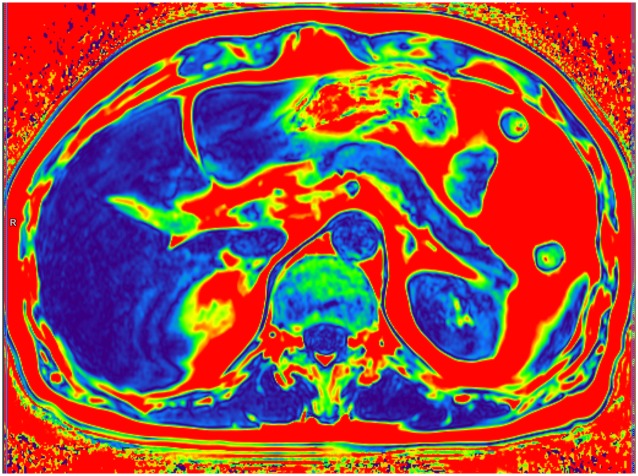
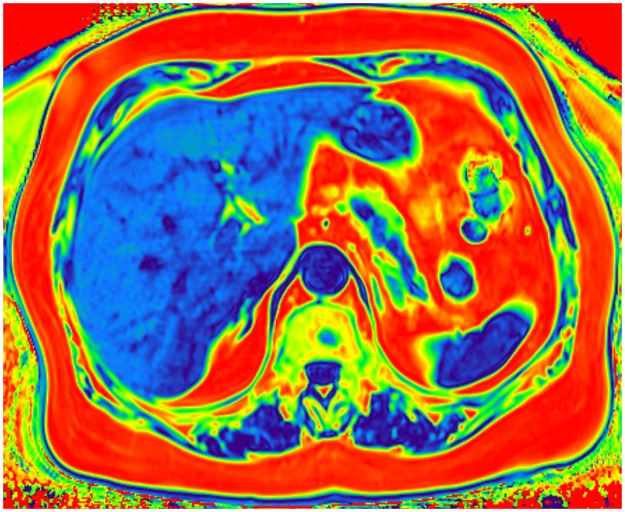
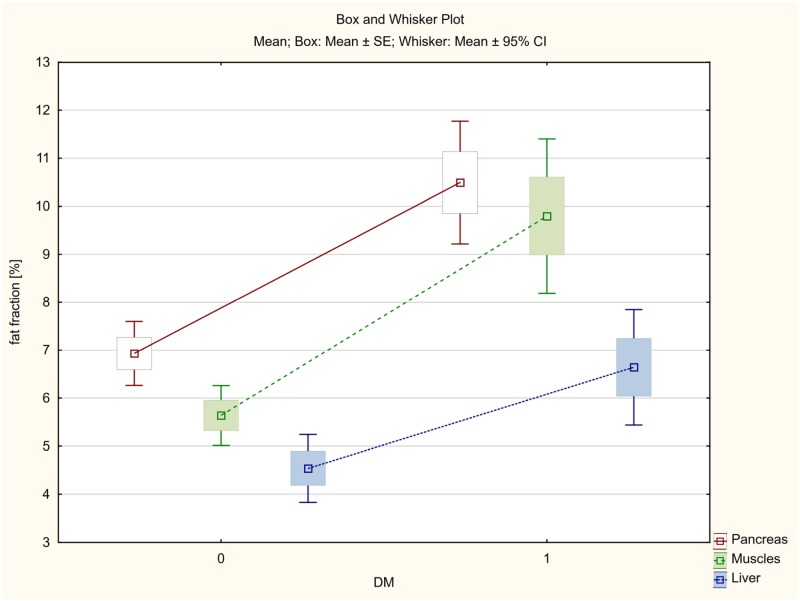
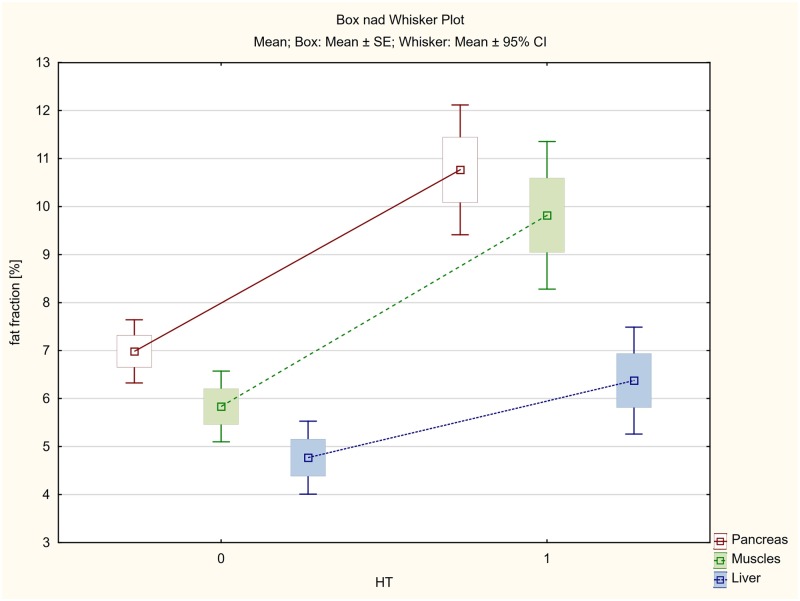
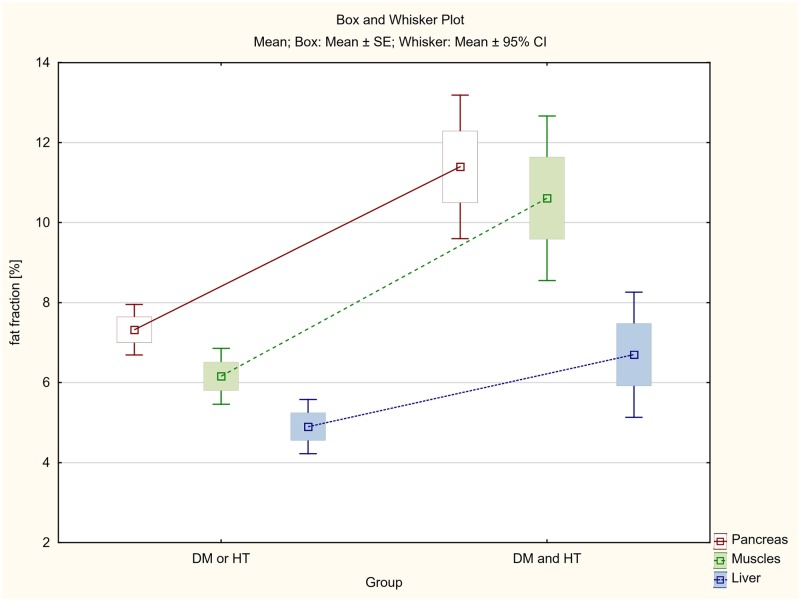
The widespread presence of overweight and obesity increases with every decade, and the number of people with body mass index (BMI) >30 kg/m2 has doubled in the last 30 years. The aim of the study is to assess the correlation between MRI-evaluated ectopic fat accumulation in pancreas, skeletal muscles and liver and the incidence of type 2 diabetes and hypertension, depending on BMI and waist circumference ratio. This prospective study included 267 consecutive patients who were referred to abdominal MRI and underwent a standard clinical assessment with BMI and waist circumference ratio calculation. Ectopic fat accumulation in pancreas, skeletal muscles and liver was evaluated in magnetic resonance imaging using the fat-water separated Dixon imaging. There were statistically significant differences in mean steatosis of all assessed organs in the group of patients with type 2 diabetes or hypertension in comparison to the non-diabetic group as well as to the group without hypertension. It has been observed that pancreas and skeletal muscles are more susceptible to fat accumulation than liver. According to our results, there is a relation between the fat content in muscles, pancreas and liver, the incidence of type 2 diabetes and hypertension and also body mass index and waist circumference ratio. We believe that future studies should aim to determine whether the use of fat content measurement in certain organs could be used as a biomarker that can enable early detection of reversible metabolic changes, as well as their subsequent monitoring.
超重和肥胖的普遍存在呈每十年递增趋势,过去 30 年来,身体质量指数(BMI)>30kg/m2 的人数增加了一倍。本研究旨在评估 MRI 评估的胰腺、骨骼肌和肝脏异位脂肪堆积与 2 型糖尿病和高血压的发生率之间的相关性,具体取决于 BMI 和腰围比。这项前瞻性研究纳入了 267 例连续就诊于腹部 MRI 的患者,并进行了标准的临床评估,计算了 BMI 和腰围比。使用脂肪-水分离 Dixon 成像在磁共振成像中评估胰腺、骨骼肌和肝脏中的异位脂肪堆积。与非糖尿病组和无高血压组相比,2 型糖尿病或高血压患者组所有评估器官的平均脂肪变性存在统计学差异。观察到胰腺和骨骼肌比肝脏更容易发生脂肪堆积。根据我们的结果,肌肉、胰腺和肝脏中的脂肪含量、2 型糖尿病和高血压的发生率以及 BMI 和腰围比之间存在相关性。我们认为,未来的研究应旨在确定在某些器官中使用脂肪含量测量是否可以作为一种生物标志物,能够早期发现可逆转的代谢变化,并对其进行后续监测。