Engelen Wouter, Zhu Kwankwan, Subedi Nikita, Idili Andrea, Ricci Francesco, Tel Jurjen, Merkx Maarten
Laboratory of Chemical Biology, Department of Biomedical Engineering, Eindhoven University of Technology, Eindhoven 5600 MB, The Netherlands.
Institute for Complex Molecular Systems, Eindhoven University of Technology, Eindhoven 5600 MB, The Netherlands.
ACS Cent Sci. 2020 Jan 22;6(1):22-31. doi: 10.1021/acscentsci.9b00964. Epub 2019 Dec 23.
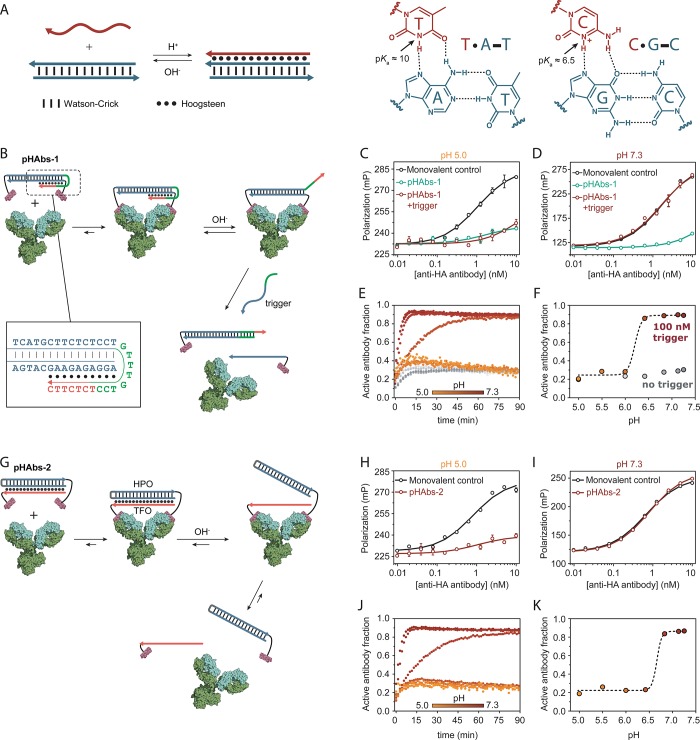
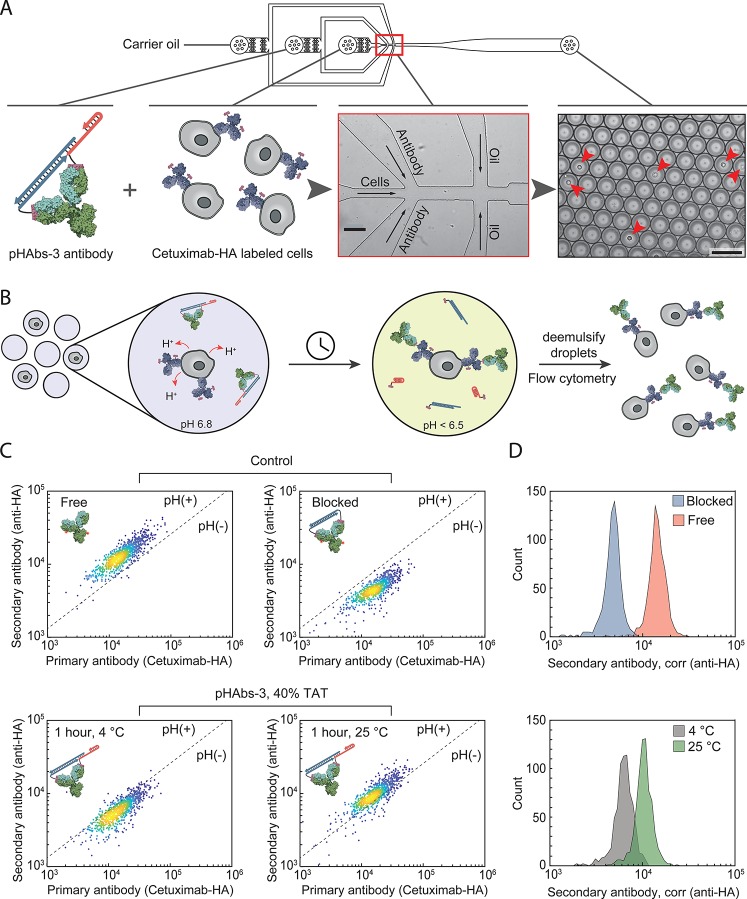
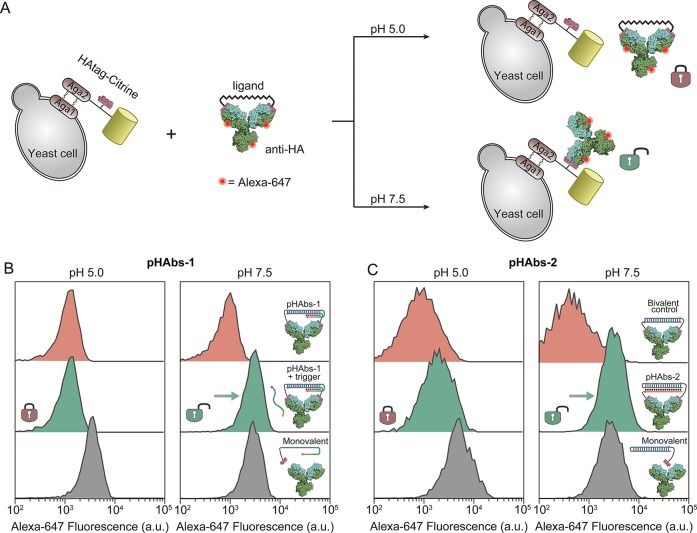
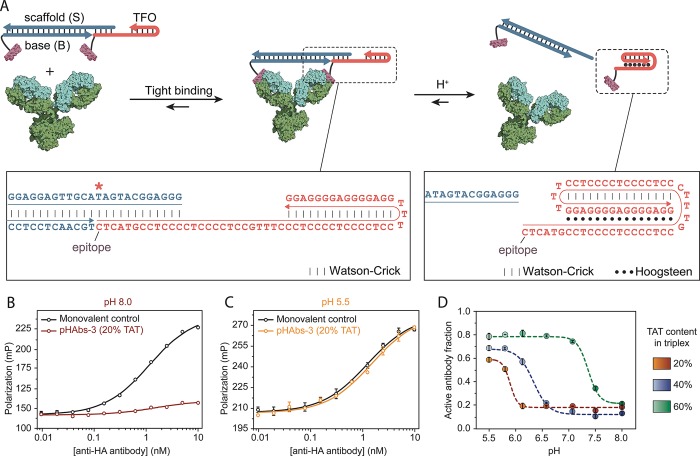
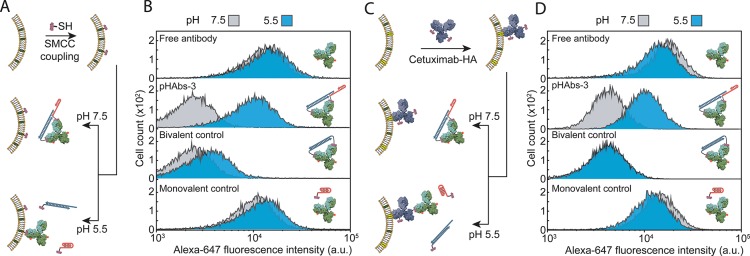
The ability to control antibody activity by pH has important applications in diagnostics, therapeutic antibody targeting, and antibody-guided imaging. Here, we report the rational design of bivalent peptide-DNA ligands that allow pH-dependent control of antibody activity. Our strategy uses a pH-responsive DNA triple helix to control switching from a tight-binding bivalent peptide-DNA lock into a weaker-binding monovalent ligand. Different designs are introduced that allow antibody activation at both basic and acidic pHs, either autonomously or in the presence of an additional oligonucleotide trigger. The pH of antibody activation could be precisely tuned by changing the DNA triple helix sequence. The peptide-DNA locks allowed pH-dependent antibody targeting of tumor cells both in bulk and for single cells confined in water-in-oil microdroplets. The latter approach enables high-throughput antibody-mediated detection of single tumor cells based on their distinctive metabolic activity.
通过pH值控制抗体活性的能力在诊断、治疗性抗体靶向和抗体引导成像中具有重要应用。在此,我们报告了二价肽-DNA配体的合理设计,该设计可实现对抗体活性的pH依赖性控制。我们的策略利用pH响应性DNA三螺旋来控制从紧密结合的二价肽-DNA锁向较弱结合的单价配体的转变。引入了不同的设计,可在碱性和酸性pH值下自主或在额外寡核苷酸触发剂存在的情况下激活抗体。通过改变DNA三螺旋序列可精确调节抗体激活的pH值。肽-DNA锁实现了在大量细胞以及油包水微滴中单个细胞的pH依赖性抗体靶向肿瘤细胞。后一种方法能够基于单个肿瘤细胞独特的代谢活性进行高通量抗体介导的检测。