Department of Pharmacology, Amity Institute of Pharmacy, Amity University, Manesar, Gurgaon-122413, Haryana, India
Department of Pharmacology and Toxicology, National Institute of Pharmaceutical Education and Research, Raebareli. Transit Campus, Bijnour-Sisendi Road, Sarojini Nagar, Lucknow-226002, Uttar Pradesh, India
Curr Neuropharmacol. 2020;18(9):868-882. doi: 10.2174/1570159X18666200128121920.
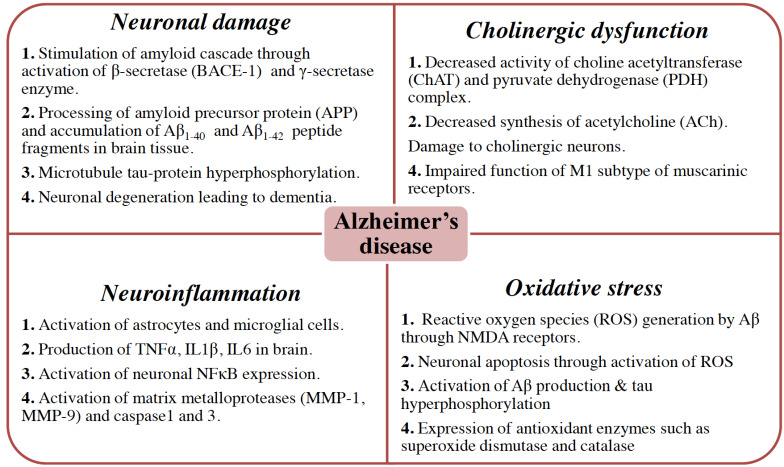
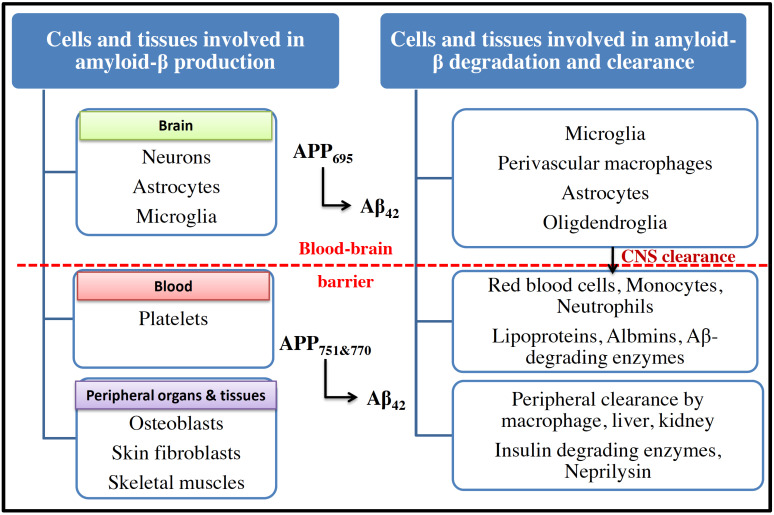
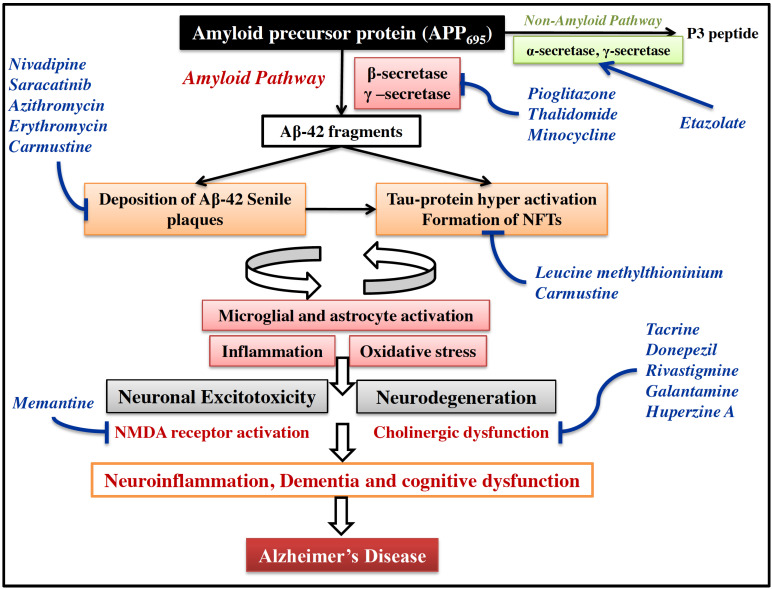
Alzheimer's disease is one of the most progressive forms of dementia, ultimately leading to death in aged populations. The major hallmarks of Alzheimer's disease include deposition of extracellular amyloid senile plaques and intracellular neurofibrillary tangles in brain neuronal cells. Although there are classical therapeutic options available for the treatment of the diseases, however, they provide only a symptomatic relief and do not modify the molecular pathophysiological course of the disease. Recent research advances in Alzheimer's disease have highlighted the potential role of anti-amyloid, anti-tau, and anti-inflammatory therapies. However, these therapies are still in different phases of pre-clinical/clinical development. In addition, drug repositioning/repurposing is another interesting and promising approach to explore rationalized options for the treatment of Alzheimer's disease. This review discusses the different aspects of the pathophysiological mechanism involved in the progression of Alzheimer's disease along with the limitations of current therapies. Furthermore, this review also highlights emerging investigational drugs along with recent drug repurposing approaches for Alzheimer's disease.
阿尔茨海默病是最具进展性的痴呆症之一,最终会导致老年人群死亡。阿尔茨海默病的主要特征包括大脑神经元细胞中外周淀粉样老年斑和细胞内神经原纤维缠结的沉积。尽管有经典的治疗方法可用于治疗该疾病,但它们只能提供症状缓解,而不能改变疾病的分子病理生理过程。最近在阿尔茨海默病方面的研究进展强调了抗淀粉样蛋白、抗 tau 和抗炎治疗的潜在作用。然而,这些疗法仍处于临床前/临床开发的不同阶段。此外,药物重定位/再利用是另一种探索阿尔茨海默病治疗合理化选择的有趣且有前途的方法。本综述讨论了阿尔茨海默病进展过程中涉及的病理生理机制的不同方面以及当前疗法的局限性。此外,本综述还强调了针对阿尔茨海默病的新兴研究性药物和最近的药物再利用方法。