Chen May-Show, Lin Hsiu-Na, Cheng Yu-Chun, Fang Alex, Chen Chin-Yi, Lee Pee-Yew, Lin Chung-Kwei
Research Center of Digital Oral Science and Technology, College of Oral Medicine, Taipei Medical University, Taipei 110, Taiwan.
Division of Prosthodontics, Department of Dentistry, Taipei Medical University Hospital, Taipei 110, Taiwan.
Materials (Basel). 2020 Jan 24;13(3):563. doi: 10.3390/ma13030563.
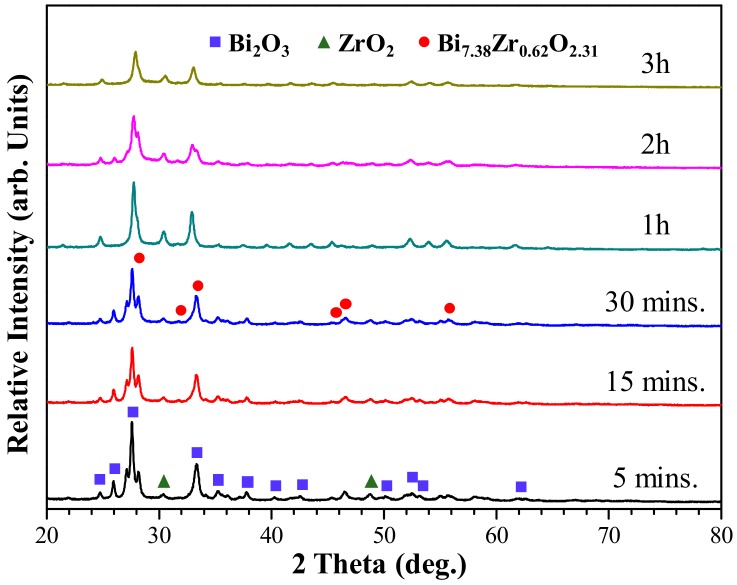
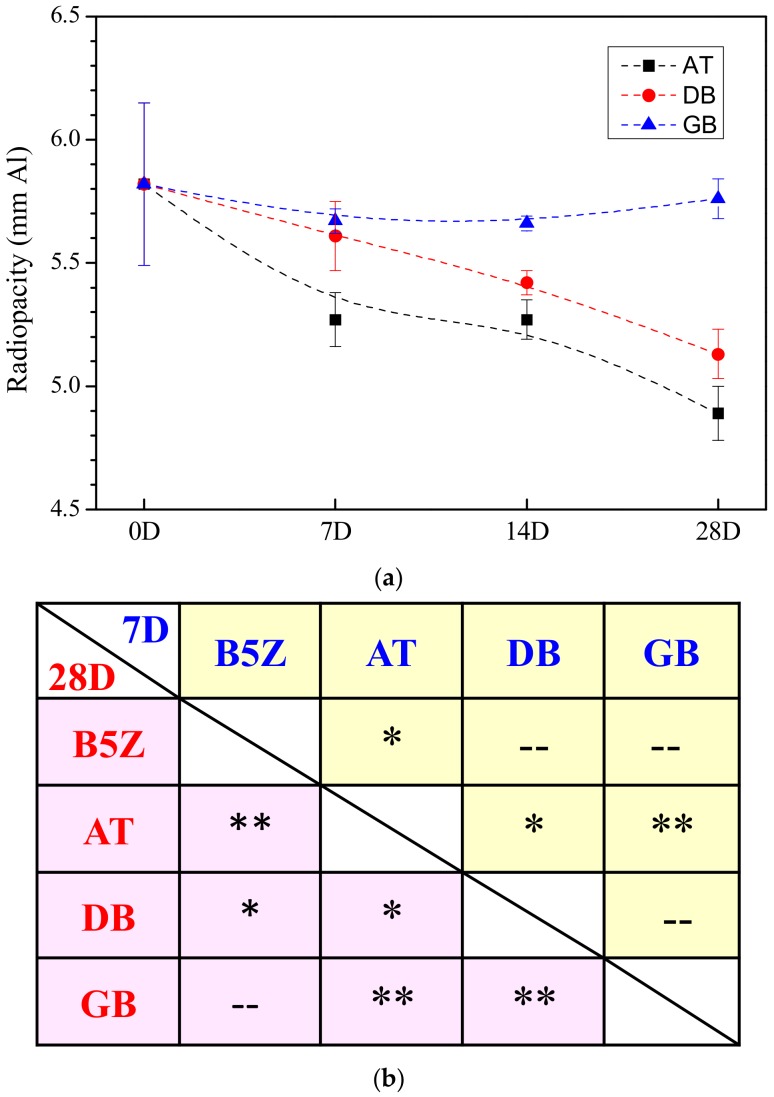
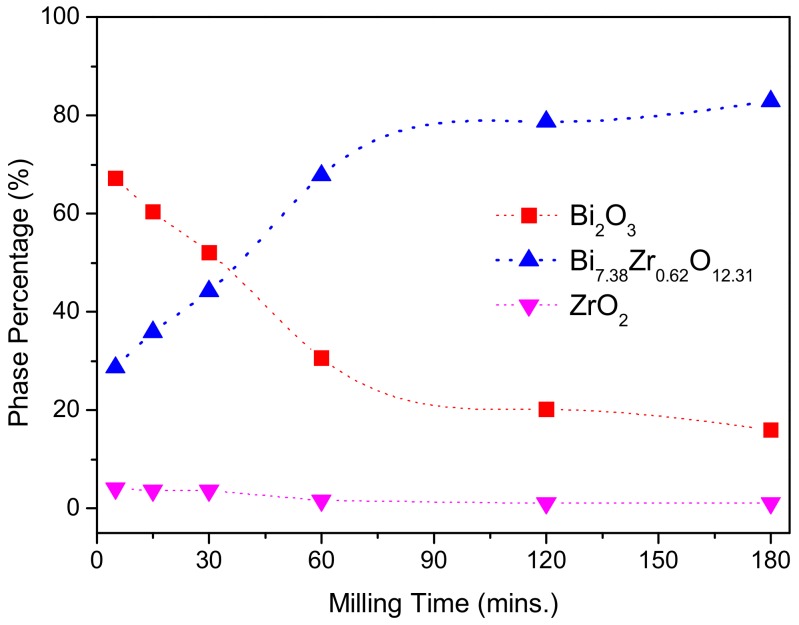
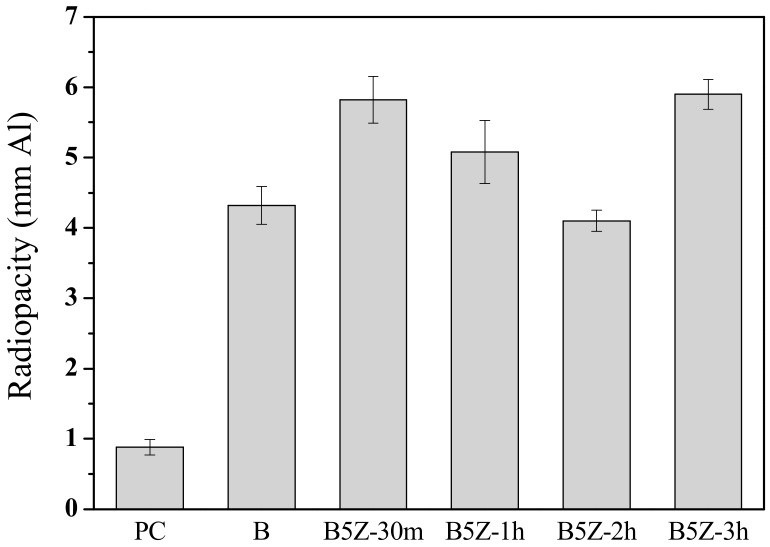
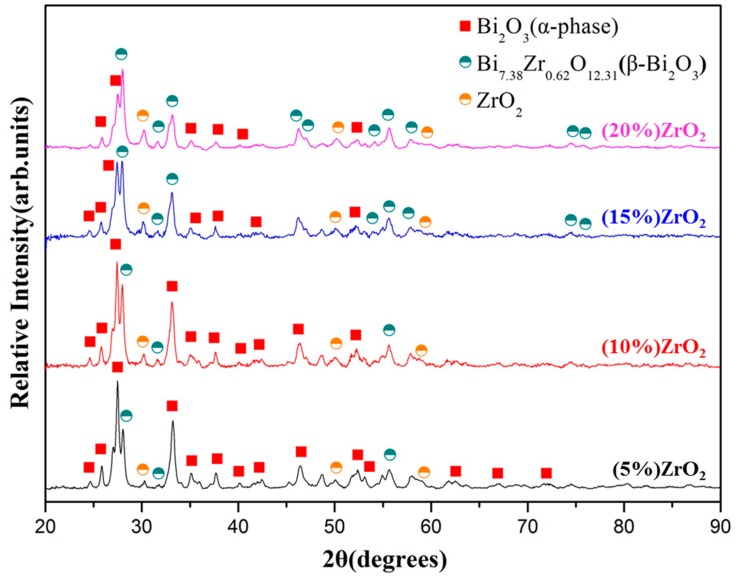
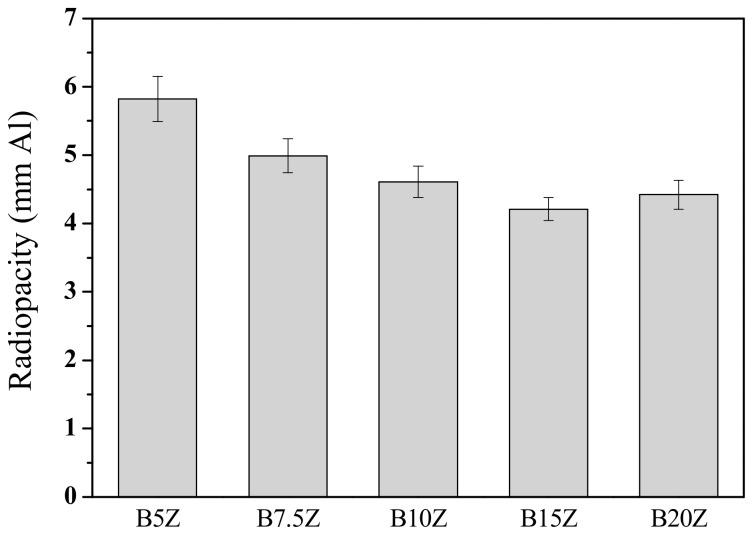
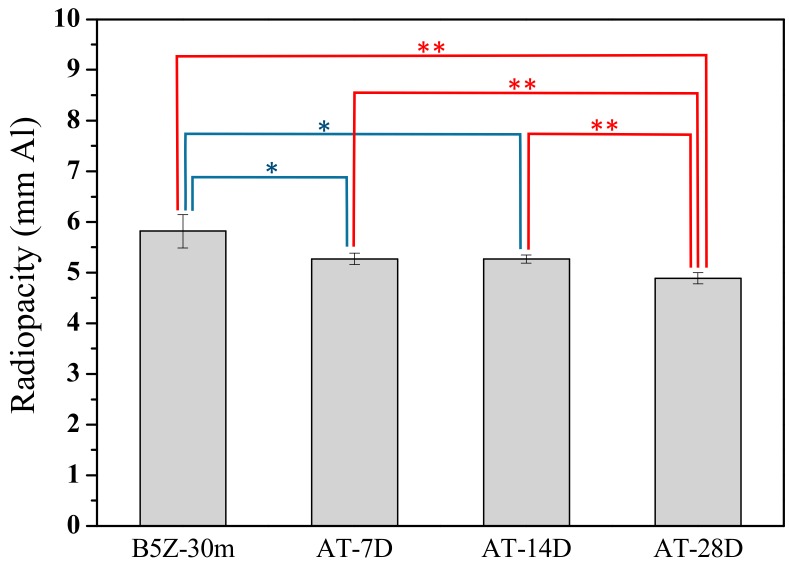
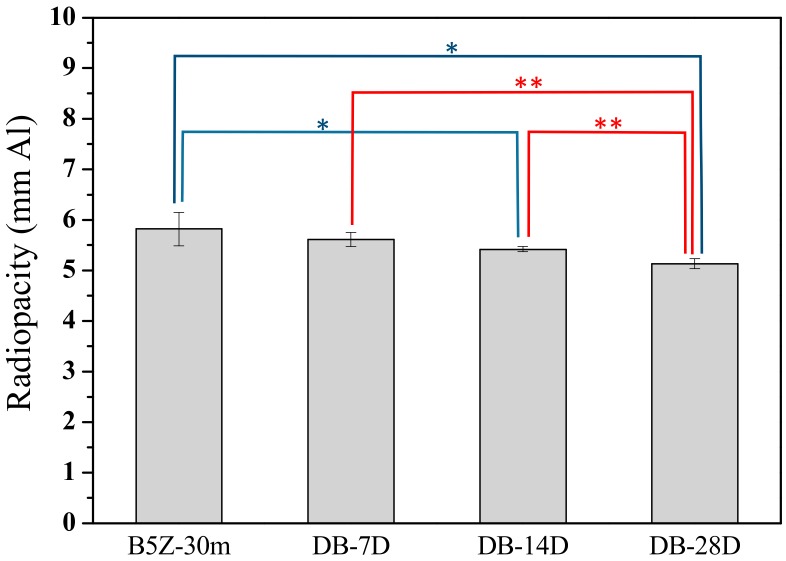
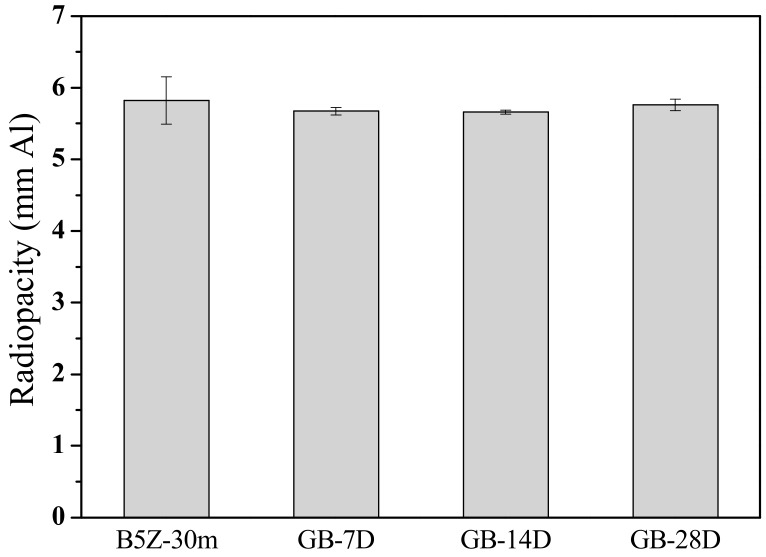
Mineral trioxide aggregate (MTA) typically consists of Portland cement (75 wt.%), bismuth oxide (20 wt.%), and gypsum (5 wt.%) and is commonly used as endodontic cement. Bismuth oxide serving as the radiopacifying material reveals the canal filling effect after clinical treatment. In the present study, bismuth/zirconium oxide composite powder was prepared by high energy ball milling of (BiO) (ZrO) (x = 5, 10, 15, and 20 wt.%) powder mixture and used as the radiopacifiers within MTA. The crystalline phases of the as-milled powders were examined by the X-ray diffraction technique. The radiopacities of MTA-like cements prepared by using as-milled composite powders (at various milling stages or different amount of zirconia addition) were examined. In addition, the stability of the as-milled powders stored in an ambient environment, an electronic dry box, or a glove box was investigated. The experimental results show that the as-milled powder exhibited the starting powder phases of BiO and ZrO and the newly formed δ-BiZrO phase. The longer the milling time or the larger the amount of the zirconia addition, the higher the percentage of the δ-BiZrO phase in the composite powder. All the MTA-like cements prepared by the as-milled powder exhibited a radiopacity higher than 4 mmAl that is better than the 3 mmAl ISO standard requirement. The 30 min as-milled (BiO)(ZrO) composite powder exhibited a radiopacity of 5.82 ± 0.33 mmAl and degraded significantly in the ambient environment. However, storing under an oxygen- and humidity-controlled glove box can prolong a high radiopacity performance. The radiopacity was 5.76 ± 0.08 mmAl after 28 days in a glove box that was statistically the same as the original composite powder.
三氧化矿物凝聚体(MTA)通常由波特兰水泥(75重量%)、氧化铋(20重量%)和石膏(5重量%)组成,常用于牙髓腔封闭剂。用作射线阻射材料的氧化铋在临床治疗后可显示根管充填效果。在本研究中,通过对(BiO)(ZrO)(x = 5、10、15和20重量%)粉末混合物进行高能球磨制备了铋/氧化锆复合粉末,并将其用作MTA中的射线阻射剂。通过X射线衍射技术检测研磨后粉末的晶相。检测了使用研磨后的复合粉末(在不同研磨阶段或添加不同量氧化锆)制备的类MTA水泥的射线阻射性。此外,还研究了研磨后粉末在环境、电子干燥箱或手套箱中储存的稳定性。实验结果表明,研磨后的粉末呈现出BiO和ZrO的起始粉末相以及新形成的δ-BiZrO相。研磨时间越长或氧化锆添加量越大,复合粉末中δ-BiZrO相的百分比越高。由研磨后粉末制备的所有类MTA水泥的射线阻射性均高于4mmAl,优于3mmAl的ISO标准要求。研磨30分钟的(BiO)(ZrO)复合粉末的射线阻射性为5.82±0.33mmAl,在环境中显著降解。然而,在氧气和湿度可控的手套箱中储存可以延长高射线阻射性能。在手套箱中放置28天后,射线阻射性为5.76±0.08mmAl,在统计学上与原始复合粉末相同。