Institute of Behavioural Sciences, Faculty of Public Health, University of Debrecen, Móricz Zs. krt. 22, Debrecen, 4032, Hungary.
Semmelweis Health Promotion Centre, Budapest, Hungary.
BMC Fam Pract. 2020 Jan 28;21(1):19. doi: 10.1186/s12875-020-1092-7.
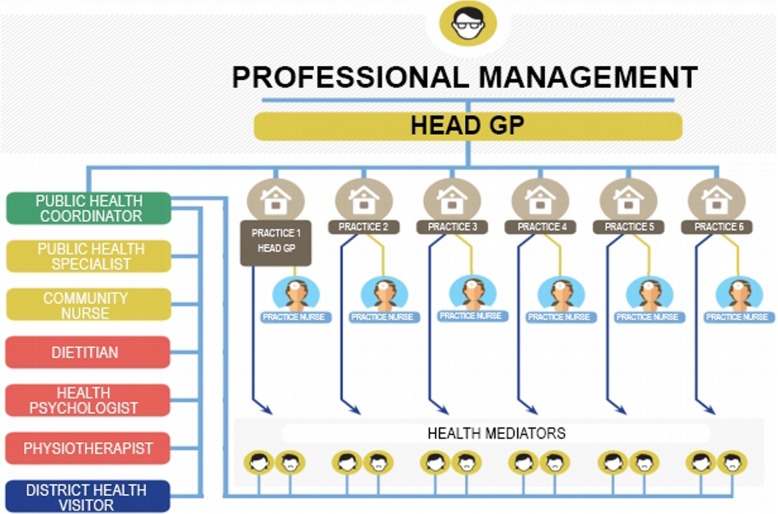
A Model Programme of primary care group practices was implemented in Hungary between 2013 and 2017 - where virtually all GPs had worked in single practices - aiming to increase preventive service uptake and reduce inequalities based on a bilateral agreement between the Swiss and Hungarian governments. Group practices employed a wide variety of health professionals as well as support workers called health mediators. Employment of the latter was based on two decades of European experience of health mediators who specifically facilitate access to and use of health services in Roma minority groups. Health mediators had been recruited from local communities, received training on the job, and were tasked to increase uptake of new preventive services provided by the group practices by personal contacts in the local minority populace. The paper describes the contribution of the work of health mediators to the uptake of two new services provided by group practices.
Quantitative analysis of depersonalized administrative data mandatorily reported to the Management of the Programme during 43 months of operation was carried out on the employment of health mediators and their contribution to the uptake of two new preventive services (health status assessment and community health promoting programmes).
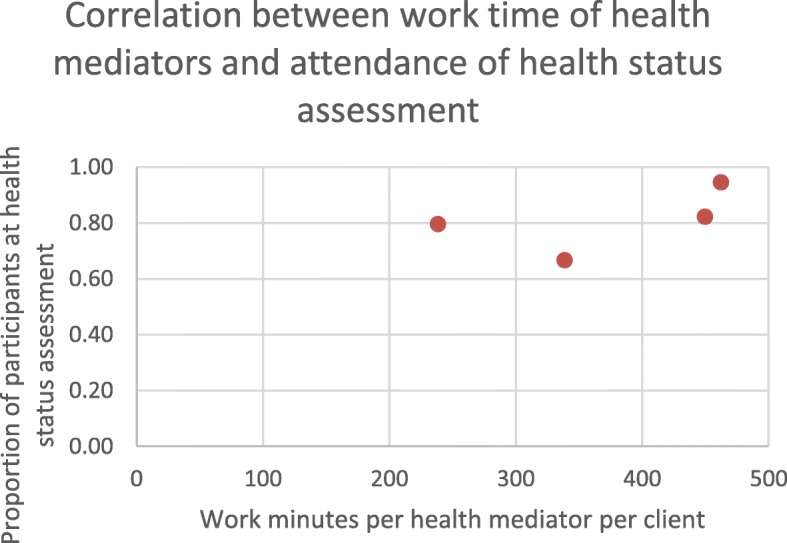
80% of all clients registered with the GPs participated at health status assessment by invitation that was 1.3-1.7 times higher than participation at the most successful national screening programmes in the past 15 years. Both the number of mediator work minutes per client and participation rate at health status assessment, as well as total work time of mediators and participants at community health events showed high correlation. Twice as many Roma minority patients were motivated for service use by health mediators compared to all patients. The very high participation rate reflects the wide impact of health mediators who probably reached not only Roma minority, but vulnerable population groups in general.
The future of general practices lays in multidisciplinary teams in which health mediators recruited from the serviced communities can be valuable members, especially in deprived areas.
2013 年至 2017 年期间,匈牙利实施了一项初级保健团体实践示范方案——在此之前,几乎所有全科医生都在单一诊所工作——旨在根据瑞士和匈牙利政府之间的双边协议,提高预防服务的利用率并减少不平等。团体实践雇佣了各种各样的卫生专业人员和被称为健康中介的支持人员。后者的雇佣基于欧洲二十年的健康中介经验,这些健康中介专门为少数民族罗姆群体提供获得和使用卫生服务提供便利。健康中介从当地社区招募,接受在职培训,并负责通过与当地少数民族人口的个人联系,增加对团体实践提供的新预防服务的利用率。本文介绍了健康中介的工作对团体实践提供的两项新服务利用率的贡献。
对方案管理在 43 个月的运作期间强制性报告的个人化行政数据进行定量分析,以了解健康中介的就业情况及其对两项新预防服务(健康状况评估和社区健康促进计划)利用率的贡献。
80%注册全科医生的客户都参加了健康状况评估邀请,这比过去 15 年中最成功的全国筛查计划的参与率高 1.3-1.7 倍。每位客户的中介工作分钟数和健康状况评估参与率,以及中介和社区健康活动参与者的总工作时间都显示出高度相关性。与所有患者相比,健康中介使两倍多的罗姆少数民族患者有动力使用服务。如此高的参与率反映了健康中介的广泛影响,他们可能不仅接触到了罗姆少数民族,还接触到了一般弱势群体。
未来的全科医生将依赖于多学科团队,在这些团队中,从服务社区招募的健康中介可以成为有价值的成员,尤其是在贫困地区。