Nilsson Hall Gabriella, Mendes Luís Freitas, Gklava Charikleia, Geris Liesbet, Luyten Frank P, Papantoniou Ioannis
Prometheus Division of Skeletal Tissue Engineering Skeletal Biology and Engineering Research Center Department of Development and Regeneration KU Leuven O&N1, Herestraat 49, PB 813 3000 Leuven Belgium.
Prometheus Division of Skeletal Tissue Engineering KU Leuven O&N1, Herestraat 49, PB 813 3000 Leuven Belgium.
Adv Sci (Weinh). 2019 Dec 10;7(2):1902295. doi: 10.1002/advs.201902295. eCollection 2020 Jan.
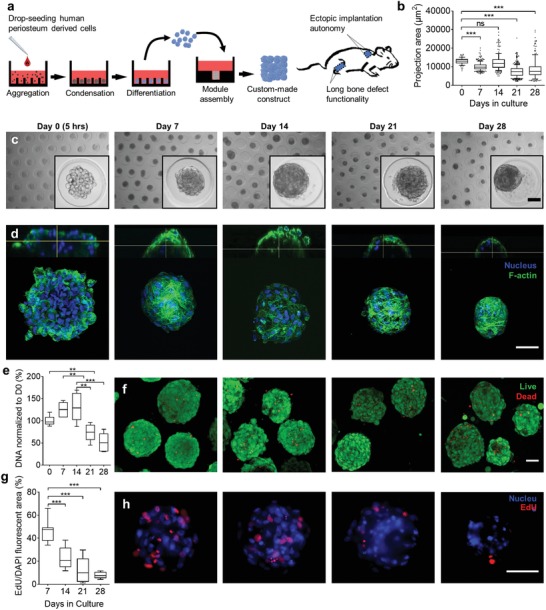
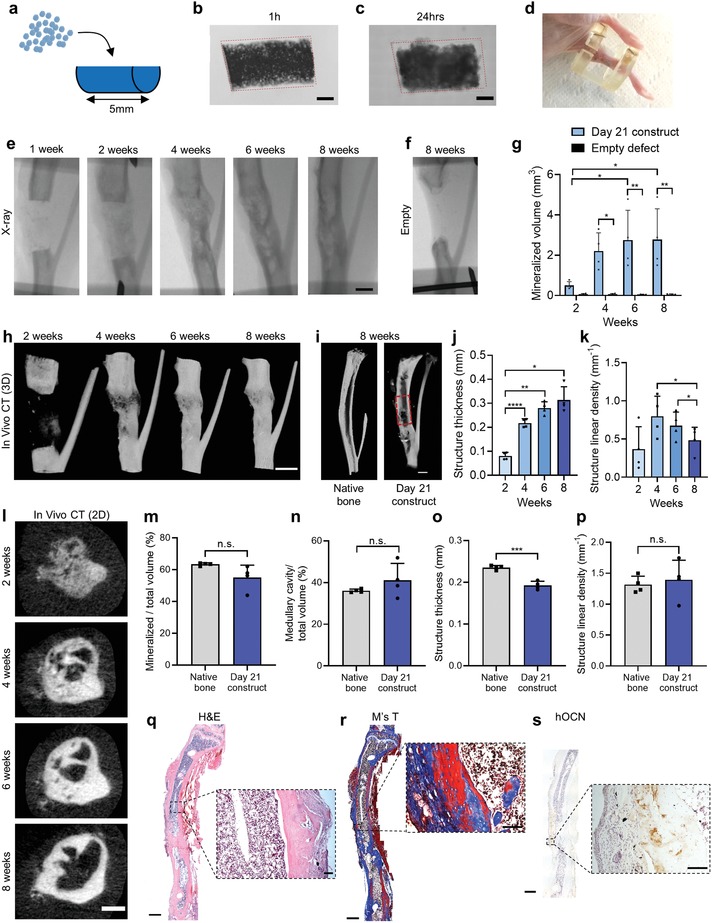
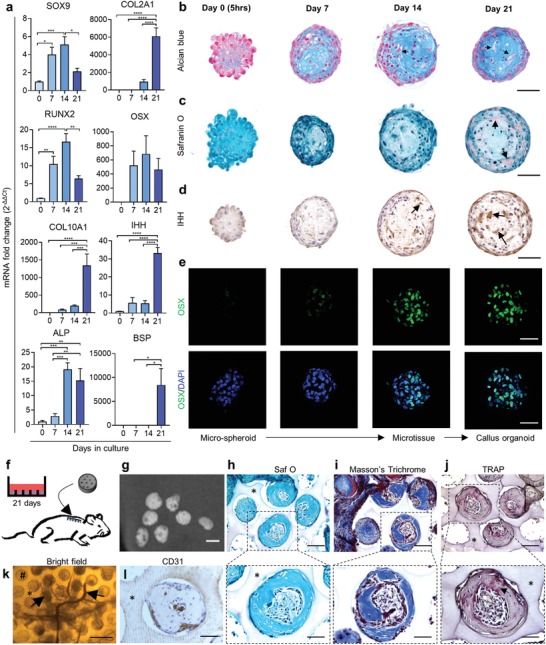
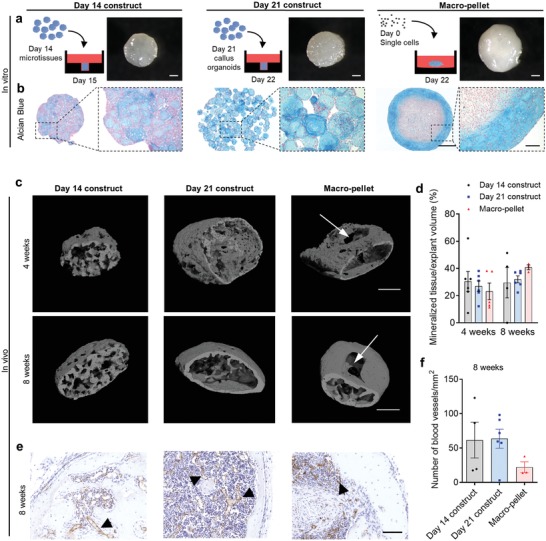
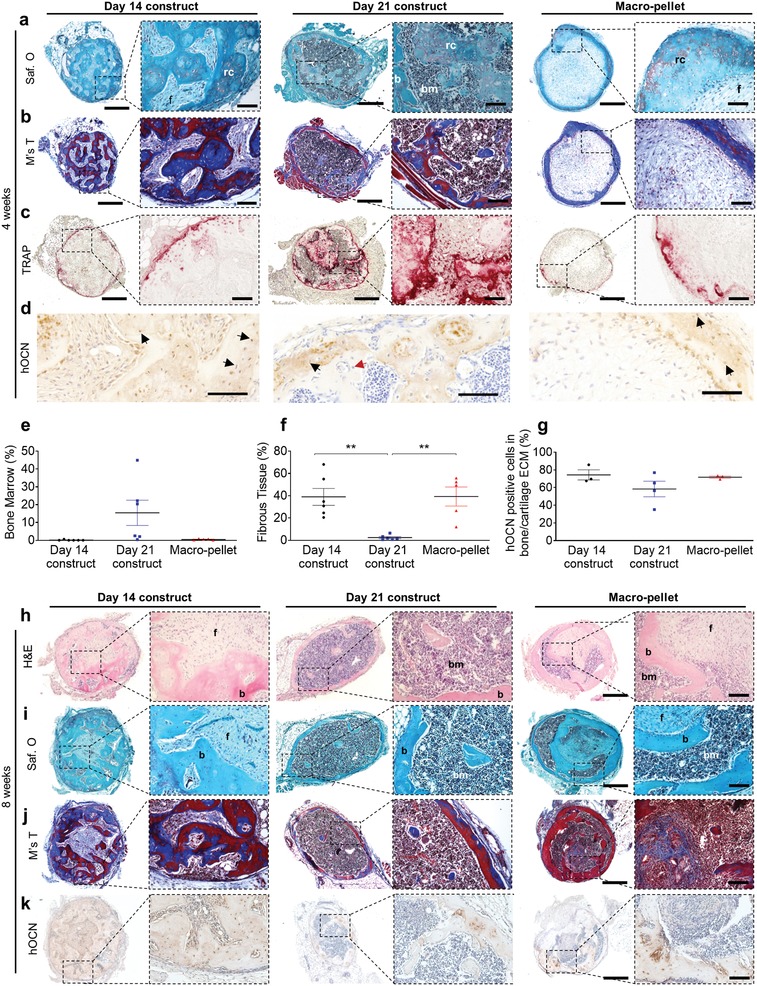
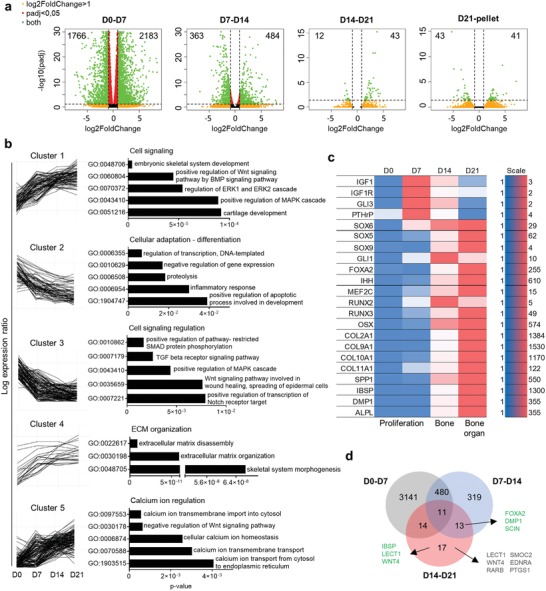
Clinical translation of cell-based products is hampered by their limited predictive in vivo performance. To overcome this hurdle, engineering strategies advocate to fabricate tissue products through processes that mimic development and regeneration, a strategy applicable for the healing of large bone defects, an unmet medical need. Natural fracture healing occurs through the formation of a cartilage intermediate, termed "soft callus," which is transformed into bone following a process that recapitulates developmental events. The main contributors to the soft callus are cells derived from the periosteum, containing potent skeletal stem cells. Herein, cells derived from human periosteum are used for the scalable production of microspheroids that are differentiated into callus organoids. The organoids attain autonomy and exhibit the capacity to form ectopic bone microorgans in vivo. This potency is linked to specific gene signatures mimicking those found in developing and healing long bones. Furthermore, callus organoids spontaneously bioassemble in vitro into large engineered tissues able to heal murine critical-sized long bone defects. The regenerated bone exhibits similar morphological properties to those of native tibia. These callus organoids can be viewed as a living "bio-ink" allowing bottom-up manufacturing of multimodular tissues with complex geometric features and inbuilt quality attributes.
基于细胞的产品的临床转化受到其体内预测性能有限的阻碍。为了克服这一障碍,工程策略主张通过模拟发育和再生的过程来制造组织产品,这一策略适用于治疗大的骨缺损,这是一种尚未满足的医疗需求。自然骨折愈合通过形成一种称为“软骨痂”的软骨中间体来实现,软骨痂在一个概括发育事件的过程后转化为骨。软骨痂的主要贡献者是来自骨膜的细胞,其中含有强大的骨骼干细胞。在此,源自人骨膜的细胞被用于可扩展地生产分化为骨痂类器官的微球体。这些类器官实现了自主性,并表现出在体内形成异位骨微器官的能力。这种潜能与模仿在发育和愈合的长骨中发现的特定基因特征有关。此外,骨痂类器官在体外自发地生物组装成能够治愈小鼠临界尺寸长骨缺损的大型工程组织。再生骨表现出与天然胫骨相似的形态学特性。这些骨痂类器官可以被视为一种活的“生物墨水”,允许自下而上制造具有复杂几何特征和内在质量属性的多模块组织。