Giannouli Eleftheria, Morat Tobias, Zijlstra Wiebren
Institute of Movement and Sport Gerontology, German Sport University Cologne, Cologne, Germany.
Front Med (Lausanne). 2020 Jan 14;6:318. doi: 10.3389/fmed.2019.00318. eCollection 2019.
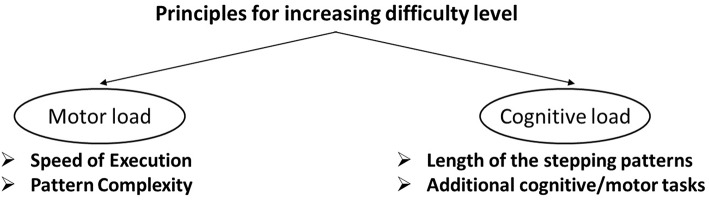
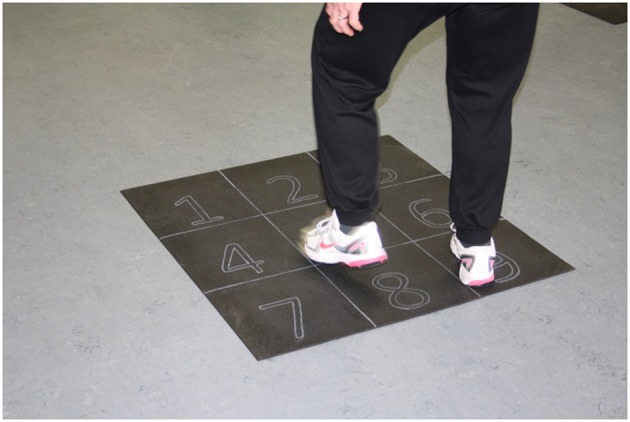
The ability to effectively execute compensatory steps is critical for preventing accidental falls, and consequently stepping training is an essential ingredient of fall prevention programs. In this paper, we propose a concept for stepping training that aims to maximize training effects by taking into account recent research evidence and a precise dosing of training ingredients. The concept addresses motor as well as cognitive falls-related aspects, it is suitable for individual as well as group based training, and it does not require costly equipment. Theory and evidence behind all of the training principles is reviewed, and an example of an exercise protocol is described in detail. Participants are presented with stepping patterns which they have to memorize and implement on a mat. In order to enable investigation of dose-response effects, the difficulty level systematically and gradually increases session by session based on four principles: execution speed, pattern complexity, pattern length and execution in dual-/multi-tasking conditions. The presented concept can be used as a framework for the development of further prevention and/or rehabilitation stepping exercise programs. Further studies using this exercise regimen or modified versions of it are encouraged.
有效执行代偿步骤的能力对于预防意外跌倒至关重要,因此跨步训练是预防跌倒计划的重要组成部分。在本文中,我们提出了一种跨步训练概念,旨在通过考虑近期研究证据和精确设定训练要素剂量来最大化训练效果。该概念涉及与跌倒相关的运动以及认知方面,适用于个体训练和团体训练,并且不需要昂贵的设备。我们回顾了所有训练原则背后的理论和证据,并详细描述了一个运动方案示例。向参与者展示他们必须在垫子上记忆并执行的跨步模式。为了能够研究剂量反应效应,基于四个原则,难度水平逐节系统且逐渐增加:执行速度、模式复杂性、模式长度以及在双重/多任务条件下的执行情况。所提出的概念可作为进一步开发预防和/或康复跨步运动计划的框架。鼓励使用此运动方案或其修改版本进行进一步研究。