Department of Experimental Pathology and Tumor Biology, Nagoya City University Graduate School of Medical Sciences, Nagoya, Japan.
Department of Nephro-Urology, Nagoya City University Graduate School of Medical Sciences, Nagoya, Japan.
Cancer Sci. 2020 Apr;111(4):1165-1179. doi: 10.1111/cas.14334. Epub 2020 Feb 24.
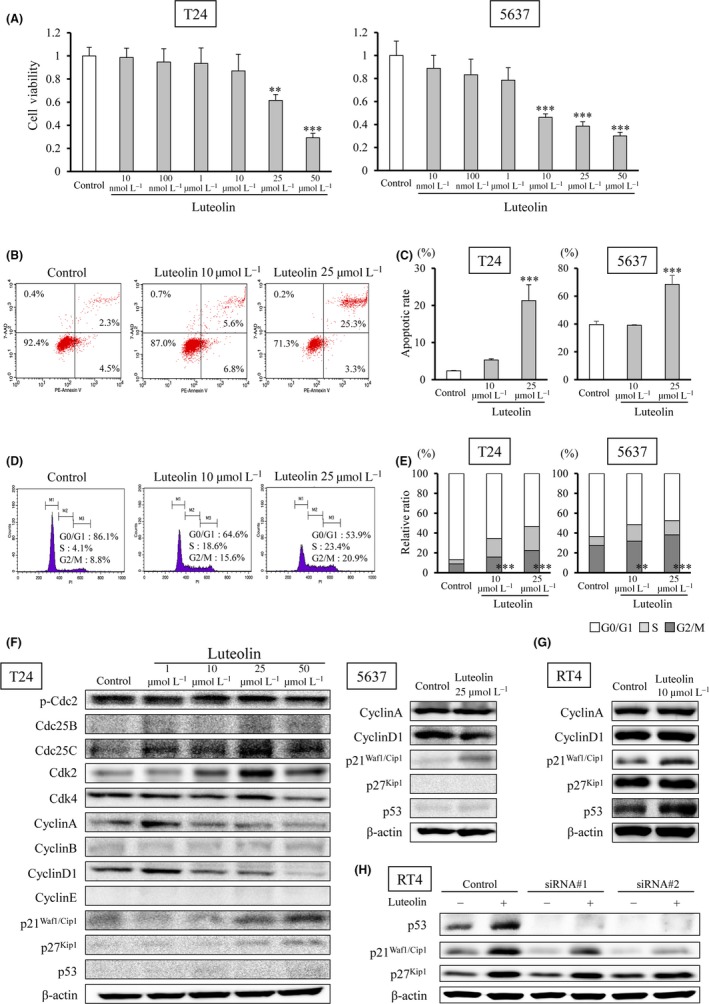
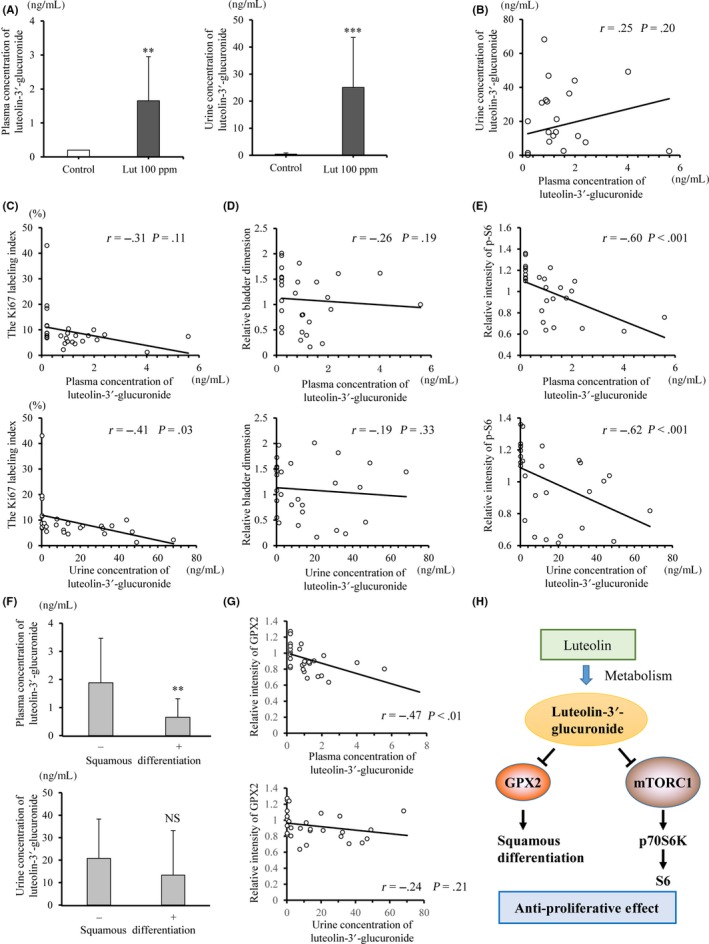
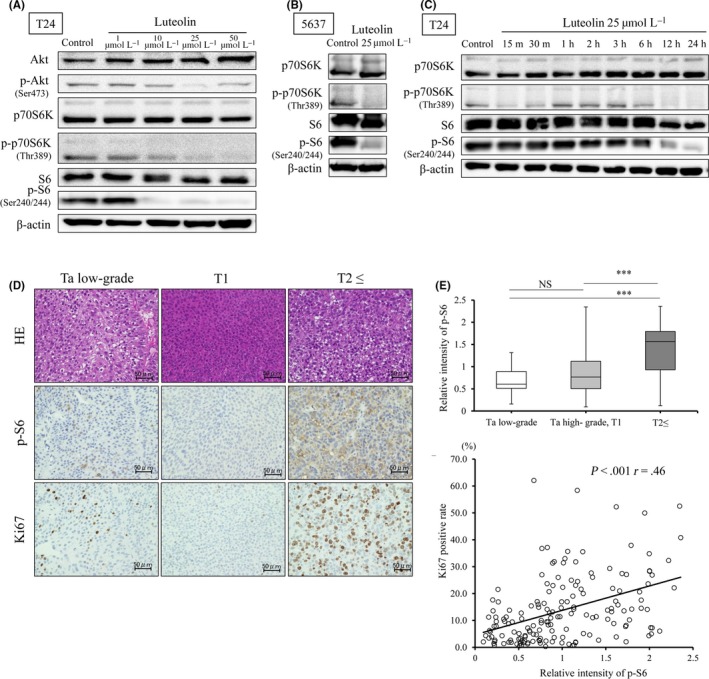
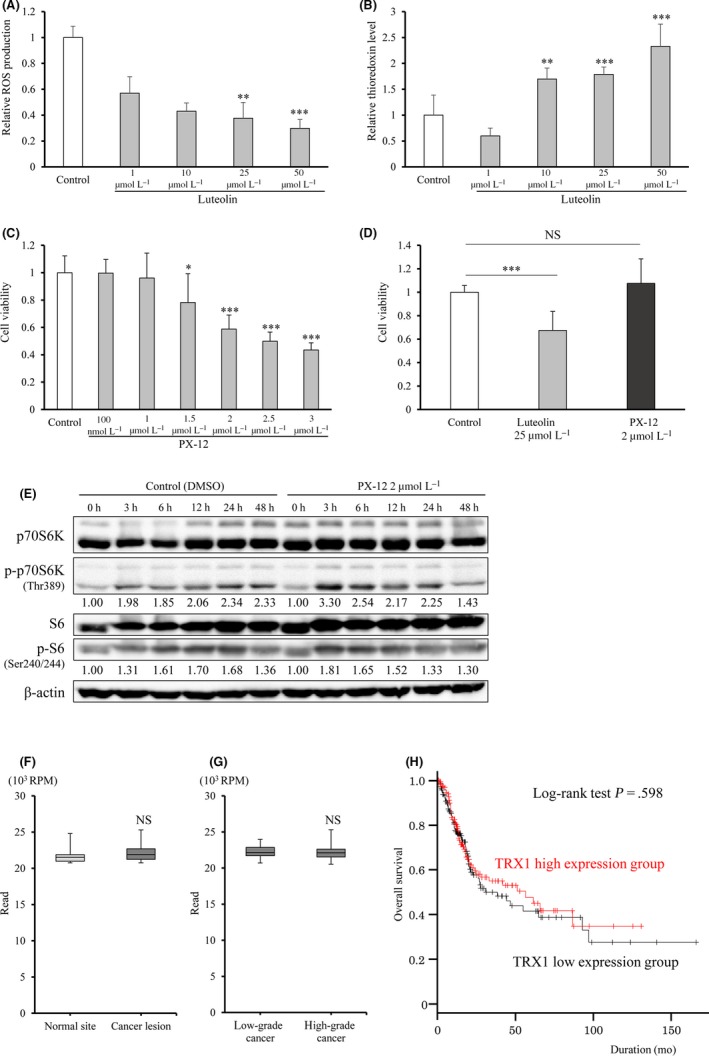
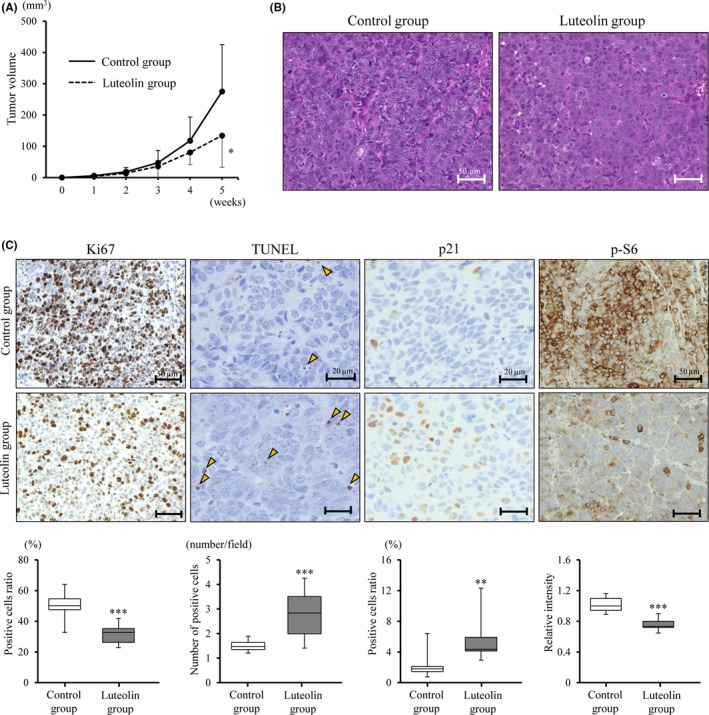
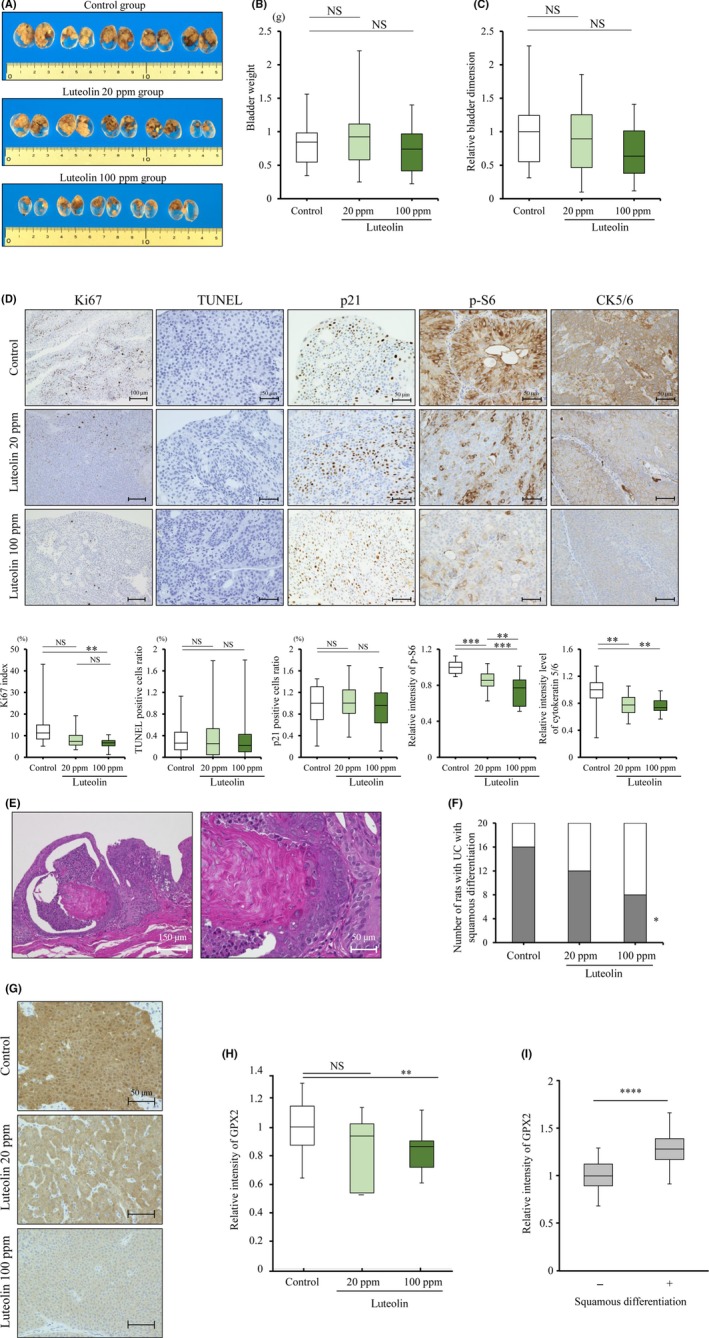
Luteolin is a natural flavonoid with strong anti-oxidative properties that is reported to have an anti-cancer effect in several malignancies other than bladder cancer. In this study, we describe the effect of luteolin on a human bladder cancer cell line, T24, in the context of the regulation of p21, thioredoxin-1 (TRX1) and the mechanistic target of rapamycin (mTOR) pathway. Luteolin inhibited cell survival and induced G2/M cell-cycle arrest, p21 upregulation and downregulation of phospho(p)-S6, which is downstream of mTOR signaling. Luteolin also upregulated TRX1 and reduced intracellular reactive oxygen species production. In a subcutaneous xenograft mouse model using the rat bladder cancer cell line, BC31, tumor volumes were significantly decreased in mice orally administered luteolin compared to control. Immunohistochemical analysis revealed that increased p21 and decreased p-S6 expression were induced in the luteolin treatment group. Moreover, in another in vivo N-butyl-N-(4-hydroxybutyl) nitrosamine (BBN)-induced rat bladder cancer model, the oral administration of luteolin led to a trend of decreased bladder tumor dimension and significantly decreased the Ki67-labeling index and p-S6 expression. Furthermore, the major findings on the metabolism of luteolin suggest that both plasma and urine luteolin-3'-O-glucuronide concentrations are strongly associated with the inhibition of cell proliferation and mTOR signaling. Moreover, a significant decrease in the squamous differentiation of bladder cancer is attributed to plasma luteolin-3'-glucuronide concentration. In conclusion, luteolin, and in particular its metabolized product, may represent another natural product-derived therapeutic agent that acts against bladder cancer by upregulating p21 and inhibiting mTOR signaling.
木樨草素是一种具有强抗氧化特性的天然类黄酮,据报道,它除了膀胱癌之外,对多种恶性肿瘤具有抗癌作用。在这项研究中,我们描述了木樨草素在调节 p21、硫氧还蛋白-1 (TRX1) 和雷帕霉素 (mTOR) 通路的情况下,对人膀胱癌 T24 细胞系的影响。木樨草素抑制细胞存活并诱导 G2/M 细胞周期停滞,上调 p21 并下调 mTOR 信号下游的磷酸化(p)-S6。木樨草素还上调了 TRX1 并减少了细胞内活性氧的产生。在使用大鼠膀胱癌细胞系 BC31 的皮下异种移植小鼠模型中,与对照组相比,口服木樨草素的小鼠肿瘤体积明显减小。免疫组织化学分析显示,木樨草素治疗组诱导了 p21 的增加和 p-S6 的减少。此外,在另一个体内 N-丁基-N-(4-羟基丁基)亚硝胺 (BBN) 诱导的大鼠膀胱癌模型中,口服木樨草素导致膀胱肿瘤尺寸呈下降趋势,并显著降低 Ki67 标记指数和 p-S6 表达。此外,木樨草素代谢的主要发现表明,血浆和尿液中木樨草素-3'-O-葡萄糖苷浓度与抑制细胞增殖和 mTOR 信号密切相关。此外,膀胱癌的鳞状分化程度显著降低归因于血浆木樨草素-3'-葡萄糖苷浓度。总之,木樨草素,特别是其代谢产物,可能代表另一种天然产物衍生的治疗剂,通过上调 p21 和抑制 mTOR 信号来对抗膀胱癌。