Department of Biology & Institute of Biochemistry, Carleton University, Ottawa, ON, Canada.
Laboratory of Molecular and Cellular Medicine, Department of Cellular & Physiological Sciences, University of British Columbia, Vancouver, Canada.
Sci Rep. 2020 Jan 29;10(1):1448. doi: 10.1038/s41598-020-57973-0.
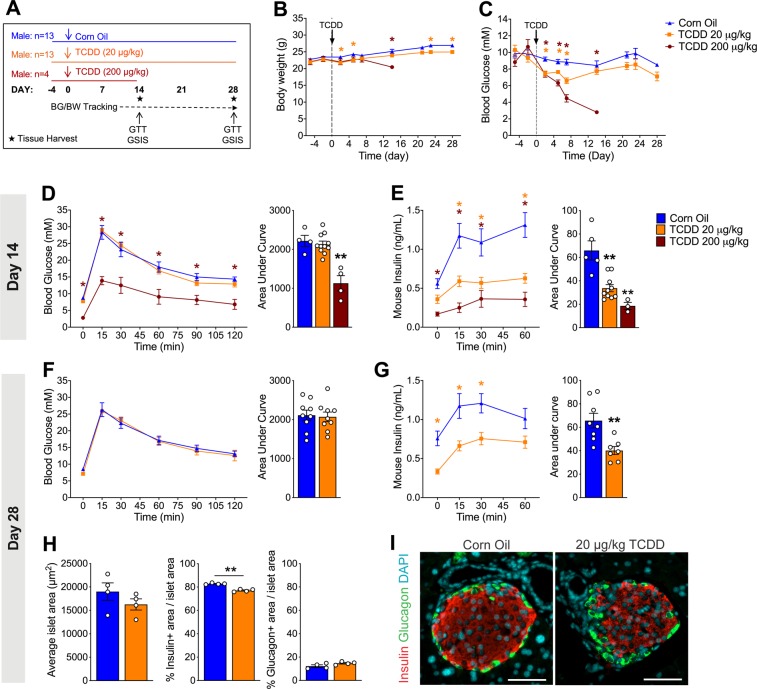
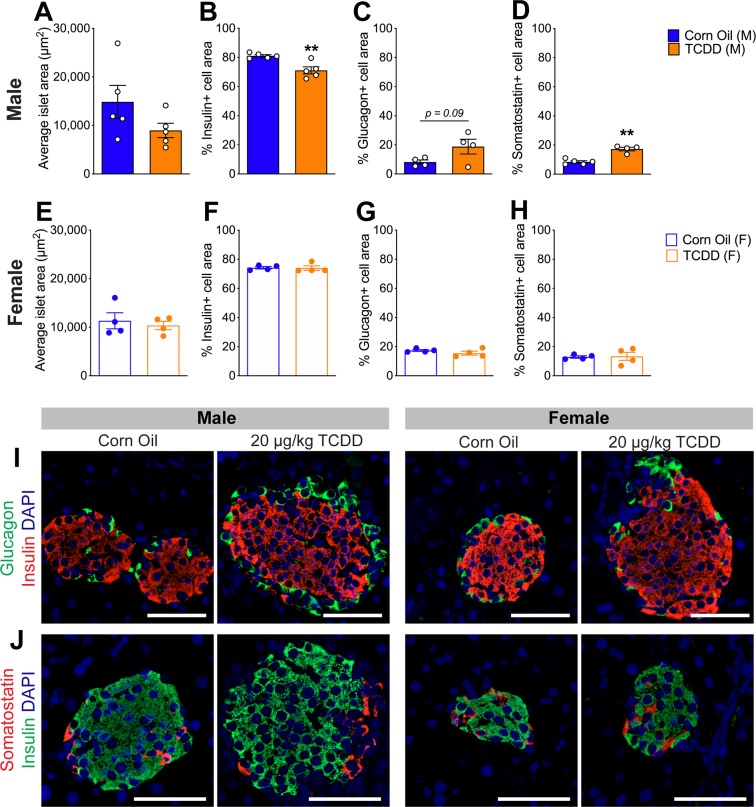
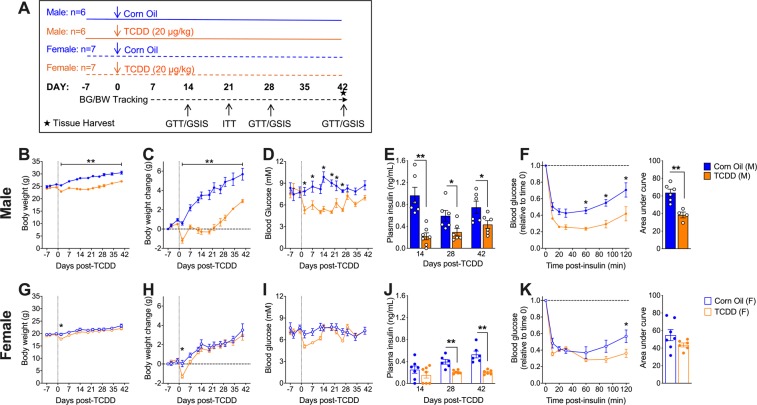
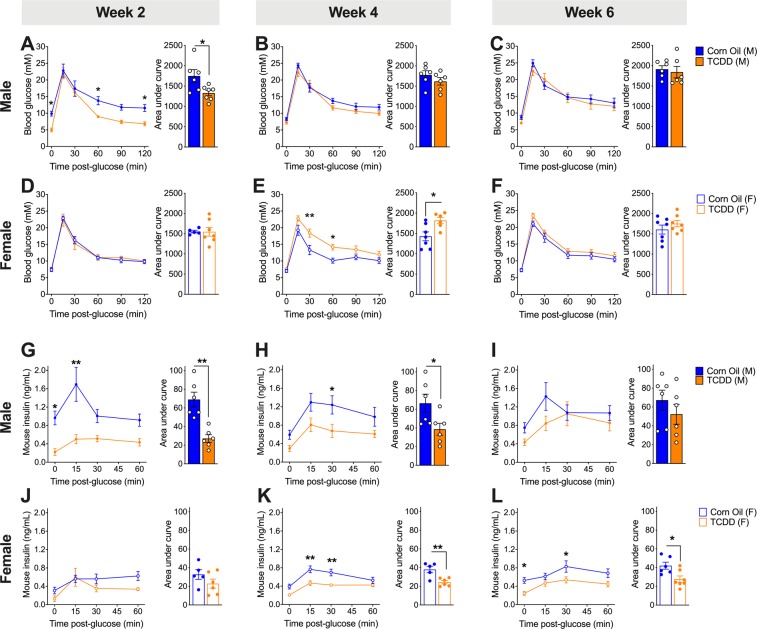
Epidemiological studies have consistently shown an association between exposure to environmental pollutants and diabetes risk in humans. We have previously shown that direct exposure of mouse and human islets (endocrine pancreas) to the highly persistent pollutant TCDD (2,3,7,8-tetrachlorodibenzo-p-dioxin) causes reduced insulin secretion ex vivo. Furthermore, a single high-dose of TCDD (200 µg/kg) suppressed both fasting and glucose-induced plasma insulin levels and promoted beta-cell apoptosis after 7 days in male mice. The current study investigated the longer-term effects of a single high-dose TCDD injection (20 µg/kg) on glucose metabolism and beta cell function in male and female C57Bl/6 mice. TCDD-exposed males displayed modest fasting hypoglycemia for ~4 weeks post-injection, reduced fasting insulin levels for up to 6 weeks, increased insulin sensitivity, decreased beta cell area, and increased delta cell area. TCDD-exposed females also had long-term suppressed basal plasma insulin levels, and abnormal insulin secretion for up to 6 weeks. Unlike males, TCDD did not impact insulin sensitivity or islet composition in females, but did cause transient glucose intolerance 4 weeks post-exposure. Our results show that a single exposure to dioxin can suppress basal insulin levels long-term in both sexes, but effects on glucose homeostasis are sex-dependent.
流行病学研究一直表明,人类暴露于环境污染物与糖尿病风险之间存在关联。我们之前已经表明,将高度持久性污染物 TCDD(2,3,7,8-四氯二苯并对二恶英)直接暴露于小鼠和人胰岛(内分泌胰腺)会导致体外胰岛素分泌减少。此外,单次高剂量 TCDD(200µg/kg)可在雄性小鼠 7 天后抑制空腹和葡萄糖诱导的血浆胰岛素水平,并促进β细胞凋亡。本研究调查了单次高剂量 TCDD 注射(20µg/kg)对雄性和雌性 C57Bl/6 小鼠葡萄糖代谢和β细胞功能的长期影响。暴露于 TCDD 的雄性在注射后约 4 周内出现轻度空腹低血糖,空腹胰岛素水平降低长达 6 周,胰岛素敏感性增加,β细胞面积减少,δ细胞面积增加。暴露于 TCDD 的雌性也表现出长期的基础血浆胰岛素水平抑制,以及长达 6 周的异常胰岛素分泌。与雄性不同的是,TCDD 并未影响雌性的胰岛素敏感性或胰岛组成,但确实会在接触后 4 周导致短暂的葡萄糖不耐受。我们的研究结果表明,单次暴露于二恶英会长期抑制两性的基础胰岛素水平,但对葡萄糖稳态的影响具有性别依赖性。