Dipartimento di Bioscienze, Università degli Studi di Milano, Via Celoria 26, 20133, Milano, Italy.
Dipartimento di Scienze Agrarie e Ambientali - Produzione, Territorio, Agroenergia, Università degli Studi di Milano, Via Celoria 2, 20133, Milano, Italy.
Sci Rep. 2020 Jan 29;10(1):1417. doi: 10.1038/s41598-020-58341-8.
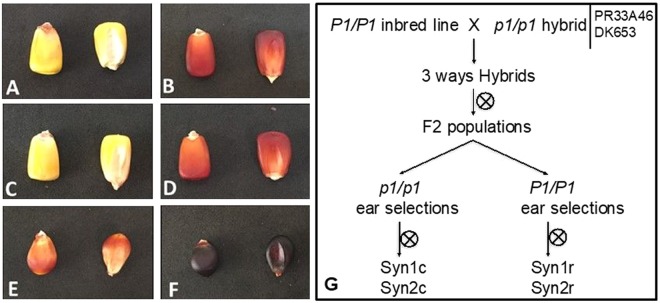
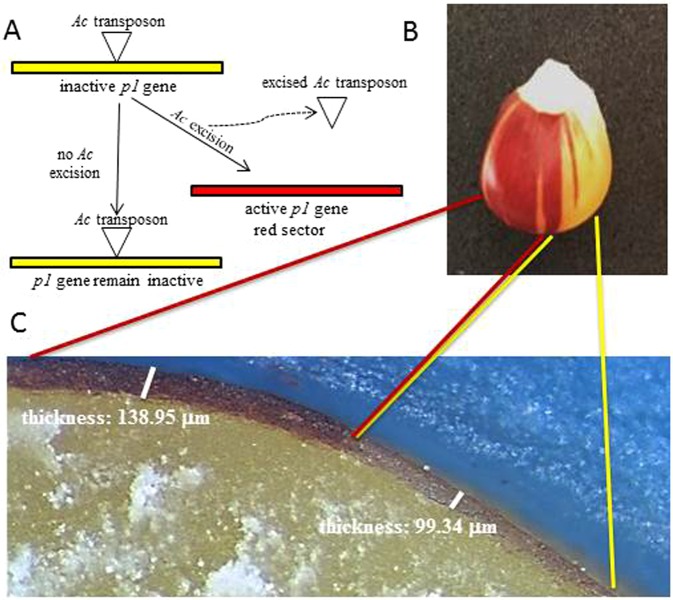
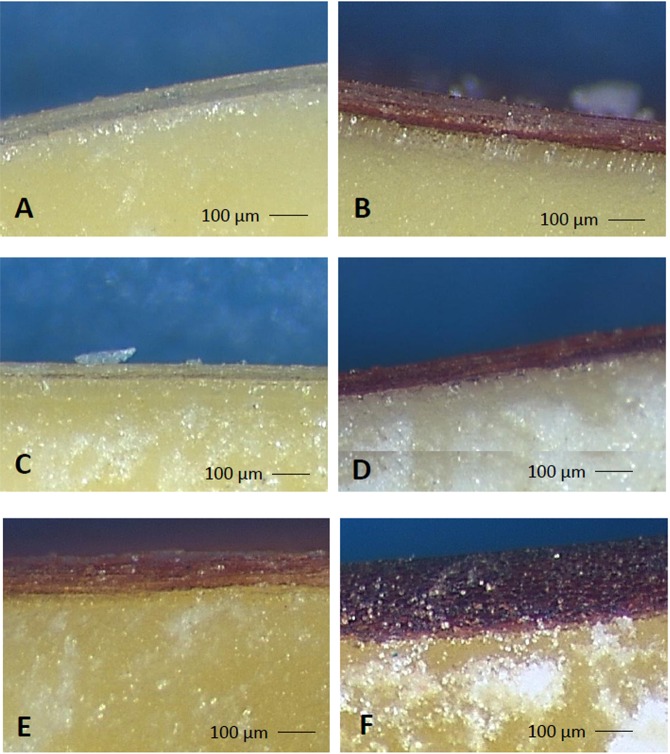
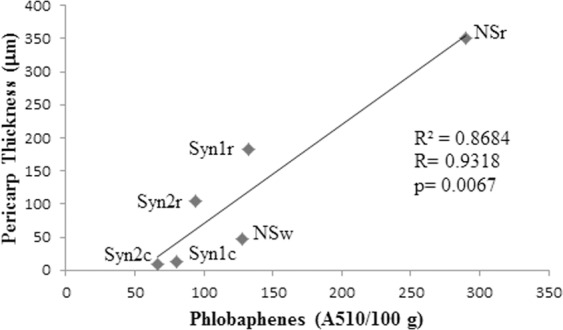
Phlobaphenes are insoluble phenolic compounds which are accumulated in a limited number of tissues such as seed pericarp and cob glumes, conferring on them a typical red-brown pigmentation. These secondary metabolites, derived from 3-deoxy flavonoids, are thought to have an important role in plants' resistance against various pathogens, e.g. by reducing fungal infection, and also to have beneficial effects on human and animal health due to their high antioxidant power. The aim of this work was to determine the role of phlobaphenes in reducing mycotoxin contamination on maize kernels. We analysed the effect of the P1 (pericarp color 1) gene on phlobaphenes accumulation, pericarp thickness and fumonisins accumulation. Analysing fumonisins accumulation in different genetic backgrounds through three seasons, we found a clear decrease of these toxins through the three years (Wilcoxon test, Z = 2.2, p = 0.0277) in coloured lines compared with the isogenic non-coloured ones. The coloured lines, carrying P1 allele showed an increase of phlobaphenes (about 10-14 fold) with respect to colourless lines. Furthermore there was a correlation between phlobaphenes accumulation and pericarp thickness (R = 0.9318; p = 0.0067). Taken together, these results suggest that the P1 gene plays a central role in regulating phlobaphenes accumulation in maize kernels, and indirectly, also tackles mycotoxins accumulation. The development and cultivation of corn varieties rich in phlobaphenes could be a powerful tool to reduce the loss of both quality and yield due to mycotoxin contamination, increasing the safety and the quality of the maize product.
叶啉是不溶于水的酚类化合物,它们在种子的种皮和玉米穗轴颖片等有限的组织中积累,赋予它们典型的红棕色色素沉着。这些次级代谢产物来源于 3-脱氧类黄酮,被认为在植物抵抗各种病原体方面具有重要作用,例如,通过减少真菌感染,并且由于其高抗氧化能力,对人类和动物健康也有有益的影响。本工作的目的是确定叶啉在减少玉米穗上霉菌毒素污染中的作用。我们分析了 P1(种皮颜色 1)基因对叶啉积累、种皮厚度和伏马菌素积累的影响。通过三个季节分析不同遗传背景下伏马菌素的积累,我们发现有色系与同基因无色系相比,这些毒素在三年中明显减少(Wilcoxon 检验,Z=2.2,p=0.0277)。携带 P1 等位基因的有色系叶啉积累增加(约 10-14 倍),而无色系则没有。此外,叶啉积累与种皮厚度之间存在相关性(R=0.9318;p=0.0067)。总之,这些结果表明,P1 基因在调节玉米穗中叶啉积累方面起着核心作用,并间接地处理霉菌毒素的积累。开发和种植富含叶啉的玉米品种可能是减少霉菌毒素污染导致的质量和产量损失的有力工具,提高玉米产品的安全性和质量。