Department of Neurology, the First Affiliated Hospital of Anhui Medical University, Hefei, China.
Department of Neurology, the Second Affiliated Hospital of Anhui Medical University, Hefei, China.
Brain Behav. 2020 Mar;10(3):e01546. doi: 10.1002/brb3.1546. Epub 2020 Jan 30.
Infections could contribute to Alzheimer's disease (AD) neuropathology in human. However, experimental evidence for a causal relationship between infections during the prenatal phase and the onset of AD is lacking.
CD-1 mothers were intraperitoneally received lipopolysaccharide (LPS) with two doses (25 and 50 μg/kg) or normal saline every day during gestational days 15-17. A battery of behavioral tasks was used to assess the species-typical behavior, sensorimotor capacity, anxiety, locomotor activity, recognition memory, and spatial learning and memory in 1-, 6-, 12-, 18-, and 22-month-old offspring mice. An immunohistochemical technology was performed to detect neuropathological indicators consisting of amyloid-β (Aβ), phosphorylated tau (p-tau), and glial fibrillary acidic protein (GFAP) in the hippocampus.
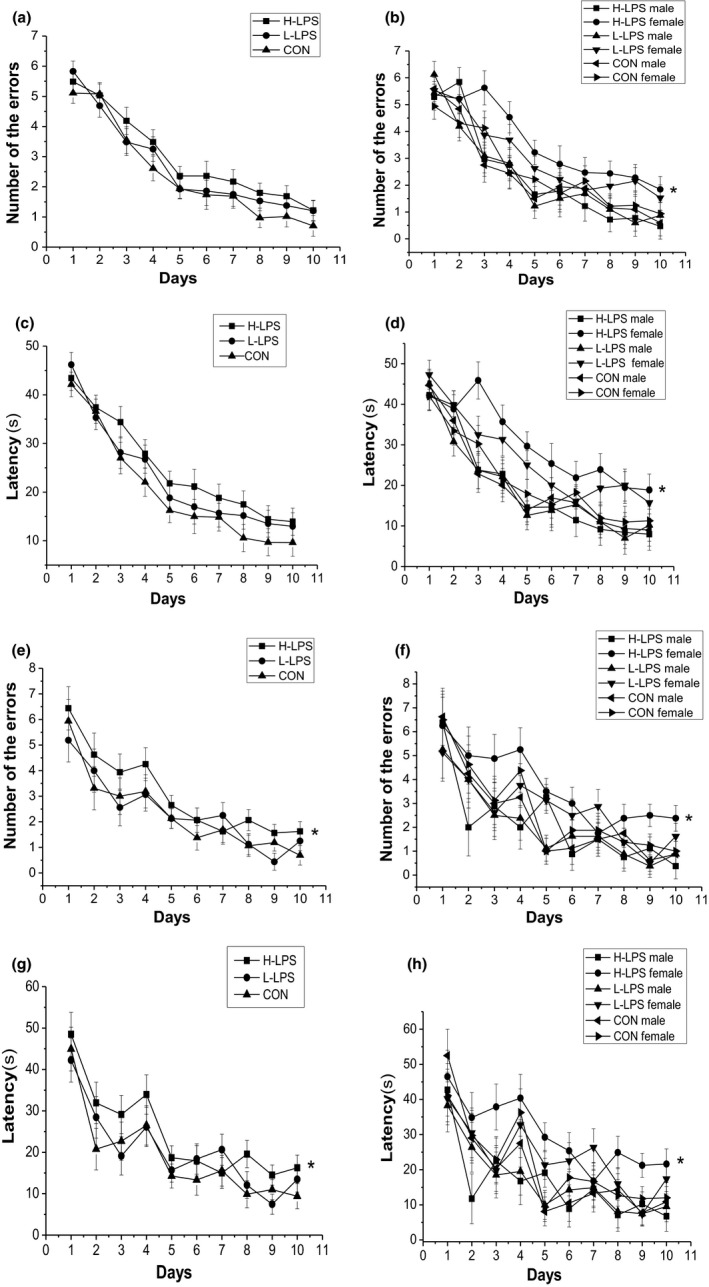
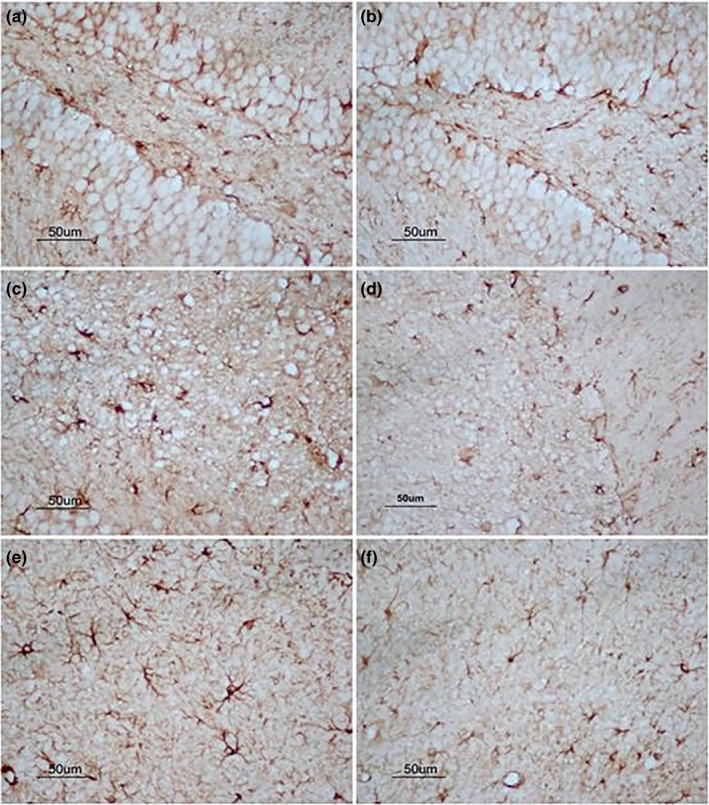
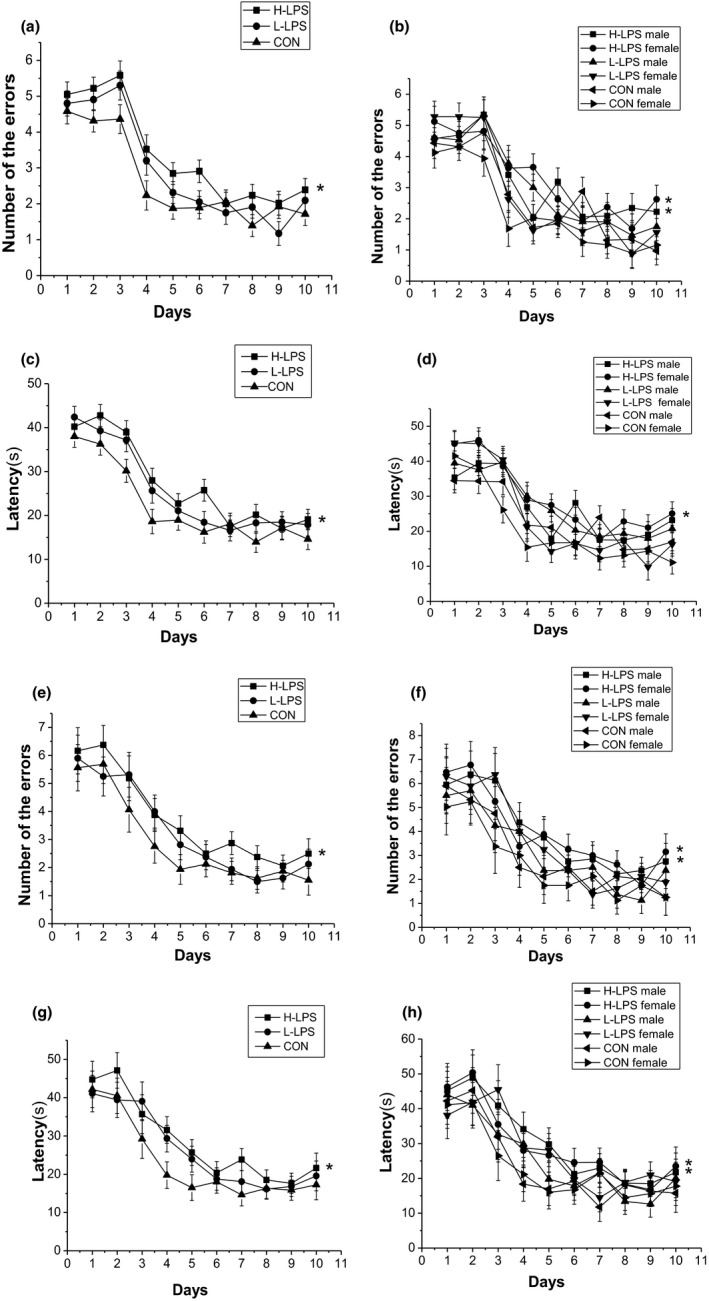
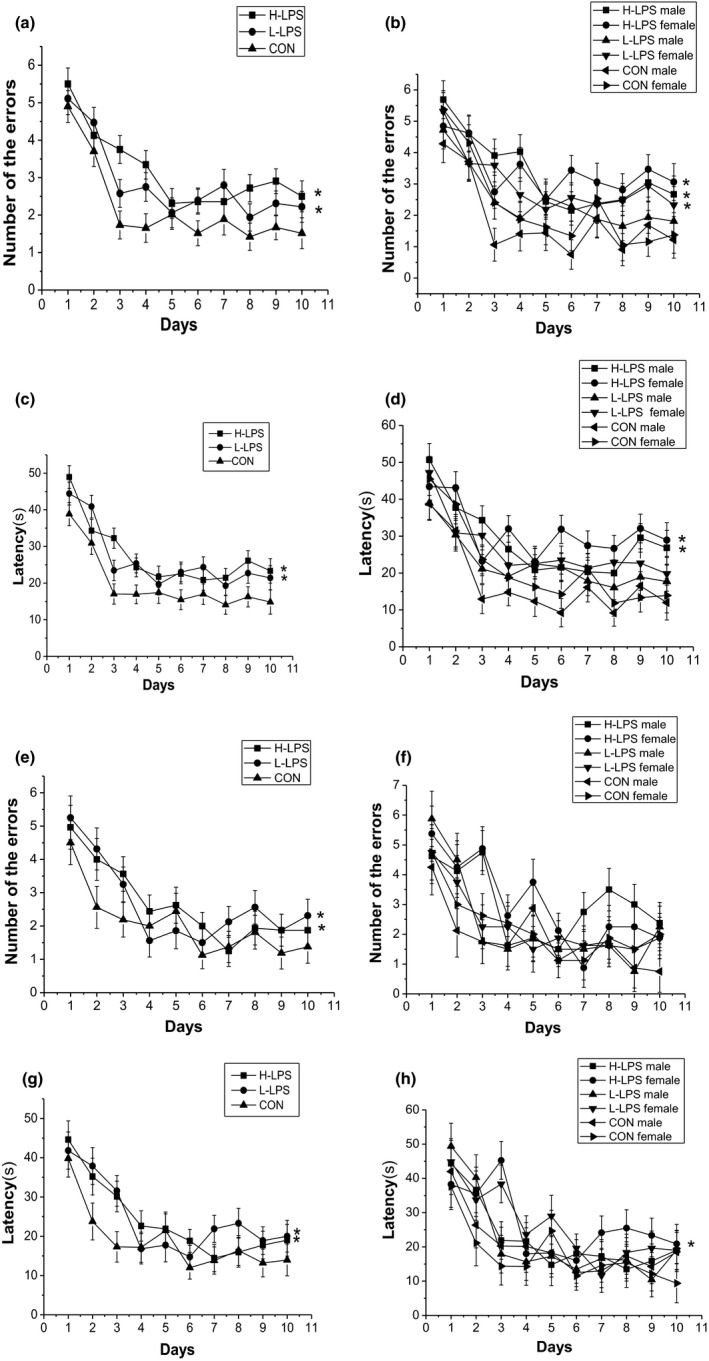
Compared to the same-aged controls, LPS-treated offspring had similar behavioral abilities and the levels of Aβ42, p-tau, and GFAP at 1 and 6 months old. From 12 months onward, LPS-treated offspring gradually showed decreased species-typical behavior, sensorimotor ability, locomotor activity, recognition memory, and spatial learning and memory, and increased anxieties and the levels of Aβ42, p-tau, and GFAP relative to the same-aged controls. Moreover, this damage effect (especially cognitive decline) persistently progressed onwards. The changes in these neuropathological indicators significantly correlated with impaired spatial learning and memory.
Prenatal exposure to low doses of LPS caused AD-related features including behavioral and neuropathological changes from midlife to senectitude.
感染可能导致人类阿尔茨海默病(AD)的神经病理学变化。然而,在产前阶段感染与 AD 发病之间存在因果关系的实验证据尚缺乏。
CD-1 孕鼠在妊娠第 15-17 天期间每天接受两次腹腔内脂多糖(LPS)(25 和 50μg/kg)或生理盐水处理。采用一系列行为学任务来评估 1、6、12、18 和 22 月龄仔鼠的种属典型行为、感觉运动能力、焦虑、运动活性、识别记忆和空间学习记忆。采用免疫组织化学技术检测海马中的神经病理学标志物,包括淀粉样β(Aβ)、磷酸化 tau(p-tau)和胶质纤维酸性蛋白(GFAP)。
与同龄对照组相比,LPS 处理的仔鼠在 1 和 6 月龄时具有相似的行为能力和 Aβ42、p-tau 和 GFAP 水平。从 12 月龄开始,LPS 处理的仔鼠逐渐表现出种属典型行为、感觉运动能力、运动活性、识别记忆和空间学习记忆下降,以及焦虑和 Aβ42、p-tau 和 GFAP 水平增加,与同龄对照组相比。此外,这种损伤效应(尤其是认知能力下降)持续进展。这些神经病理学指标的变化与空间学习和记忆受损显著相关。
产前低剂量 LPS 暴露可导致 AD 相关特征,包括从中年到老年的行为和神经病理学变化。