Emig Ramona, Zgierski-Johnston Callum M, Beyersdorf Friedhelm, Rylski Bartosz, Ravens Ursula, Weber Wilfried, Kohl Peter, Hörner Maximilian, Peyronnet Rémi
Institute for Experimental Cardiovascular Medicine, University Heart Center Freiburg - Bad Krozingen, Medical Center-University of Freiburg, Freiburg, Germany.
Faculty of Medicine, University of Freiburg, Freiburg, Germany.
Front Physiol. 2020 Jan 10;10:1526. doi: 10.3389/fphys.2019.01526. eCollection 2019.
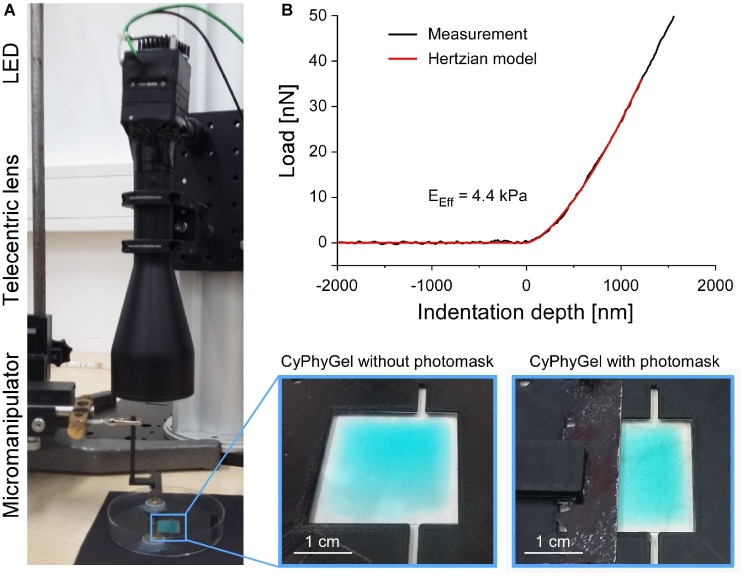
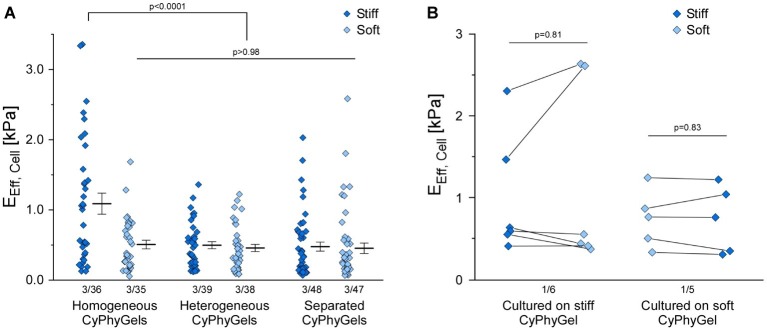
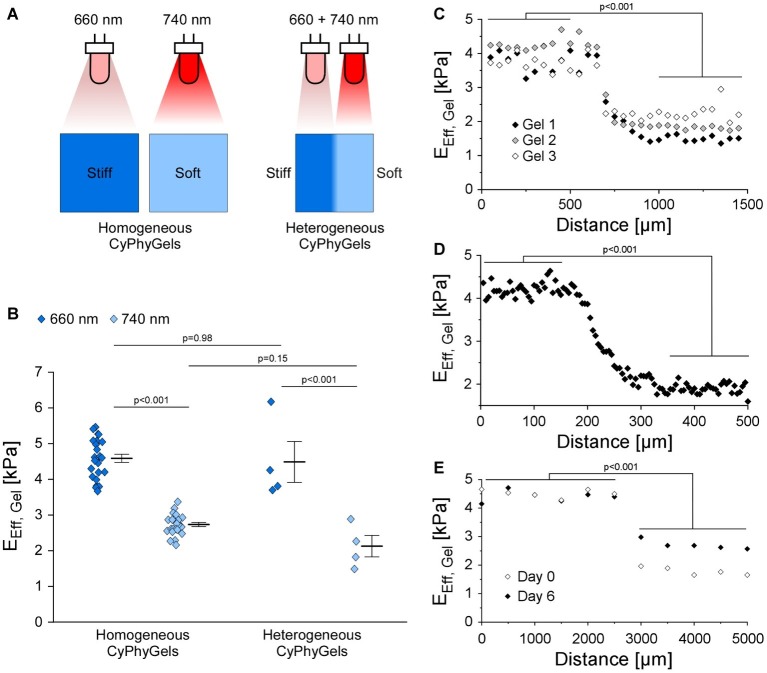
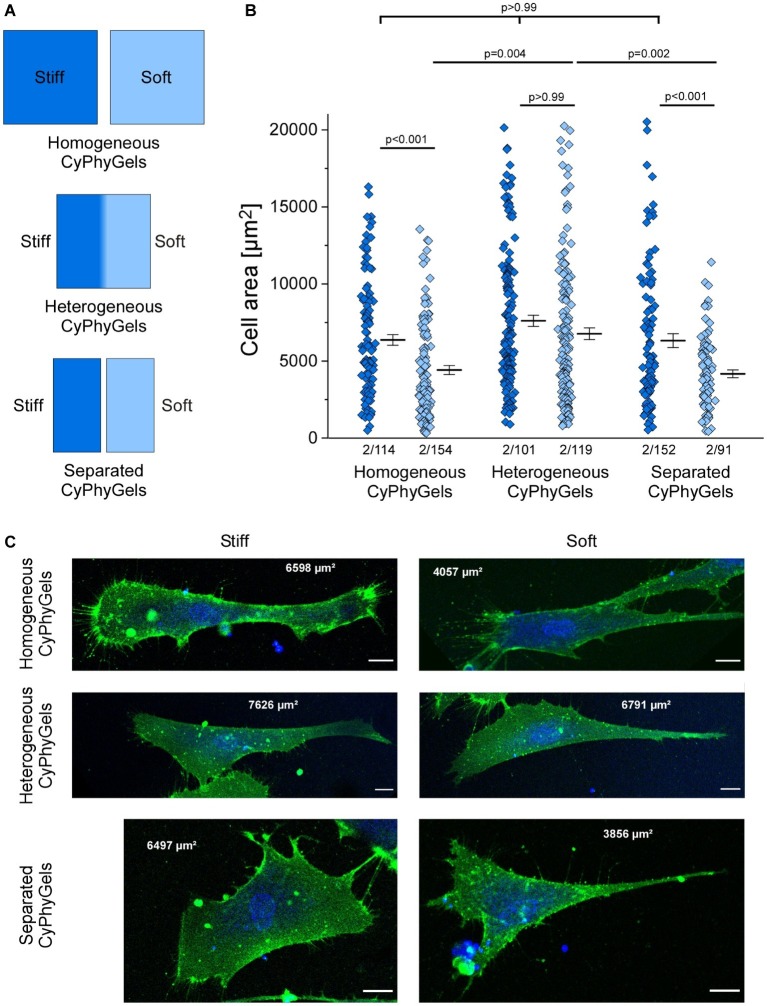
Fibrosis is associated with aging and many cardiac pathologies. It is characterized both by myofibroblast differentiation and by excessive accumulation of extracellular matrix proteins. Fibrosis-related tissue remodeling results in significant changes in tissue structure and function, including passive mechanical properties. This research area has gained significant momentum with the recent development of new tools and approaches to better characterize and understand the ability of cells to sense and respond to their biophysical environment. We use a novel hydrogel, termed CyPhyGel, to provide an advanced model of remodeling-related changes in tissue stiffness. Based on light-controlled dimerization of a Cyanobacterial Phytochrome, it enables contactless and reversible tuning of hydrogel mechanical properties with high spatial and temporal resolution. Human primary atrial fibroblasts were cultured on CyPhyGels. After 4 days of culturing on stiff (4.6 kPa) or soft (2.7 kPa) CyPhyGels, we analyzed fibroblast cell area and stiffness. Cells grown on the softer substrate were smaller and softer, compared to cells grown on the stiffer substrate. This difference was absent when both soft and stiff growth substrates were combined in a single CyPhyGel, with the resulting cell areas being similar to those on homogeneously stiff gels and cell stiffnesses being similar to those on homogeneously soft substrates. Using CyPhyGels to mimic tissue stiffness heterogeneities , our results confirm the ability of cardiac fibroblasts to adapt to their mechanical environment, and suggest the presence of a paracrine mechanism that tunes fibroblast structural and functional properties associated with mechanically induced phenotype conversion toward myofibroblasts. In the context of regionally increased tissue stiffness, such as upon scarring or in diffuse fibrosis, such a mechanism could help to prevent abrupt changes in cell properties at the border zone between normal and diseased tissue. The light-tunable mechanical properties of CyPhyGels and their suitability for studying human primary cardiac cells make them an attractive model system for cardiac mechanobiology research. Further investigations will explore the interactions between biophysical and soluble factors in the response of cardiac fibroblasts to spatially and temporally heterogeneous mechanical cues.
纤维化与衰老及多种心脏病理状况相关。其特征在于肌成纤维细胞分化以及细胞外基质蛋白的过度积累。与纤维化相关的组织重塑会导致组织结构和功能发生显著变化,包括被动力学特性。随着用于更好地表征和理解细胞感知及响应其生物物理环境能力的新工具和新方法的近期发展,该研究领域已获得显著发展动力。我们使用一种名为CyPhyGel的新型水凝胶,以提供与重塑相关的组织硬度变化的先进模型。基于蓝藻光敏色素的光控二聚作用,它能够以高空间和时间分辨率对水凝胶的力学特性进行非接触式和可逆调节。人原代心房成纤维细胞在CyPhyGels上培养。在坚硬(约4.6 kPa)或柔软(约2.7 kPa)的CyPhyGels上培养4天后,我们分析了成纤维细胞的面积和硬度。与在较硬基质上生长的细胞相比,在较软基质上生长的细胞更小且更柔软。当软质和硬质生长基质在单个CyPhyGel中结合时,这种差异消失,所得细胞面积与在均匀坚硬凝胶上的细胞面积相似,细胞硬度与在均匀柔软基质上的细胞硬度相似。使用CyPhyGels模拟组织硬度异质性,我们的结果证实了心脏成纤维细胞适应其力学环境的能力,并表明存在一种旁分泌机制,该机制可调节与机械诱导的向肌成纤维细胞表型转化相关的成纤维细胞结构和功能特性。在局部组织硬度增加的情况下,例如在瘢痕形成或弥漫性纤维化时,这样的机制有助于防止正常组织与病变组织边界区域细胞特性的突然变化。CyPhyGels的光可调力学特性及其对研究人原代心脏细胞的适用性使其成为心脏机械生物学研究的有吸引力的模型系统。进一步的研究将探索生物物理因素和可溶性因素在心脏成纤维细胞对空间和时间异质力学信号响应中的相互作用。