Saito Yoshiro
Laboratory of Molecular Biology and Metabolism, Graduate School of Pharmaceutical Sciences, Tohoku University, 6-3, Aoba, Aramaki, Aoba-ku, Sendai 980-8578, Japan.
J Clin Biochem Nutr. 2020 Jan;66(1):1-7. doi: 10.3164/jcbn.19-31. Epub 2019 Nov 12.
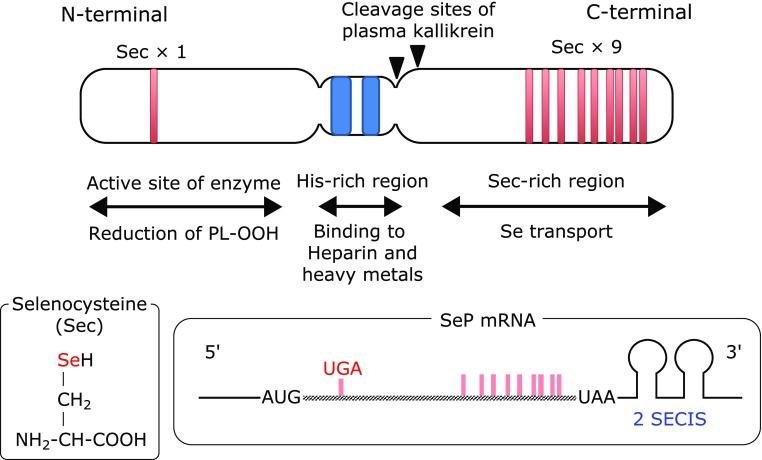
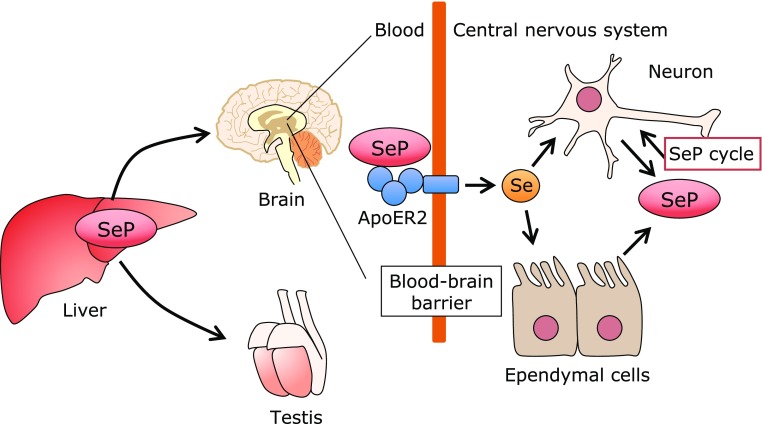
Selenoprotein P (encoded by ) contains the essential trace element selenium in the form of selenocysteine, which is an analog of cysteine that contains selenium instead of sulfur. Selenoprotein P is a major selenium-containing protein in human plasma and is mainly synthesized in the liver. It functions as a selenium-transporter to maintain antioxidative selenoenzymes in several tissues, such as the brain and testis, and plays a pivotal role in selenium-metabolism and antioxidative defense. A decrease of selenoprotein P and selenoproteins causes various dysfunctions related to oxidative stress. On the other hand, recent studies indicate that excess selenoprotein P exacerbates glucose metabolism and promotes type 2 diabetes. This review focuses on the biological functions of selenoprotein P, particularly its role in selenium-metabolism and antioxidative defense. Furthermore, the effects of excess selenoprotein P on glucose metabolism, and resulting diseases are described. The development of a therapeutic agent that targets excess selenoprotein P is discussed.
硒蛋白P(由 编码)以硒代半胱氨酸的形式包含必需微量元素硒,硒代半胱氨酸是半胱氨酸的类似物,其中含硒而非硫。硒蛋白P是人体血浆中主要的含硒蛋白,主要在肝脏中合成。它作为一种硒转运蛋白,维持多种组织(如大脑和睾丸)中的抗氧化硒酶,并在硒代谢和抗氧化防御中起关键作用。硒蛋白P和硒蛋白的减少会导致与氧化应激相关的各种功能障碍。另一方面,最近的研究表明,过量的硒蛋白P会加剧葡萄糖代谢并促进2型糖尿病。本综述重点关注硒蛋白P的生物学功能,特别是其在硒代谢和抗氧化防御中的作用。此外,还描述了过量硒蛋白P对葡萄糖代谢及由此引发疾病的影响。讨论了针对过量硒蛋白P的治疗药物的开发。