First Department of Internal Medicine, University of Toyama, Toyama, Japan.
Fuji Chemical Industries, Co., Ltd., Toyama, Japan.
J Cachexia Sarcopenia Muscle. 2020 Feb;11(1):241-258. doi: 10.1002/jcsm.12530. Epub 2020 Jan 31.
Skeletal muscle is mainly responsible for insulin-stimulated glucose disposal. Dysfunction in skeletal muscle metabolism especially during obesity contributes to the insulin resistance. Astaxanthin (AX), a natural antioxidant, has been shown to ameliorate hepatic insulin resistance in obese mice. However, its effects in skeletal muscle are poorly understood. The current study aimed to investigate the molecular target of AX in ameliorating skeletal muscle insulin resistance.
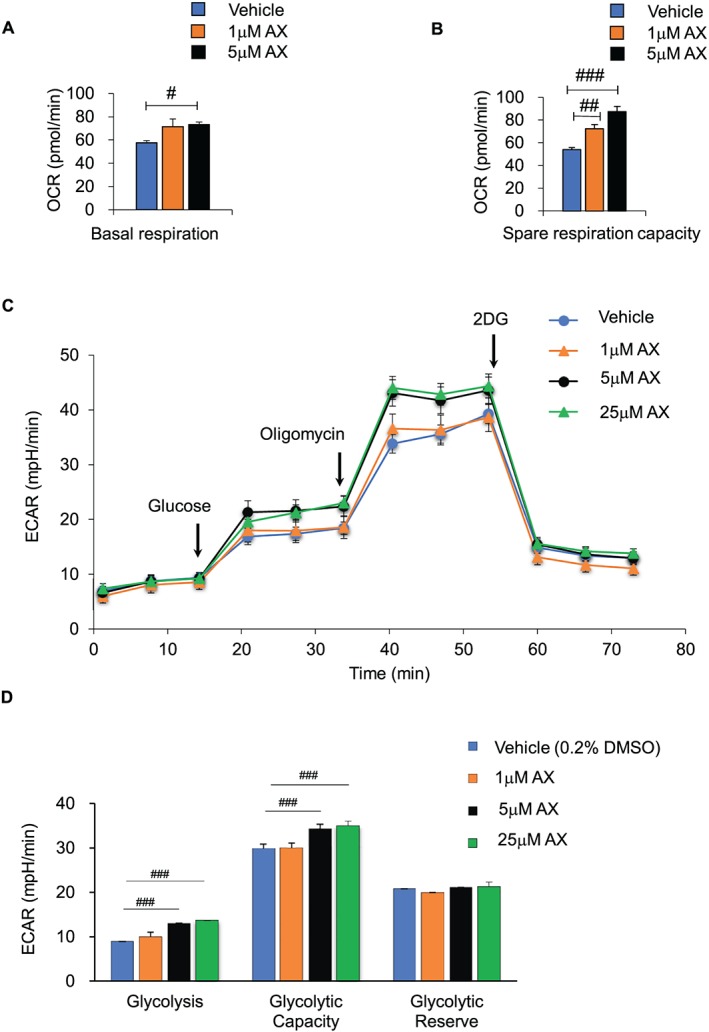
We fed 6-week-old male C57BL/6J mice with normal chow (NC) or NC supplemented with AX (NC+AX) and high-fat-diet (HFD) or HFD supplemented with AX for 24 weeks. We determined the effect of AX on various parameters including insulin sensitivity, glucose uptake, inflammation, kinase signaling, gene expression, and mitochondrial function in muscle. We also determined energy metabolism in intact C2C12 cells treated with AX using the Seahorse XFe96 Extracellular Flux Analyzer and assessed the effect of AX on mitochondrial oxidative phosphorylation and mitochondrial biogenesis.
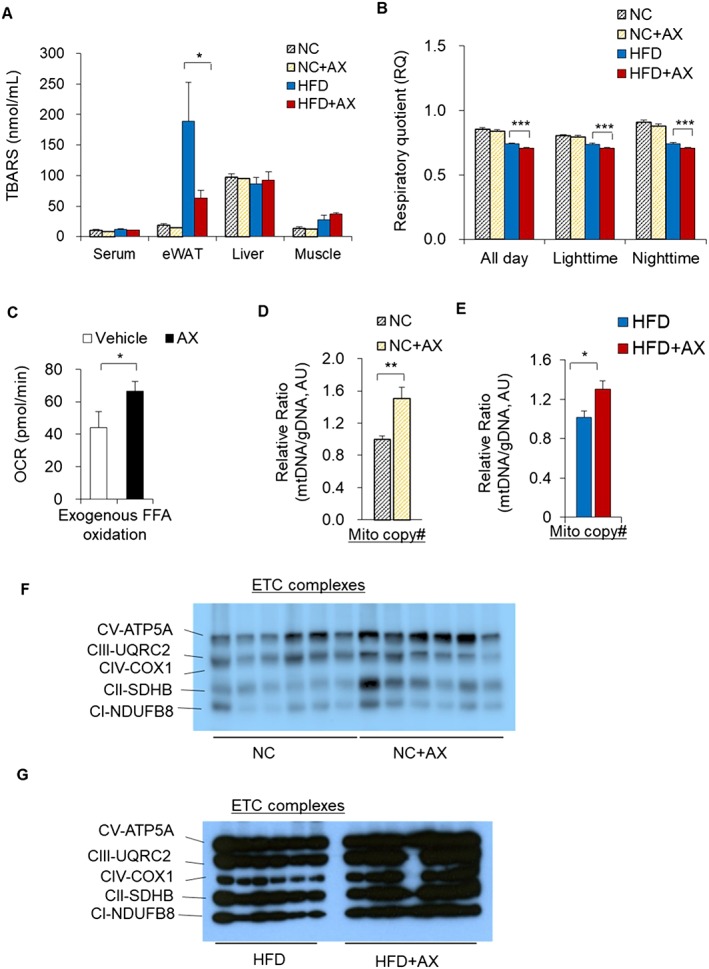
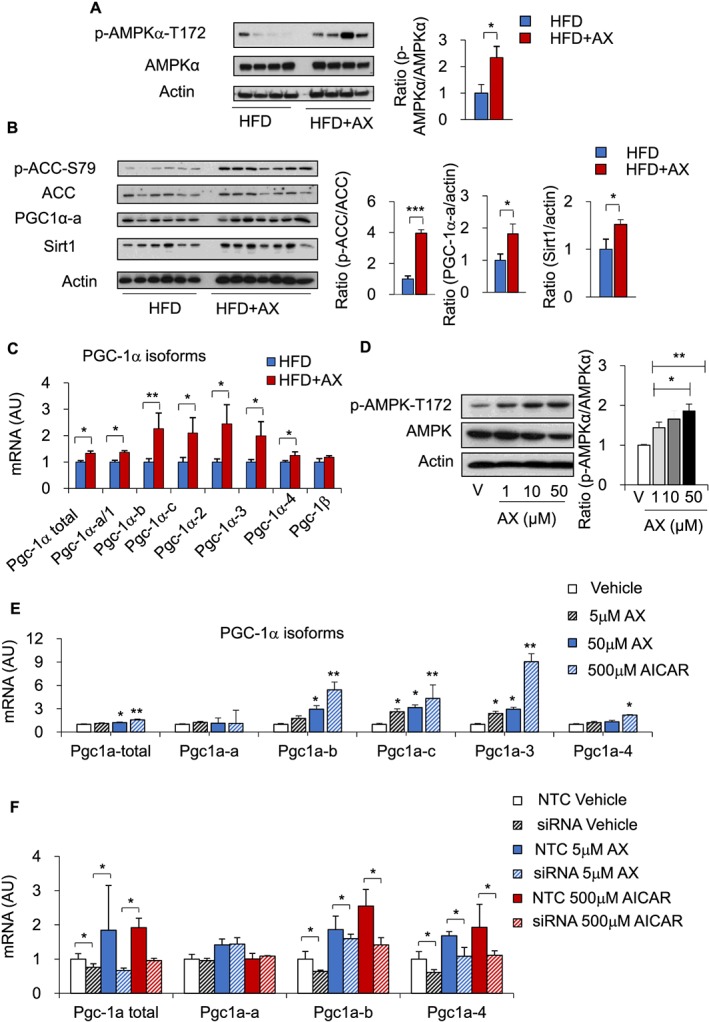
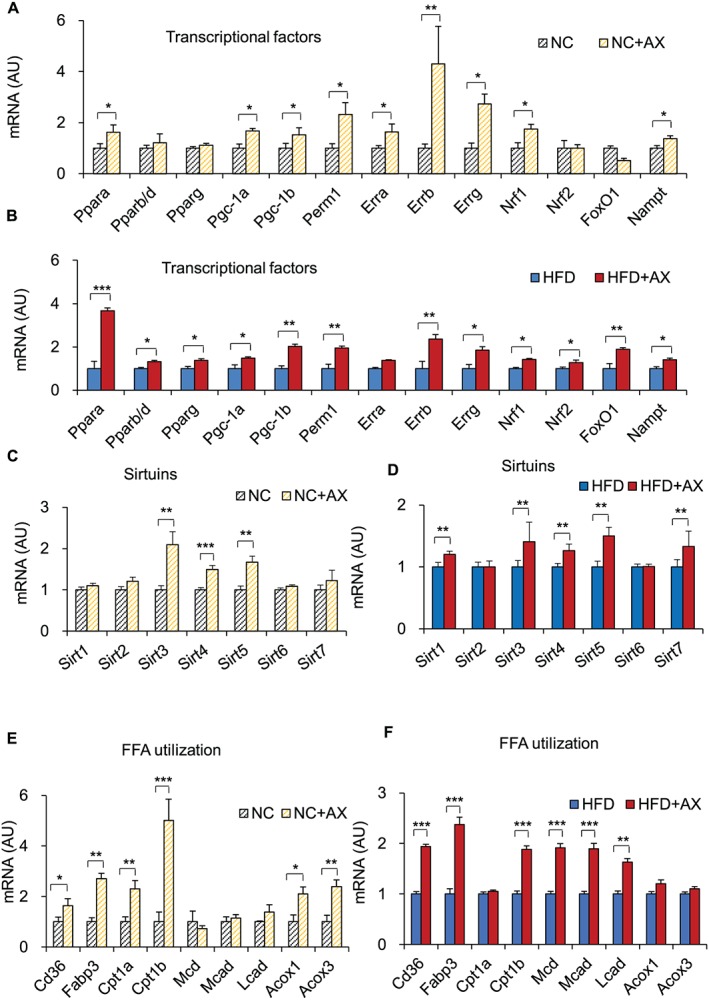
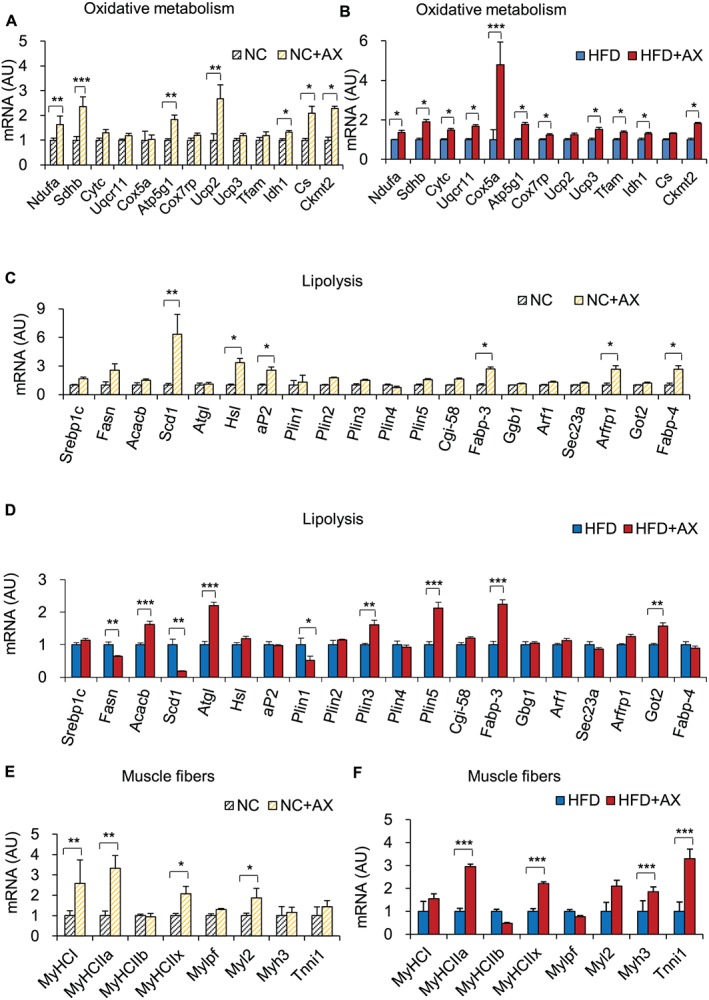
AX-treated HFD mice showed improved metabolic status with significant reduction in blood glucose, serum total triglycerides, and cholesterol (p< 0.05). AX-treated HFD mice also showed improved glucose metabolism by enhancing glucose incorporation into peripheral target tissues, such as the skeletal muscle, rather than by suppressing gluconeogenesis in the liver as shown by hyperinsulinemic-euglycemic clamp study. AX activated AMPK in the skeletal muscle of the HFD mice and upregulated the expressions of transcriptional factors and coactivator, thereby inducing mitochondrial remodeling, including increased mitochondrial oxidative phosphorylation component and free fatty acid metabolism. We also assessed the effects of AX on mitochondrial biogenesis in the siRNA-mediated AMPK-depleted C2C12 cells and showed that the effect of AX was lost in the genetically AMPK-depleted C2C12 cells. Collectively, AX treatment (i) significantly ameliorated insulin resistance and glucose intolerance through regulation of AMPK activation in the muscle, (ii) stimulated mitochondrial biogenesis in the muscle, (iii) enhanced exercise tolerance and exercise-induced fatty acid metabolism, and (iv) exerted antiinflammatory effects via its antioxidant activity in adipose tissue.
We concluded that AX treatment stimulated mitochondrial biogenesis and significantly ameliorated insulin resistance through activation of AMPK pathway in the skeletal muscle.
骨骼肌主要负责胰岛素刺激的葡萄糖摄取。骨骼肌代谢功能障碍,尤其是在肥胖时,会导致胰岛素抵抗。虾青素(AX)是一种天然抗氧化剂,已被证明可改善肥胖小鼠的肝胰岛素抵抗。然而,其在骨骼肌中的作用尚不清楚。本研究旨在探讨 AX 改善骨骼肌胰岛素抵抗的分子靶标。
我们用普通饲料(NC)或 NC 补充虾青素(NC+AX)喂养 6 周龄雄性 C57BL/6J 小鼠,并给予高脂肪饮食(HFD)或 HFD 补充虾青素 24 周。我们测定了 AX 对胰岛素敏感性、葡萄糖摄取、炎症、激酶信号、基因表达和肌肉线粒体功能等各种参数的影响。我们还使用 Seahorse XFe96 细胞外通量分析仪测定了 AX 处理的完整 C2C12 细胞中的能量代谢,并评估了 AX 对线粒体氧化磷酸化和线粒体生物发生的影响。
AX 处理的 HFD 小鼠表现出代谢状态的改善,血糖、血清总甘油三酯和胆固醇显著降低(p<0.05)。AX 处理的 HFD 小鼠还通过增强外周靶组织(如骨骼肌)的葡萄糖摄取来改善葡萄糖代谢,而不是通过抑制肝脏的糖异生来实现,这一点通过高胰岛素-正葡萄糖钳夹研究得到证实。AX 激活了 HFD 小鼠骨骼肌中的 AMPK,并上调了转录因子和共激活因子的表达,从而诱导线粒体重塑,包括增加线粒体氧化磷酸化成分和游离脂肪酸代谢。我们还评估了 AX 在 siRNA 介导的 AMPK 耗竭的 C2C12 细胞中线粒体生物发生的影响,并表明 AX 的作用在基因敲除 AMPK 的 C2C12 细胞中丧失。总之,AX 治疗(i)通过调节肌肉中的 AMPK 激活,显著改善了胰岛素抵抗和葡萄糖不耐受,(ii)刺激了肌肉中的线粒体生物发生,(iii)增强了运动耐受力和运动诱导的脂肪酸代谢,(iv)通过其在脂肪组织中的抗氧化活性发挥了抗炎作用。
我们得出结论,AX 治疗通过激活骨骼肌中的 AMPK 通路刺激线粒体生物发生,显著改善了胰岛素抵抗。