Transfusion Department, First Affiliated Hospital of China Medical University, Shenyang, China.
J Clin Lab Anal. 2020 Jun;34(6):e23224. doi: 10.1002/jcla.23224. Epub 2020 Jan 31.
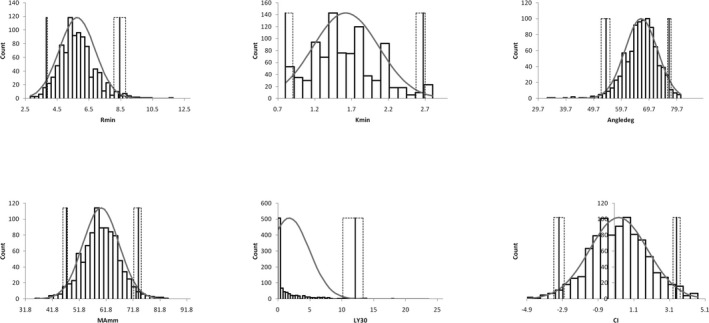
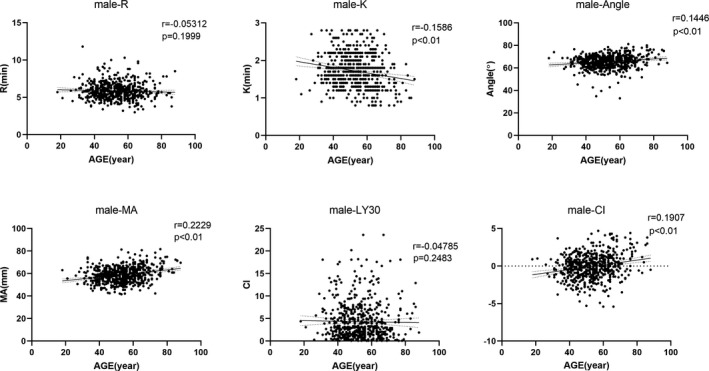
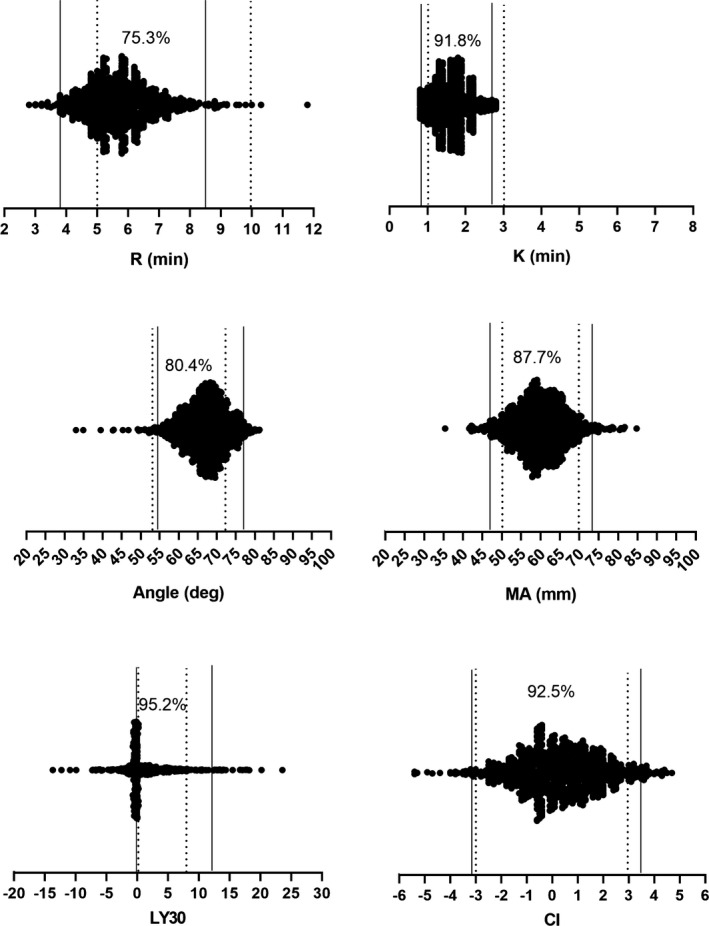
Thromboelastography (TEG) as a global coagulation test has been continuously developed for many decades in either research or clinical practice. The versatility of TEG test leads to difficulty in standardization and result interpretation. Reference intervals (RIs) of TEG may be one of the most controversial factors that influence its wide applications. RIs establishment with the traditional method is time-consuming and laborious as well as beyond general laboratory capability. Indirect method using stored data and with statistical calculation and small cost is emerging as an alternative approach for RIs determination. Gender, age, or both affect RIs and must be taken into account before RIs estimation. The present study retrospectively collected a total of 930 TEG results as subjects and established RIs with indirect method for Kaolin-activated TEG, including the parameters of R, K, αAngle, MA, and CI. Furthermore, gender, age, and gender-dependent age subsets analyses were performed to determine their effects on RIs of TEG. In this study, we found that TEG parameters showed more hypercoagulability in female than male, most of the measured TEG variables were significantly associated with aging, but only in male statistical significance was found among different age stratification and 60-year-old could be considered as cutting point to differentiate coagulation ability in male. In addition, RIs of TEG were estimated by indirect method suitably and verified to be valid in our study. Finally, the RIs of TEG by indirect method were basically significantly different to the RIs recommended by manufacturer, but the consistent percentage is relatively high in the most of measured parameters. In conclusion, it is suggestive that the indirect method for RIs establishment is feasible, but relevant factors, such as gender and age, specifically gender-dependent age effect, should be considered before RIs determinations.
血栓弹力图(TEG)作为一种全局凝血测试,在研究或临床实践中已经不断发展了几十年。TEG 测试的多功能性导致其标准化和结果解释变得困难。TEG 的参考区间(RIs)可能是影响其广泛应用的最具争议的因素之一。使用传统方法建立 RIs 既耗时费力,也超出了一般实验室的能力。使用存储数据和统计计算的间接方法以及成本低廉,正在成为确定 RIs 的替代方法。性别、年龄或两者都会影响 RIs,在进行 RIs 估计之前必须考虑到这些因素。本研究回顾性地收集了总共 930 个 TEG 结果作为研究对象,并使用间接方法建立了高岭土激活 TEG 的 RIs,包括 R、K、αAngle、MA 和 CI 等参数。此外,还进行了性别、年龄以及性别相关年龄亚组分析,以确定它们对 TEG RIs 的影响。在这项研究中,我们发现 TEG 参数在女性中表现出比男性更高的高凝状态,大多数测量的 TEG 变量与年龄有关,但只有在男性中,不同年龄分层之间才存在统计学意义,60 岁可以被认为是区分男性凝血能力的临界点。此外,我们通过间接方法适当地估计了 TEG 的 RIs,并在本研究中验证了其有效性。最后,通过间接方法得出的 TEG RIs 与制造商推荐的 RIs 基本显著不同,但在大多数测量参数中,一致性百分比相对较高。总之,间接方法建立 RIs 是可行的,但在进行 RIs 测定之前,应考虑相关因素,如性别和年龄,特别是性别相关的年龄效应。