Program in Chronic Infectious and Inflammatory Diseases, Oxidant and Inflammation Biology Group, School of Health and Biomedical Sciences, College of Science, Engineering & Health, RMIT University, Melbourne, Australia.
Infection and Immunity Program, Department of Pharmacology, Biomedicine Discovery Institute, Monash University, Clayton, Australia.
Antioxid Redox Signal. 2020 May 1;32(13):982-992. doi: 10.1089/ars.2020.8027. Epub 2020 Mar 6.
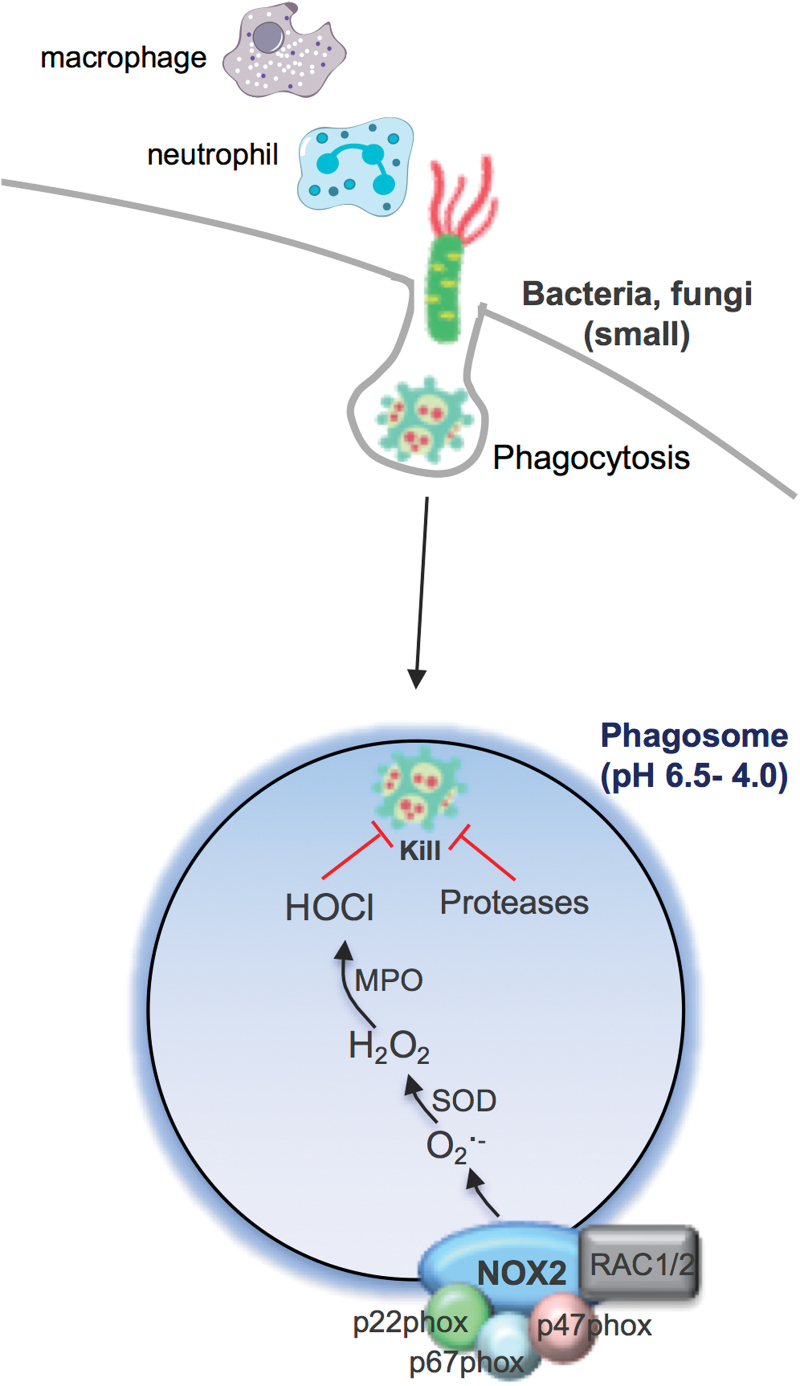
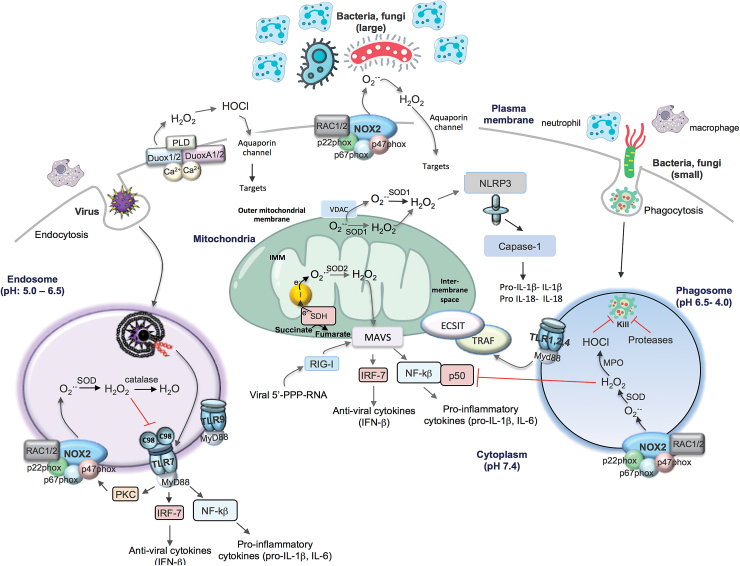
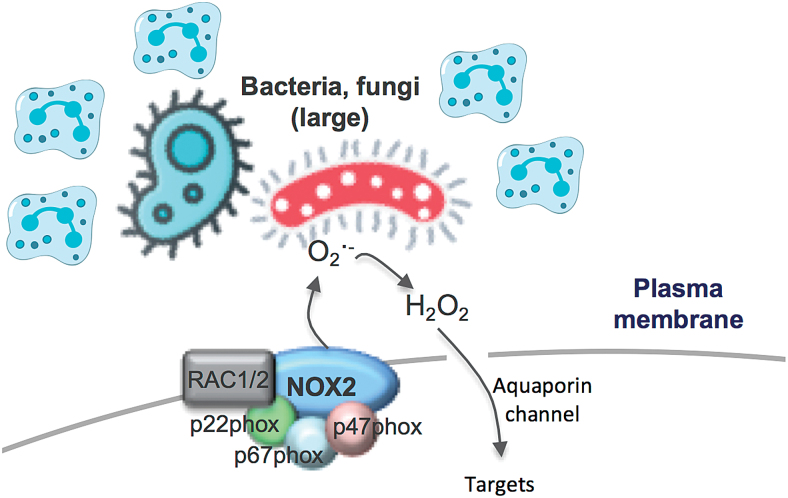
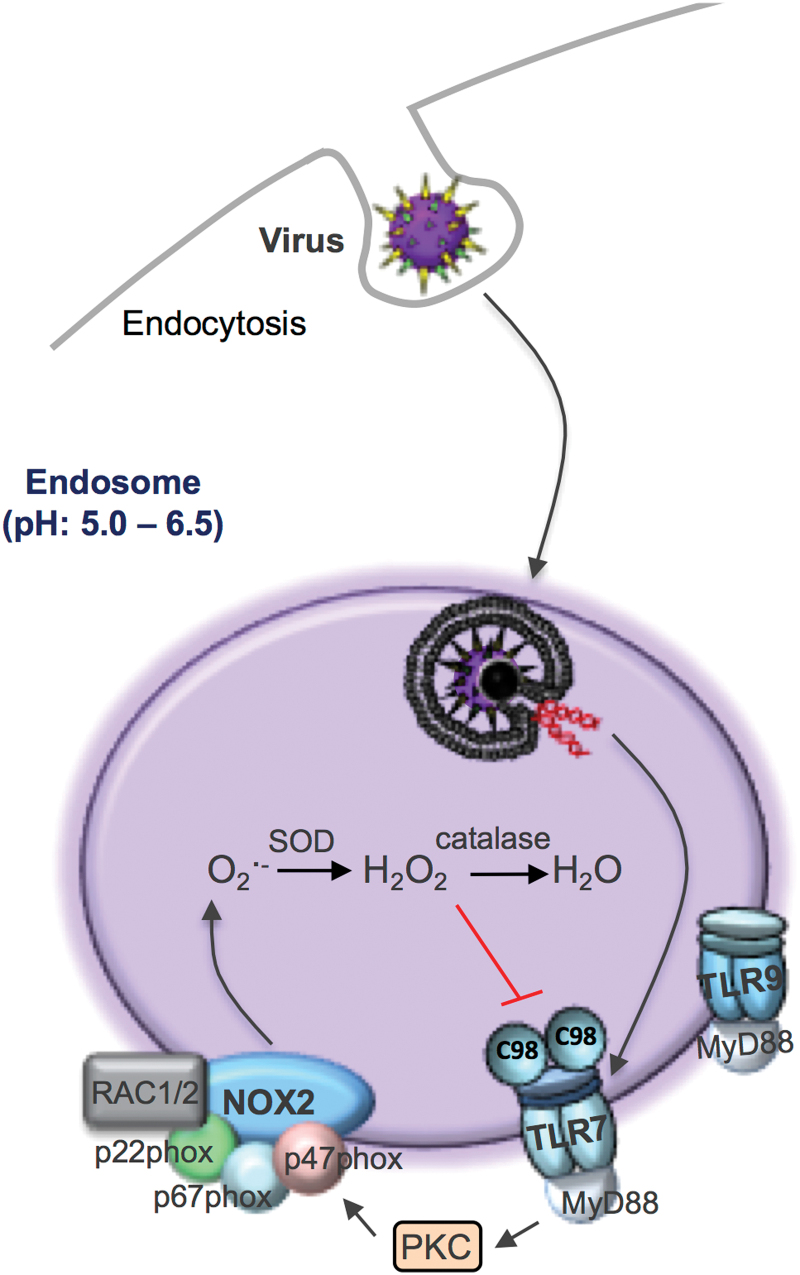
Reactive oxygen species (ROS) are often considered to be undesirable toxic molecules that are generated under conditions of cellular stress, which can cause damage to critical macromolecules such as DNA. However, ROS can also contribute to the pathogenesis of cancer and many other chronic inflammatory disease conditions, including atherosclerosis, metabolic disease, chronic obstructive pulmonary disease, neurodegenerative disease, and autoimmune disease. The field of ROS biology is expanding, with an emerging paradigm that these reactive species are not generated haphazardly, but produced in localized regions or in specific subcellular compartments, and this has important consequences for immune system function. Currently, there is evidence for ROS generation in extracellular spaces, in endosomal compartments, and within mitochondria. Intriguingly, the specific location of ROS production appears to be influenced by the type of invading pathogen (, bacteria, virus, or fungus), the size of the invading pathogen, as well as the expression/subcellular action of pattern recognition receptors and their downstream signaling networks, which sense the presence of these invading pathogens. ROS are deliberately generated by the immune system, using specific NADPH oxidases that are critically important for pathogen clearance. Professional phagocytic cells can sense a foreign bacterium, initiate phagocytosis, and then within the confines of the phagosome, deliver bursts of ROS to these pathogens. The importance of confining ROS to this specific location is the impetus for this perspective. There are specific knowledge gaps on the fate of the ROS generated by NADPH oxidases/mitochondria, how these ROS are confined to specific locations, as well as the identity of ROS-sensitive targets and how they regulate cellular signaling.
活性氧 (ROS) 通常被认为是在细胞应激条件下产生的有害有毒分子,会对 DNA 等关键大分子造成损伤。然而,ROS 也可以促成癌症和许多其他慢性炎症性疾病的发生,包括动脉粥样硬化、代谢疾病、慢性阻塞性肺疾病、神经退行性疾病和自身免疫性疾病。ROS 生物学领域正在不断发展,出现了一种新的观点,即这些活性物质不是随机产生的,而是在局部区域或特定的亚细胞隔室中产生的,这对免疫系统功能有重要影响。目前有证据表明 ROS 生成于细胞外空间、内体隔室和线粒体中。有趣的是,ROS 产生的具体位置似乎受到入侵病原体(细菌、病毒或真菌)的类型、入侵病原体的大小以及模式识别受体及其下游信号网络的表达/亚细胞作用的影响,这些受体和信号网络可以感知这些入侵病原体的存在。ROS 是免疫系统通过特定的 NADPH 氧化酶有目的地产生的,这些酶对清除病原体至关重要。专业的吞噬细胞可以感知外来细菌,启动吞噬作用,然后在吞噬体的限制下,向这些病原体输送大量的 ROS。将 ROS 限制在这个特定位置的重要性是这一观点的动力。关于 NADPH 氧化酶/线粒体产生的 ROS 的命运、这些 ROS 如何局限于特定位置以及 ROS 敏感靶标及其如何调节细胞信号的具体知识空白仍然存在。