Muhammad-Azam Fazil, Nur-Fazila Saulol Hamid, Ain-Fatin Raslan, Mustapha Noordin Mohamed, Yimer Nurhusien
Department of Veterinary Pathology and Microbiology, Faculty of Veterinary Medicine, Universiti Putra Malaysia, 43400 UPM Serdang, Selangor, Malaysia.
Vet World. 2019 Nov;12(11):1682-1688. doi: 10.14202/vetworld.2019.1682-1688. Epub 2019 Nov 4.
Laboratory mice are widely used as a research model to provide insights into toxicological studies of various xenobiotic. Acetaminophen (APAP) is an antipyretic and analgesic drug that is commonly known as paracetamol, an ideal hepatotoxicant to exhibit centrilobular necrosis in laboratory mice to resemble humans. However, assessment of histopathological changes between mouse strains is important to decide the optimal mouse model used in APAP toxicity study. Therefore, we aim to assess the histomorphological features of APAP-induced liver injury (AILI) in BALB/C and Institute of Cancer Research (ICR) mice.
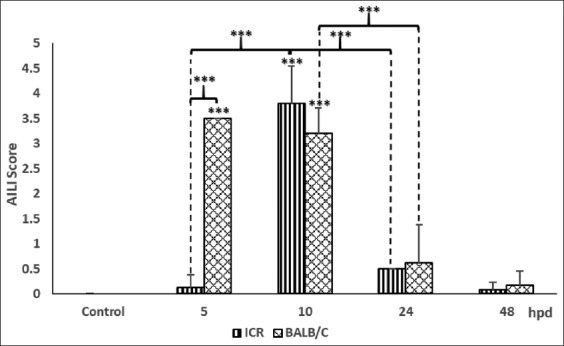
Twenty-five ICR mice and 20 BALB/C mice were used where five animals as control and the rest were randomly divided into four time points at 5, 10, 24 and 48 hours post-dosing (hpd). They were induced with 500 mg/kg APAP intraperitoneally. Liver sections were processed for hematoxylin-eosin staining and histopathological changes were scored based on grading methods.
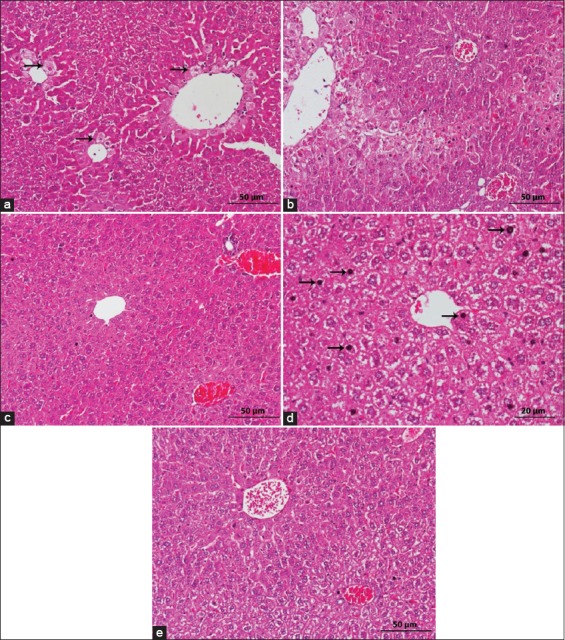
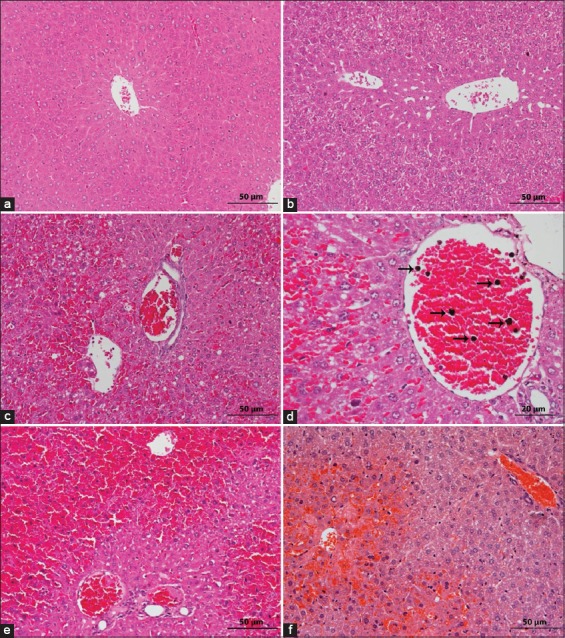
Intense centrilobular damage was observed as early as 5 hpd in BALB/C as compared to ICR mice, which was observed at 10 hpd. The difference of liver injury between ICR and BALB/C mice is due to dissimilarity in the genetic line-up that related to different elimination pathways of APAP toxicity. However, at 24 hpd, the damage was markedly subsided and liver regeneration had taken place for both ICR and BALB/C groups with evidence of mitotic figures. This study showed that normal liver architecture was restored after the clearance of toxic insult.
AILI was exhibited earlier in BALB/C than ICR mice but both underwent liver recovery at later time points.
实验室小鼠被广泛用作研究模型,以深入了解各种外源性物质的毒理学研究。对乙酰氨基酚(APAP)是一种解热镇痛药,通常被称为扑热息痛,是一种理想的肝毒性物质,可在实验室小鼠中引发小叶中心坏死,类似于人类情况。然而,评估不同小鼠品系之间的组织病理学变化对于确定用于APAP毒性研究的最佳小鼠模型很重要。因此,我们旨在评估BALB/C和癌症研究所(ICR)小鼠中APAP诱导的肝损伤(AILI)的组织形态学特征。
使用25只ICR小鼠和20只BALB/C小鼠,其中5只作为对照,其余小鼠在给药后5、10、24和48小时(hpd)随机分为四个时间点。它们通过腹腔注射500mg/kg APAP进行诱导。对肝脏切片进行苏木精-伊红染色,并根据分级方法对组织病理学变化进行评分。
与ICR小鼠相比,BALB/C小鼠在给药后5小时就观察到了严重的小叶中心损伤,而ICR小鼠在给药后10小时才观察到。ICR和BALB/C小鼠之间肝损伤的差异是由于与APAP毒性不同消除途径相关的基因排列差异。然而,在给药后24小时,损伤明显减轻,ICR和BALB/C组均发生了肝再生,有有丝分裂象的证据。这项研究表明,在清除毒性损伤后,正常的肝脏结构得以恢复。
AILI在BALB/C小鼠中比ICR小鼠出现得更早,但两者在后期都经历了肝脏恢复。