Erfan Ahmed Mohammed, Marouf Sherif
National Laboratory for Veterinary Quality Control on Poultry Production, Animal Health Research Institute, Dokki, Giza, 12618, Egypt.
Department of Microbiology, Faculty of Veterinary Medicine, Cairo University, Giza, 12211, Egypt.
Vet World. 2019 Nov;12(11):1707-1715. doi: 10.14202/vetworld.2019.1707-1715. Epub 2019 Nov 4.
Respiratory bacterial agents represent one of the most harmful factors that ordinarily threaten the poultry industry and usually lead to great economic losses. Meanwhile, there is a global demand to avoid the highly emerging antibiotic resistance and antibiotic residues in edible meat. Whereas, the use of alternatives became of great priority, especially for those substances extracted from natural plant origin. The study aimed to evaluate the antibacterial effect of cinnamon oil as a herbal extract on different respiratory bacterial agents.
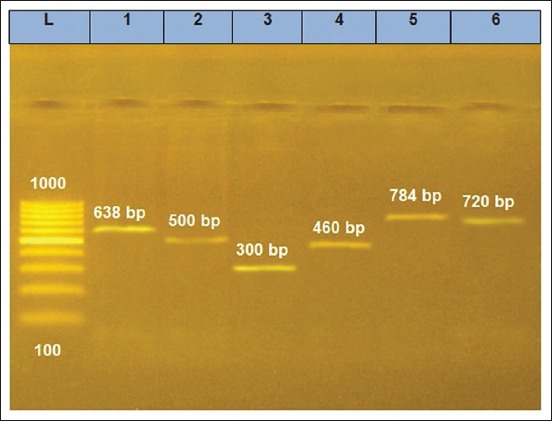
One hundred and fifty biological samples were collected through targeted surveillance for respiratory diseased poultry farms representing three governorates, from which bacterial isolation and identification, DNA sequencing of representative strains were performed. Furtherly, phenotypic and genotypic evaluation of the antibacterial effect of cinnamon oil was performed by minimum inhibitory concentration, agar disk diffusion, and virulence genes expression real-time polymerase chain reaction.
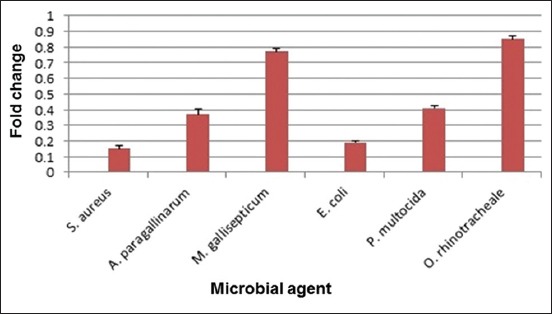
Cinnamon oil gave rise to acceptable degrees of virulence genes downregulation of 0.15, 0.19, 0.37, 0.41, 0.77, and 0.85 for gene, gene, gene, gene gene, and gene, respectively. Phenotypically, using agar disk diffusion assay and broth microdilution susceptibility, cinnamon oil showed also tolerable results as it stopped the growth of , , and with varying zones of inhibition.
The encountered results declared the successful effect of cinnamon oil that recommends its application for living birds for future use as a safe antibacterial in the poultry industry.
呼吸道细菌病原体是通常威胁家禽业并常常导致巨大经济损失的最有害因素之一。与此同时,全球都有避免食用肉类中出现高度新发的抗生素耐药性和抗生素残留的需求。因此,使用替代物成为当务之急,尤其是从天然植物来源提取的物质。本研究旨在评估肉桂油作为一种草药提取物对不同呼吸道细菌病原体的抗菌效果。
通过对代表三个省份的呼吸道疾病家禽养殖场进行目标监测,收集了150份生物样本,从中进行细菌分离和鉴定,并对代表性菌株进行DNA测序。此外,通过最低抑菌浓度、琼脂平板扩散法以及毒力基因表达实时聚合酶链反应,对肉桂油的抗菌效果进行表型和基因型评估。
肉桂油分别使 基因、 基因、 基因、 基因、 基因和 基因的毒力基因下调程度达到可接受水平,分别为0.15、0.19、0.37、0.41、0.77和0.85。在表型上,使用琼脂平板扩散试验和肉汤微量稀释药敏试验,肉桂油也显示出可接受的结果,因为它能抑制 、 和 的生长,抑菌圈大小各异。
所获得的结果表明肉桂油具有成功的 效果,建议将其应用于活禽,以便未来在家禽业中作为一种安全的抗菌剂使用。