Mo Yiqun, Sarojini Harshini, Wan Rong, Zhang Qunwei, Wang Jianpu, Eichenberger Sarah, Kotwal Girish J, Chien Sufan
Department of Environmental and Occupational Health Sciences, School of Public Health and Information Sciences, Louisville, KY, United States.
Department of Surgery, School of Medicine, University of Louisville, Louisville, KY, United States.
Front Pharmacol. 2020 Jan 16;10:1502. doi: 10.3389/fphar.2019.01502. eCollection 2019.
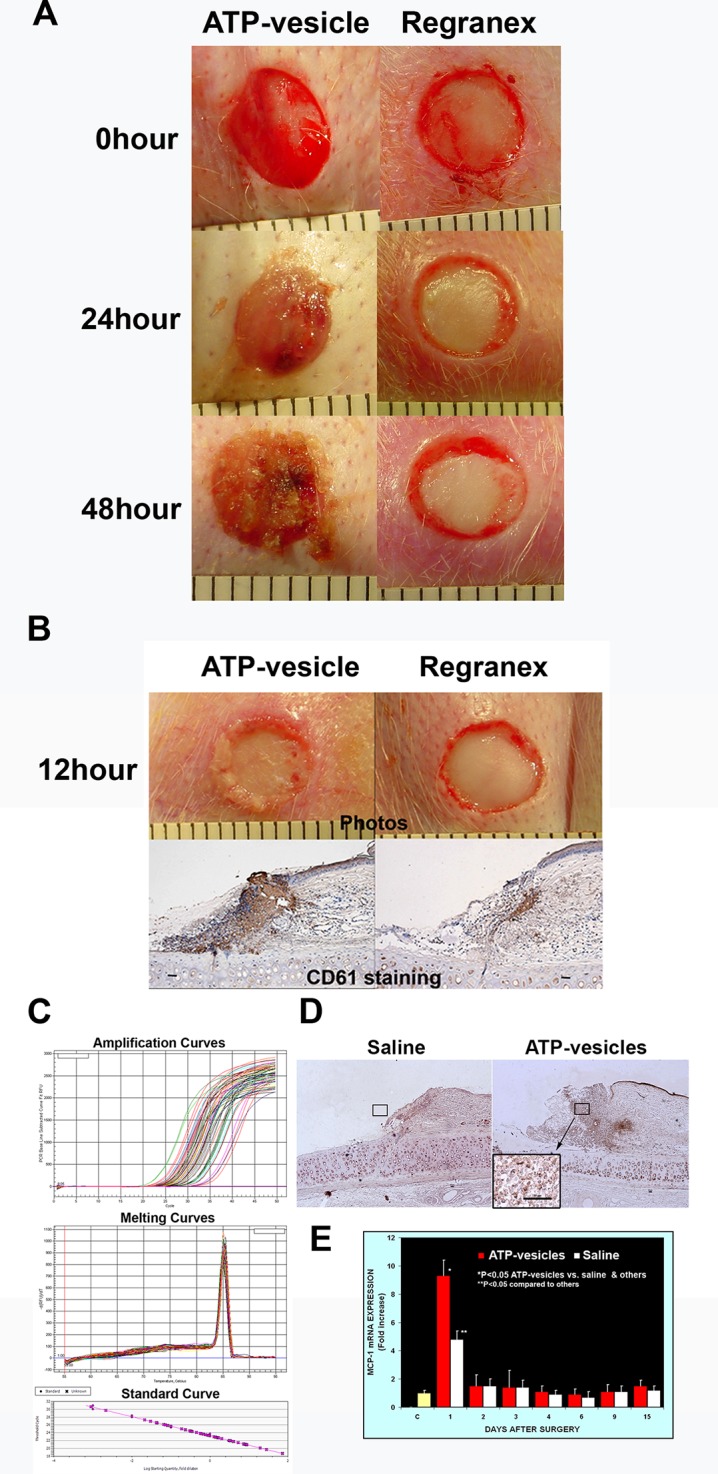
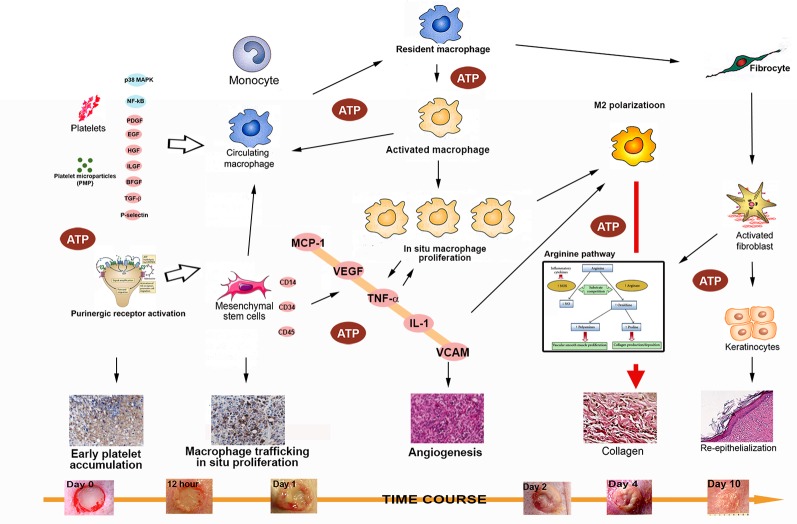
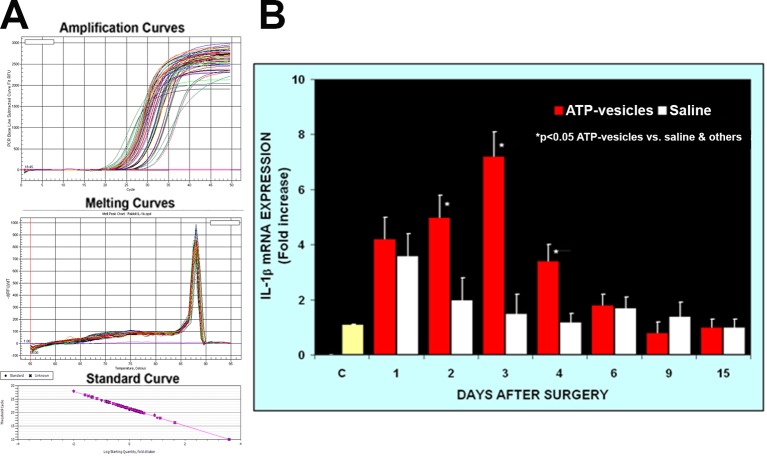
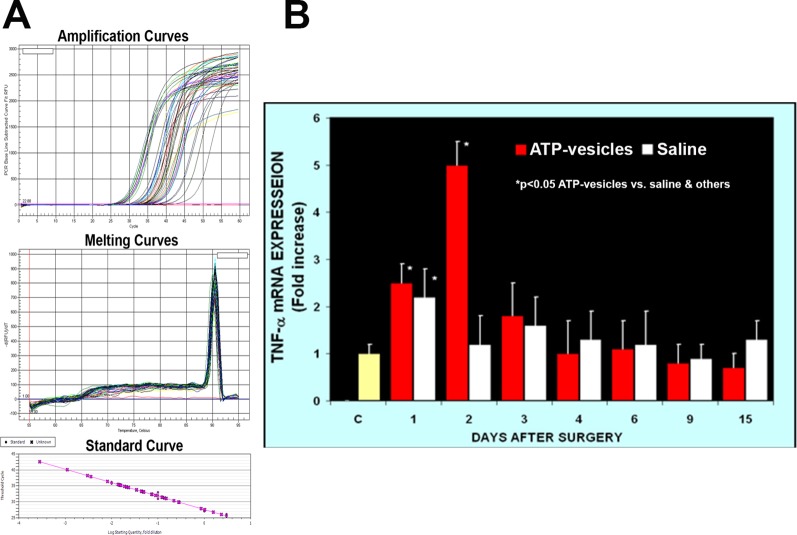
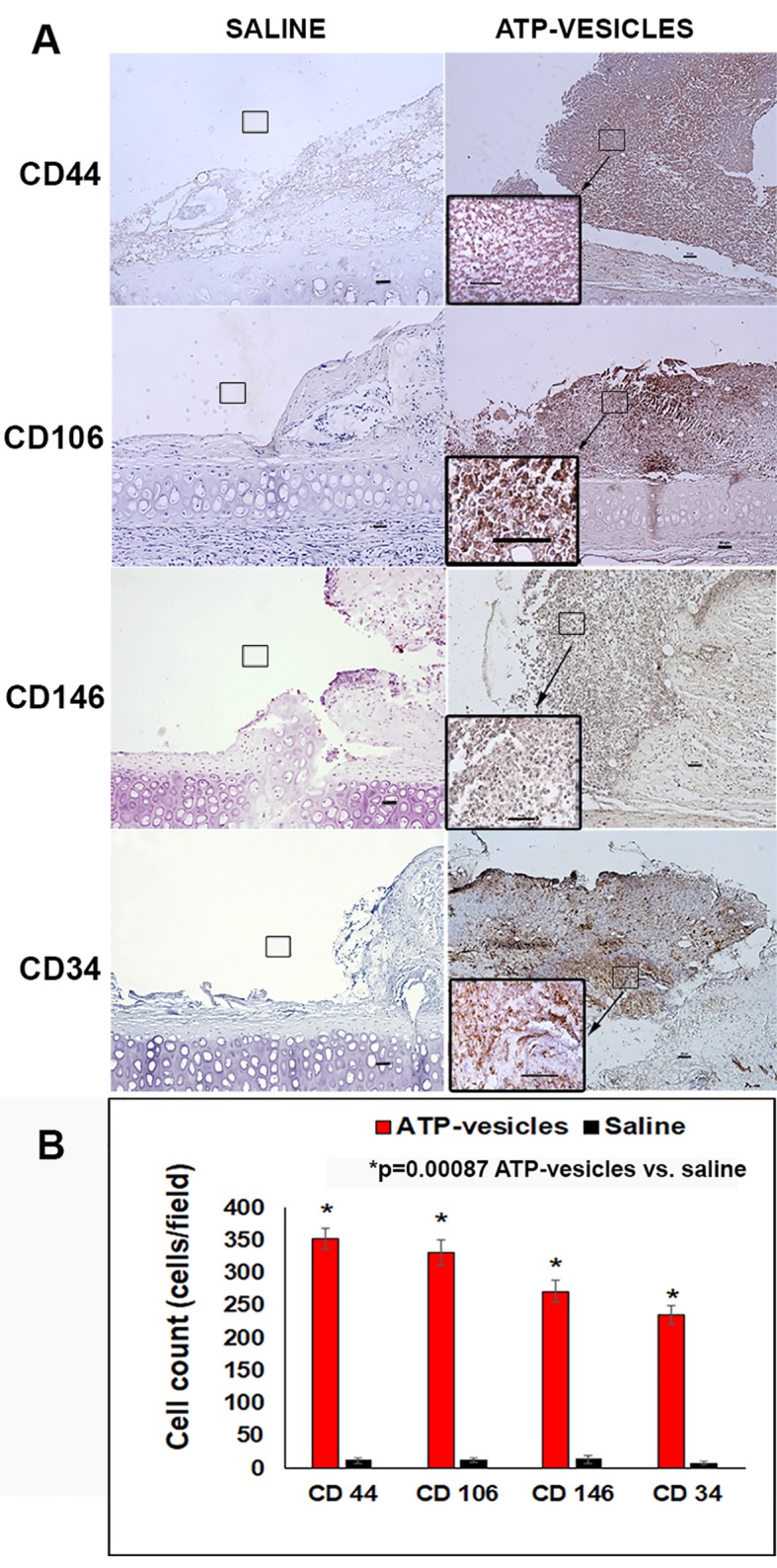
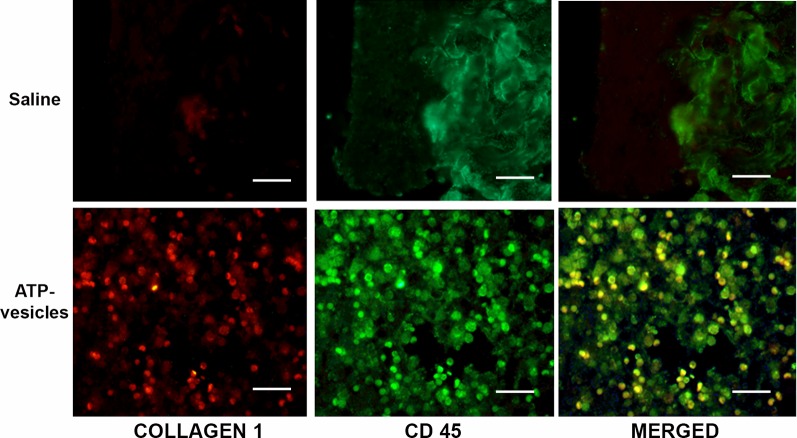
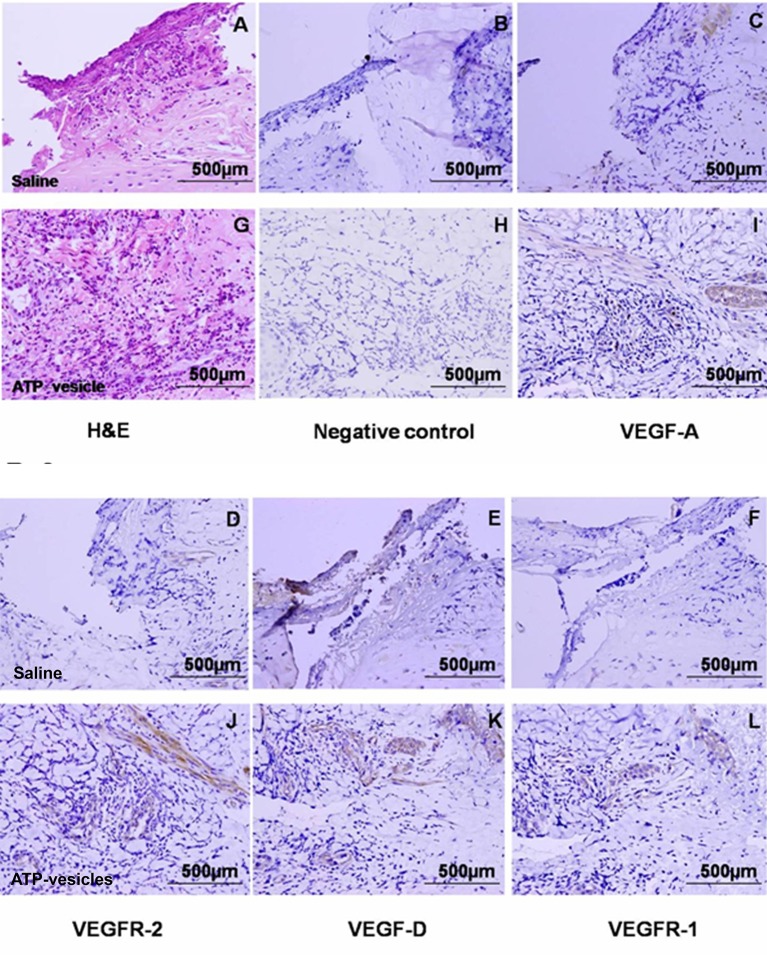
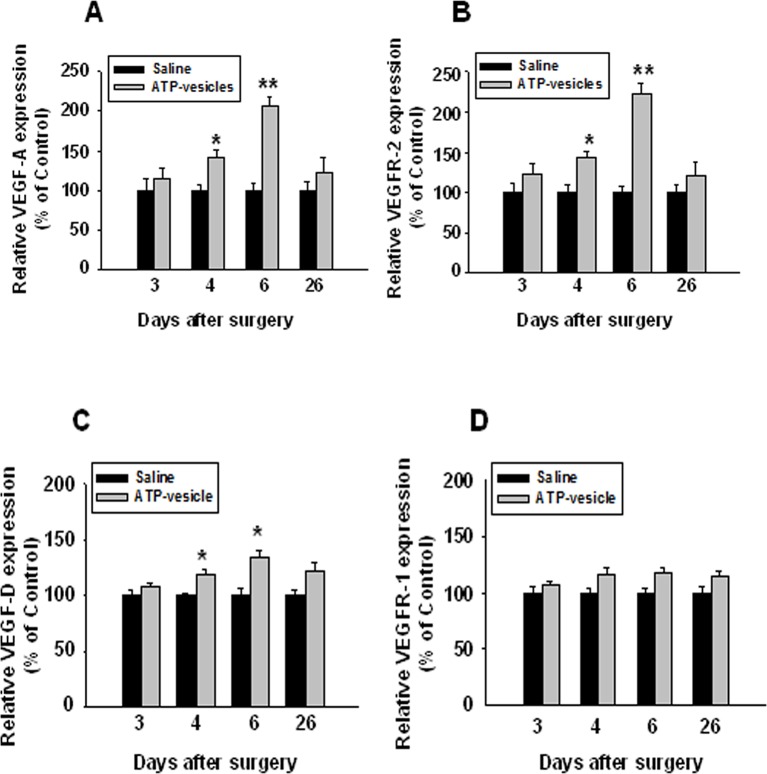
We have reported accelerated wound healing induced by intracellular ATP delivery in rabbits, through early massive accumulation, proliferation, and M2 polarization of macrophages. Granulation tissue started to grow within first 24 h of treatment and continued the growth till the wound cavity is completely covered. However, the mechanisms underlying this macrophage response are totally unclear because no one has ever reported this before. In this study, we performed a preliminary exploration of the possible mechanisms by focusing on the roles of cytokines, growth factors, and stem cells in this process. Among the 33 adult rabbits, 18 were used for cytokine measurements and the remaining were used for histological and immunohistochemical studies. Four wounds were created on the ventral side of each ear. Two wounds on one side were treated with ATP-vesicles (10 mM ATP), and the other two were treated with controls (normal saline or Regranex). Dressing changes were made daily and the rabbits were sacrificed at 5 h, 12 h, and 1, 2, 3, 4, 6, 9, 15, and 26 days after wounding. Tissue samples were analyzed for cytokines and growth factors using real-time PCR and immunohistochemical staining. The control wounds showed an immediate increase in proinflammatory cytokines after wound creation but no further increase after this initial spike. The growth factor levels in the control wounds remained unchanged throughout the study. Conversely, the wounds treated with ATP-vesicles showed significantly higher expression of MCP-1 and stem cell markers (CD44, CD106, CD146, and CD34) at day 1, significantly higher IL-1β and TNF-α expression from day 1-4, and significantly higher VEGF-A, VEGF-D, and VEGFR-2 expression from day 4-6 when compared to the controls. The significant upregulation of these factors corresponded to the very early and rapid macrophage accumulation, proliferation, and M2 polarization, resulting in unprecedented rapid granulation tissue generation due to direct macrophage collagen production and neovascularization.
我们曾报道,通过巨噬细胞的早期大量聚集、增殖和M2极化,细胞内ATP递送可加速家兔伤口愈合。肉芽组织在治疗的最初24小时内开始生长,并持续生长直至伤口腔完全被覆盖。然而,这种巨噬细胞反应的潜在机制完全不清楚,因为此前从未有人报道过。在本研究中,我们通过关注细胞因子、生长因子和干细胞在此过程中的作用,对可能的机制进行了初步探索。在33只成年家兔中,18只用于细胞因子测量,其余用于组织学和免疫组织化学研究。在每只耳朵的腹侧制造4个伤口。一侧的2个伤口用ATP囊泡(10 mM ATP)治疗,另外2个用对照(生理盐水或Regranex)治疗。每天更换敷料,并在受伤后5小时、12小时以及1、2、3、4、6、9、15和26天处死家兔。使用实时PCR和免疫组织化学染色分析组织样本中的细胞因子和生长因子。对照伤口在伤口形成后促炎细胞因子立即增加,但在最初的峰值后没有进一步增加。在整个研究过程中,对照伤口中的生长因子水平保持不变。相反,与对照相比,用ATP囊泡治疗的伤口在第1天显示MCP-1和干细胞标志物(CD44、CD106、CD146和CD34)的表达显著更高,在第1 - 4天IL-1β和TNF-α表达显著更高,在第4 - 6天VEGF-A、VEGF-D和VEGFR-2表达显著更高。这些因子的显著上调与巨噬细胞非常早期和快速的聚集、增殖和M2极化相对应,由于巨噬细胞直接产生胶原蛋白和血管生成,导致前所未有的快速肉芽组织生成。