Wang Guangming, Luan Yongxin, Feng Lu, Yu Jinlu
Department of Neurosurgery, The First Hospital of Jilin University, Changchun, Jilin 130021, P.R. China.
Exp Ther Med. 2020 Feb;19(2):1149-1154. doi: 10.3892/etm.2019.8320. Epub 2019 Dec 12.
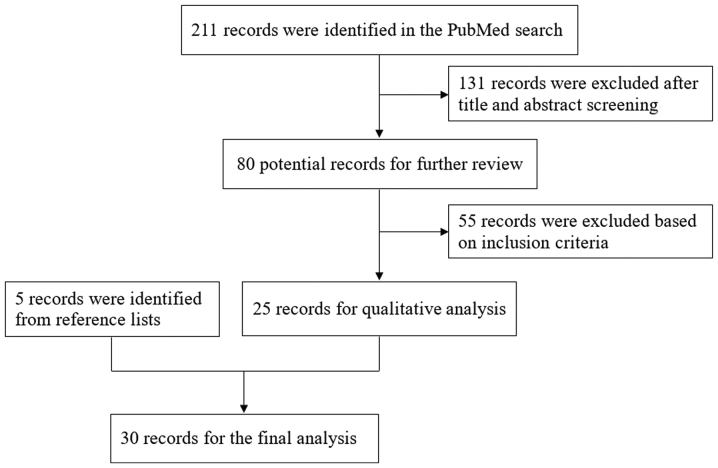
Post-traumatic basal ganglia-internal capsule (BGIC) infarction in pediatric patients is a relatively rare consequence of mild head injury (MHI). To the best of the authors' knowledge, at present, no comprehensive review has been published. To review research on BGIC infarction after MHI, a literature search was performed using the PubMed database and relevant search terms. According to recent data, MHI may cause BGIC infarction due to mechanical vasospasm of the perforating vessels in pediatric patients. The anatomical characteristics of the growing brain in infancy, mineralization of the lenticulostriate arteries and viral infection may all play a part in BGIC infarction after MHI, which often occurs within 24 months. Symptoms are not as severe and tend to disappear in the early period. Computed tomography or magnetic resonance imaging often shows BGIC infarction. There are also children with scattered calcification of the basal ganglia. Neural rehabilitation is a commonly accepted treatment. The prognosis of patients with BGIC infarction after MHI consistently improves.
创伤后基底节-内囊(BGIC)梗死在儿科患者中是轻度头部损伤(MHI)相对罕见的后果。据作者所知,目前尚未发表全面的综述。为了回顾关于MHI后BGIC梗死的研究,使用PubMed数据库和相关检索词进行了文献检索。根据最近的数据,MHI可能由于儿科患者穿支血管的机械性血管痉挛而导致BGIC梗死。婴儿期大脑生长的解剖学特征、豆纹动脉的矿化和病毒感染可能都在MHI后的BGIC梗死中起作用,这种梗死通常发生在24个月内。症状不那么严重,且在早期往往会消失。计算机断层扫描或磁共振成像常显示BGIC梗死。也有基底节散在钙化的儿童。神经康复是一种普遍接受的治疗方法。MHI后BGIC梗死患者的预后持续改善。