
一种新型癌症联合疗法在非癌组织中的亚急性毒性及免疫相关不良事件
Sub-acute Toxicity in Non-cancerous Tissue and Immune-Related Adverse Events of a Novel Combination Therapy for Cancer.
作者信息
McKelvey Kelly J, Hudson Amanda L, Prasanna Kumar Ramyashree, Eade Thomas, Clarke Stephen J, Wheeler Helen R, Diakos Connie I, Howell Viive M
机构信息
Bill Walsh Translational Cancer Research Laboratory, Kolling Institute, The University of Sydney Northern Clinical School and Northern Sydney Local Health District, St Leonards, NSW, Australia.
Sydney Vital Translational Cancer Research Centre, Royal North Shore Hospital, St Leonards, NSW, Australia.
出版信息
Front Oncol. 2020 Jan 14;9:1504. doi: 10.3389/fonc.2019.01504. eCollection 2019.
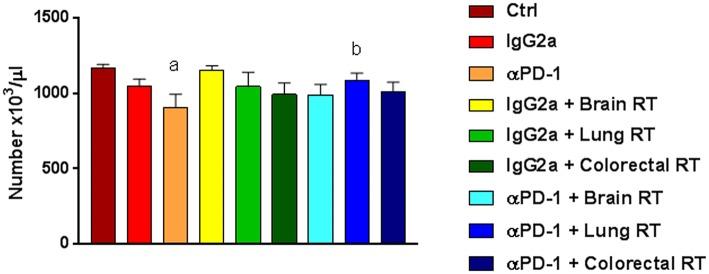
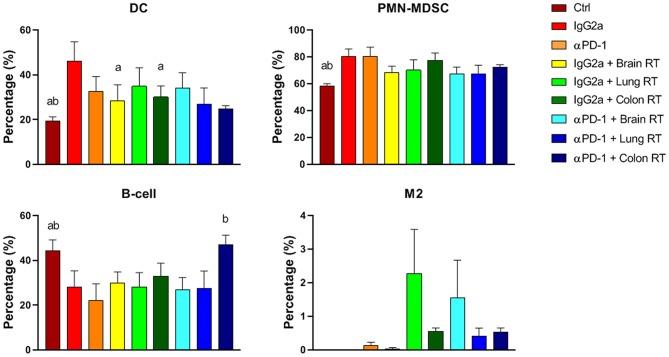
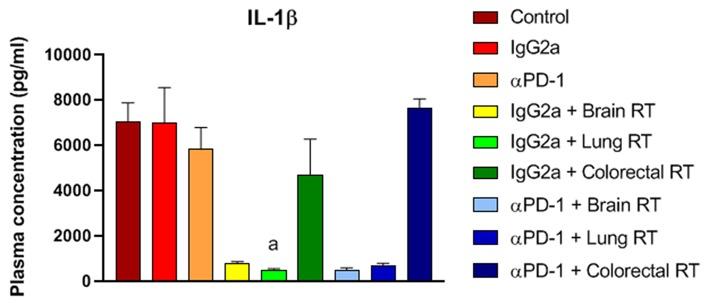
Brain, lung, and colon tissue experience deleterious immune-related adverse events when immune-oncological agents or radiation are administered. However, there is a paucity of information regarding whether the addition of radiation to immuno-oncological regimens exacerbates the tissue inflammatory response. We used a murine model to evaluate sub-acute tissue damage and the systemic immune response in C57Bl/6 mice when administered systemic anti-programmed cell death protein 1 (αPD-1) immunotherapy alone or in combination with stereotactic fractionated 10 gray/5 X-ray radiation to normal brain, lung or colon tissue. The model indicated that combinatorial αPD-1 immunotherapy and radiation may alter normal colon cell proliferation and cerebral blood vasculature, and induce systemic thrombocytopenia, lymphopenia, immune suppression, and altered immune repertoire (including interleukin-1β). Therein our data supports close monitoring of hematological and immune-related adverse events in patients receiving combination therapy.
当给予免疫肿瘤药物或放疗时,脑、肺和结肠组织会出现有害的免疫相关不良事件。然而,关于在免疫肿瘤治疗方案中加入放疗是否会加剧组织炎症反应,目前信息匮乏。我们使用小鼠模型评估了C57Bl/6小鼠在单独给予全身性抗程序性细胞死亡蛋白1(αPD-1)免疫疗法或与立体定向分次10格雷/5次X射线放疗联合应用于正常脑、肺或结肠组织时的亚急性组织损伤和全身免疫反应。该模型表明,联合αPD-1免疫疗法和放疗可能会改变正常结肠细胞增殖和脑血循环,并诱导全身性血小板减少、淋巴细胞减少、免疫抑制和免疫库改变(包括白细胞介素-1β)。因此,我们的数据支持对接受联合治疗的患者密切监测血液学和免疫相关不良事件。




 Zotero 插件