Yin Ming, Verschraegen Claire, Vincent Vinh-Hung, Patel Sandipkumar M, George Tiffany, Truica Cristina I
The Ohio State University Comprehensive Cancer Center, Columbus, OH, USA.
University Hospital of Martinique, Martinique, France.
Medicine (Baltimore). 2020 Jan;99(3):e18745. doi: 10.1097/MD.0000000000018745.
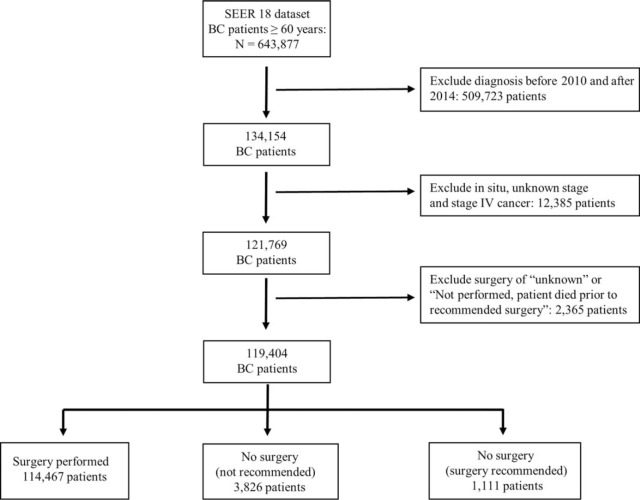
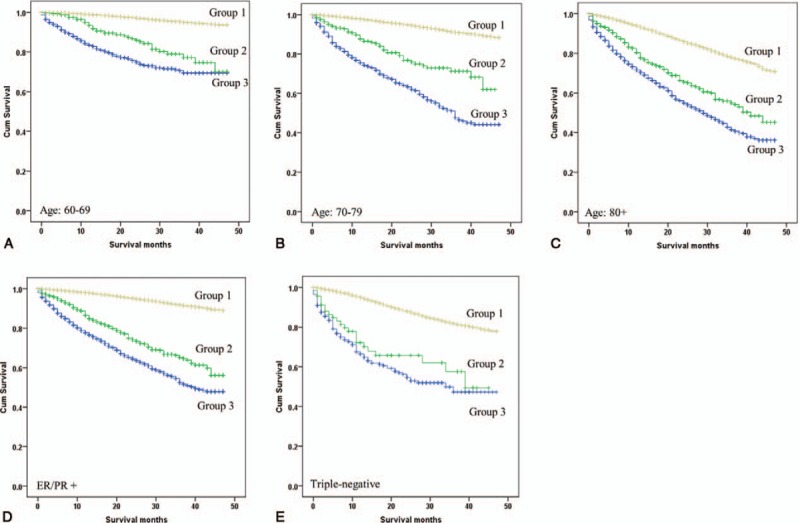
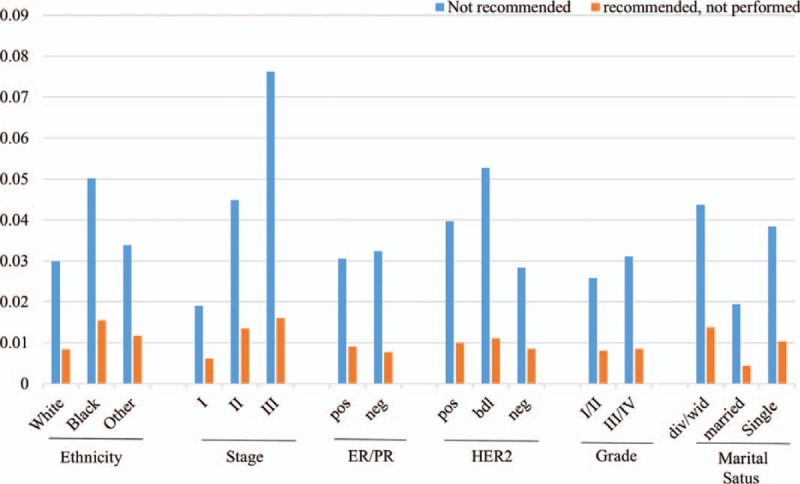
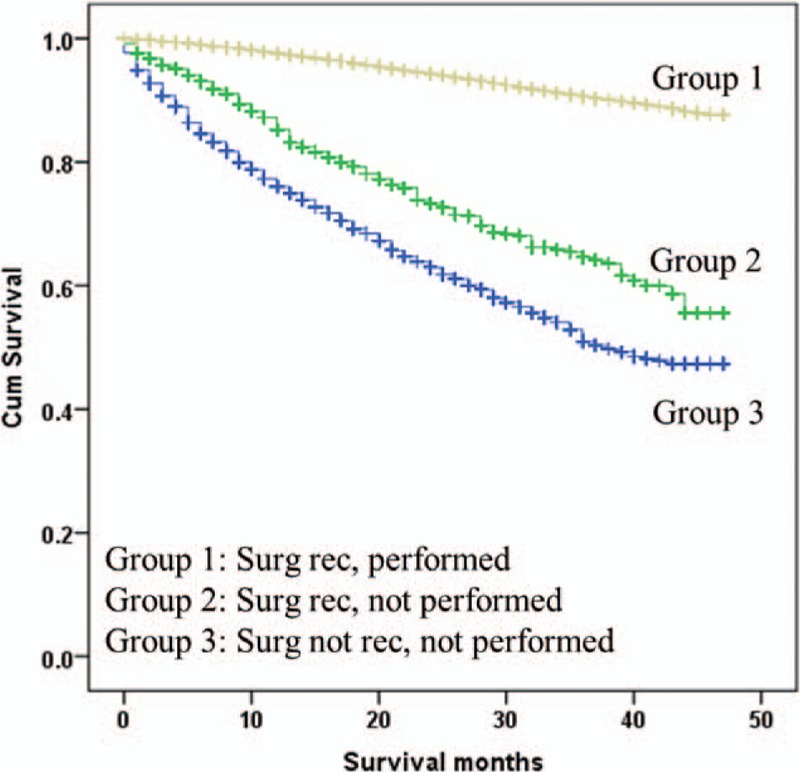
Elderly women with early-stage, nonmetastatic breast cancer do not always receive recommendations for definitive surgical treatment. The reasons vary and include patient and provider-related reasons.We queried the surveillance, epidemiology, and end results database from 2010 to 2013 for women age 60 and older with stage I/II/III invasive breast cancer for whom local treatment was known. We divided the patients into 3 groups: patients for whom surgery was performed; patients for whom surgery was recommended but not performed; patients for whom surgery was not recommended and not performed. We used Kaplan-Meier method to generate OS curves and the Cox proportional hazard test to compare survival outcomes.A total of 119,404 patients were eligible for study with a median age between 70 and 74 years old. Compared with patients who received breast surgery, patients who did not receive surgery had a worse overall survival (OS) (hazard ratio [HR], 7.39; 95% confidence interval [CI], 6.98-7.83, P < .001). Patients who were recommended but ultimately did not undergo surgery had better OS than those who were recommended against surgery (adjusted HR, 0.60; 95% CI, 0.53-0.69). However, their survival was significantly inferior to patients who underwent surgery (adjusted HR, 2.81; 95% CI 2.48-3.19). Similar results were found regardless of age, tumor stage, estrogen receptor, or human epidermal growth factor receptor 2 status and were recapitulated in analyses of cancer-specific survival.Upfront definitive breast surgery should be performed in medically-fit elderly patients with early-stage, nonmetastatic breast cancer given significant survival benefit.
患有早期非转移性乳腺癌的老年女性并不总是能得到明确手术治疗的建议。原因各不相同,包括患者和医疗服务提供者相关的原因。我们查询了2010年至2013年监测、流行病学和最终结果数据库中年龄在60岁及以上、患有I/II/III期浸润性乳腺癌且已知局部治疗情况的女性。我们将患者分为三组:接受手术的患者;被建议手术但未进行手术的患者;未被建议手术且未进行手术的患者。我们使用Kaplan-Meier方法生成总生存期(OS)曲线,并使用Cox比例风险检验比较生存结果。共有119404名患者符合研究条件,中位年龄在70至74岁之间。与接受乳房手术的患者相比,未接受手术的患者总生存期(OS)更差(风险比[HR],7.39;95%置信区间[CI],6.98 - 7.83,P<0.001)。被建议手术但最终未进行手术的患者的总生存期优于那些被建议不进行手术的患者(调整后HR,0.60;95%CI,0.53 - 0.69)。然而,他们的生存期明显低于接受手术的患者(调整后HR,2.81;95%CI 2.48 - 3.19)。无论年龄、肿瘤分期、雌激素受体或人表皮生长因子受体2状态如何,都发现了类似的结果,并且在癌症特异性生存分析中得到了重现。鉴于显著的生存益处,对于身体状况适合的患有早期非转移性乳腺癌的老年患者,应进行前期明确的乳房手术。