Nanobiophysics (NBP), MESA+ Institute for Nanotechnology and Technical Medical Centre, Faculty of Science and Technology , University of Twente , PO Box 217, 7500 AE Enschede , The Netherlands.
Section of Molecular Cytology, Swammerdam Institute for Life Sciences , University of Amsterdam , P.O. Box 94215, 1090 GE Amsterdam , The Netherlands.
J Phys Chem B. 2020 Feb 27;124(8):1383-1391. doi: 10.1021/acs.jpcb.9b10396. Epub 2020 Feb 17.
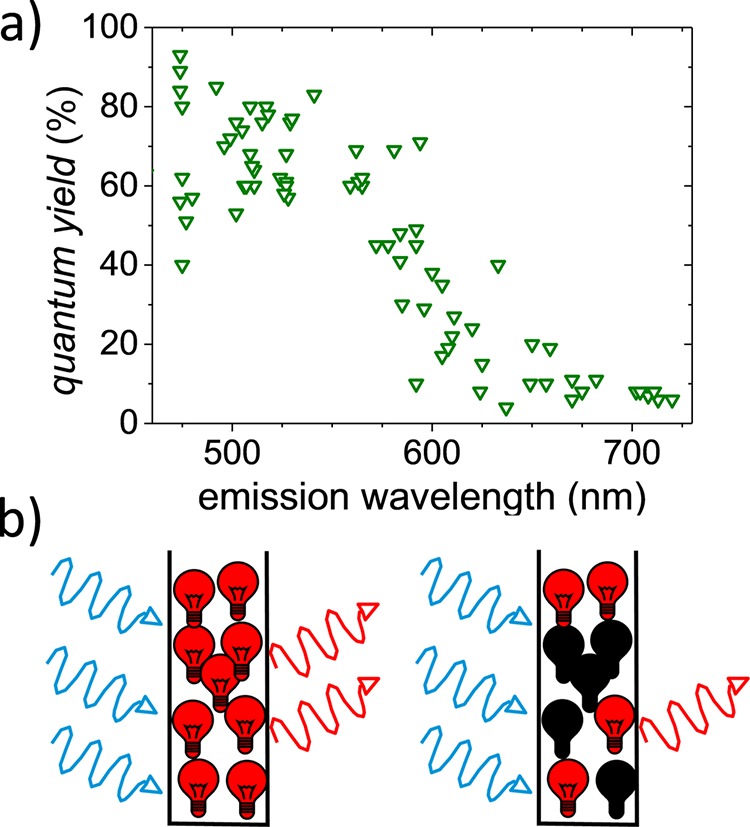
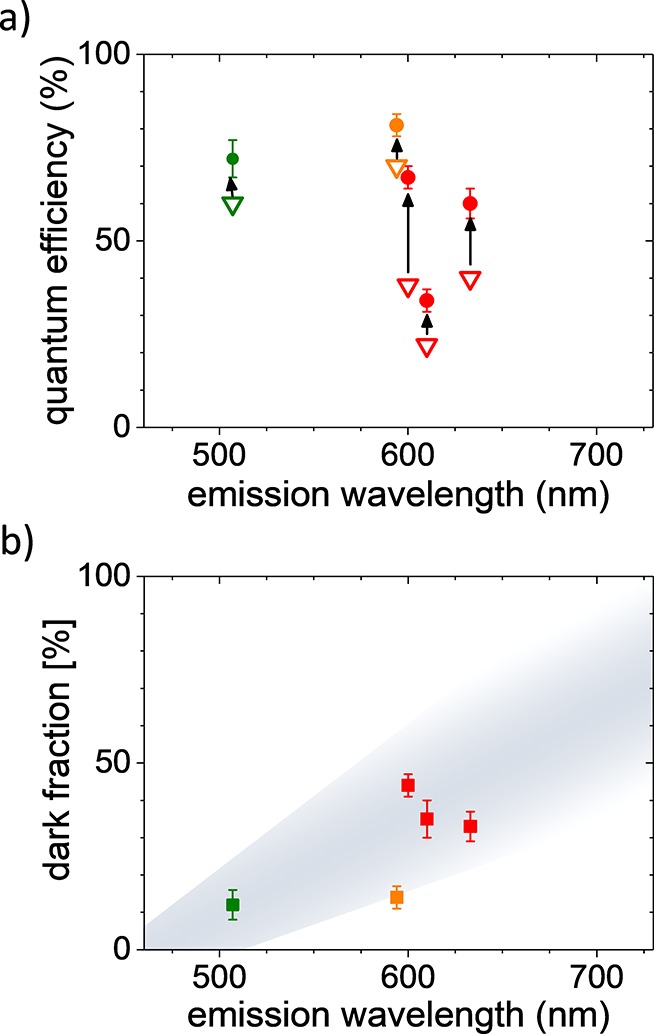
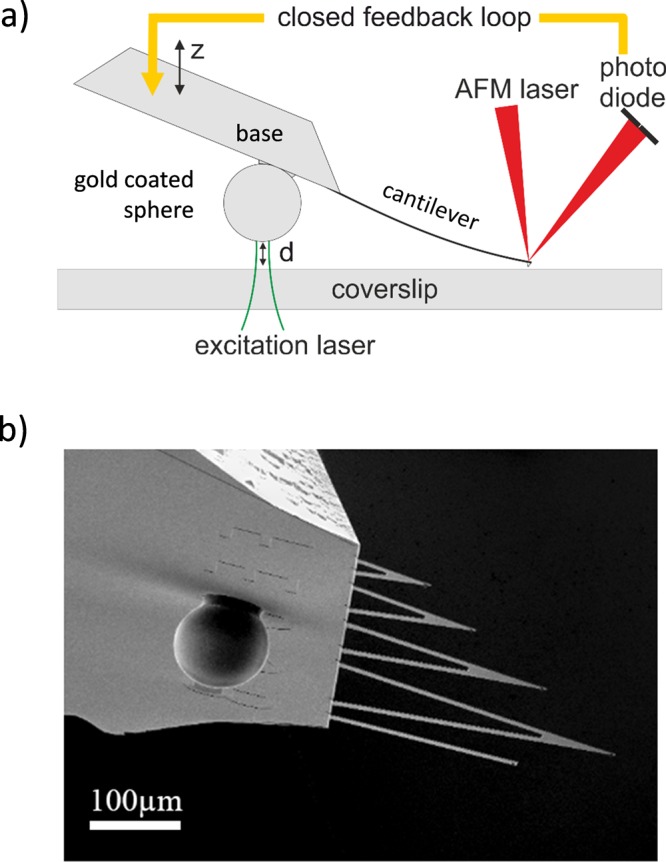
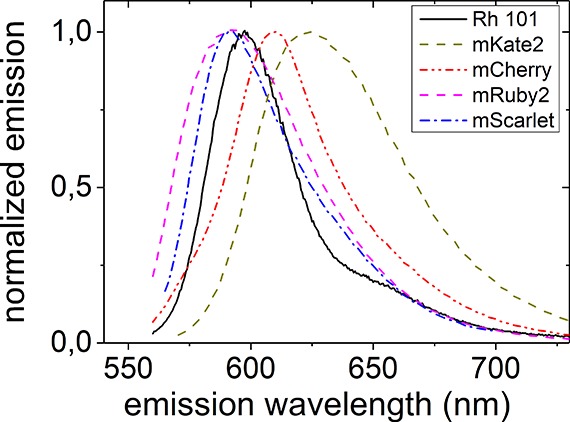
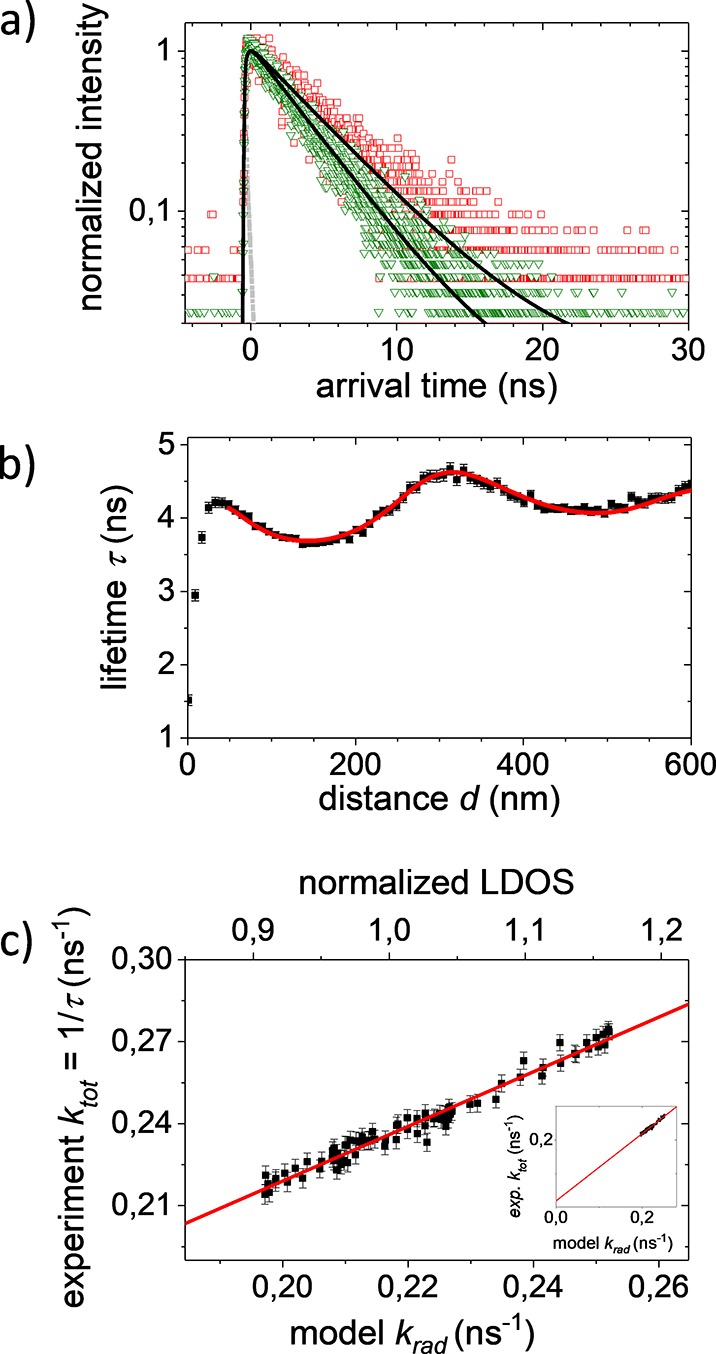
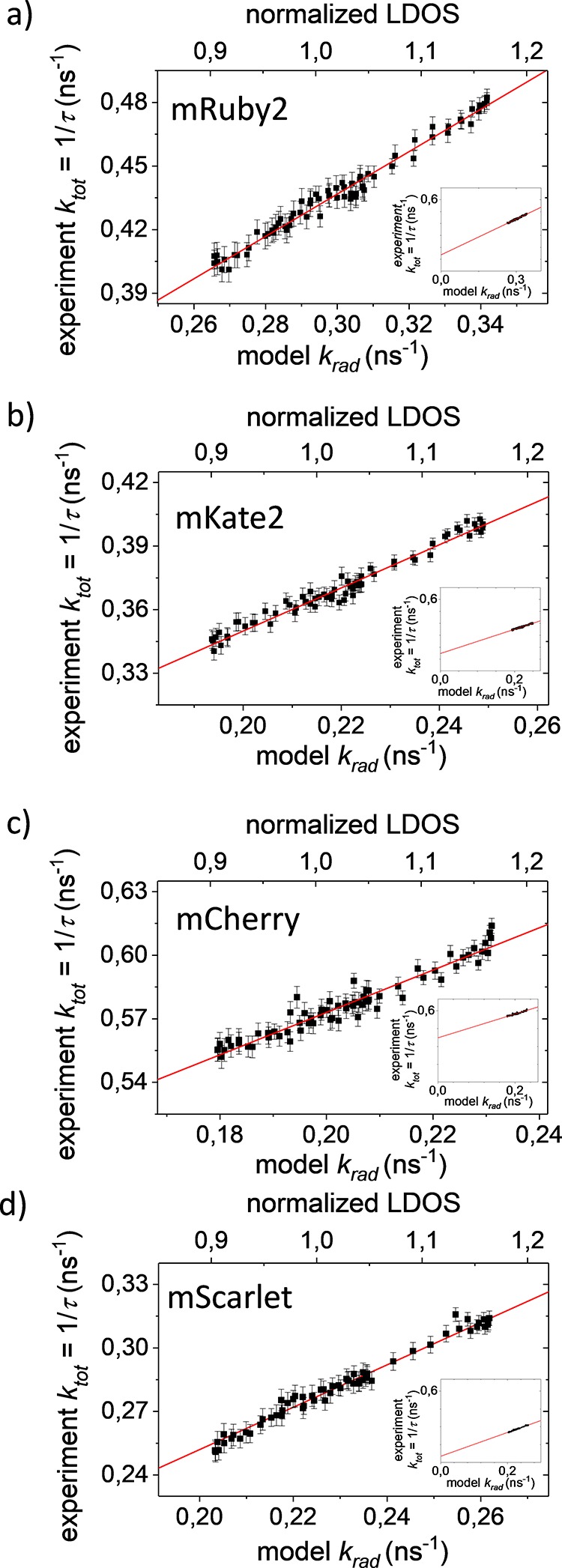
The fluorescence quantum yield of four representative red fluorescent proteins mCherry, mKate2, mRuby2, and the recently introduced mScarlet was investigated. The excited state lifetimes were measured as a function of the distance to a gold mirror in order to control the local density of optical states (LDOS). By analyzing the total emission rates as a function of the LDOS, we obtain separately the emission rate and the nonradiative rate of the bright states. We thus obtain for the first time the bright state quantum yield of the proteins without interference from dark, nonemitting states. The bright state quantum yields are considerably higher than previously reported quantum yields that average over both bright and dark states. We determine that mCherry, mKate2, and mRuby2 have a considerable fraction of dark chromophores up to 45%, which explains both the low measured quantum yields of red emitting proteins reported in the literature and the difficulties in developing high quantum yield variants of such proteins. For the recently developed bright mScarlet, we find a much smaller dark fraction of 14%, accompanied by a very high quantum yield of the bright state of 81%. The presence of a considerable fraction of dark chromophores has implications for numerous applications of fluorescent proteins, ranging from quantitative fluorescence microscopy to FRET studies to monitoring protein expression levels. We recommend that future optimization of red fluorescent proteins should pay more attention to minimizing the fraction of dark proteins.
研究了四种代表性红色荧光蛋白 mCherry、mKate2、mRuby2 和最近引入的 mScarlet 的荧光量子产率。通过测量距金镜的距离作为函数来测量激发态寿命,以控制局域态密度(LDOS)。通过分析作为 LDOS 的函数的总发射率,我们分别获得了明亮态的发射率和非辐射率。因此,我们首次获得了无暗态干扰的蛋白质的明亮态量子产率。明亮态量子产率明显高于先前报道的平均考虑明亮和暗态的量子产率。我们确定 mCherry、mKate2 和 mRuby2 具有高达 45%的暗发色团,这解释了文献中报道的红色发射蛋白的低测量量子产率以及开发此类蛋白的高量子产率变体的困难。对于最近开发的明亮 mScarlet,我们发现暗态的比例小得多,为 14%,同时明亮态的量子产率非常高,为 81%。暗发色团的存在对荧光蛋白的许多应用都有影响,从定量荧光显微镜到 FRET 研究再到监测蛋白表达水平。我们建议,未来对红色荧光蛋白的优化应更加注意最小化暗蛋白的比例。