Step Mary M, McMillen Smith Jennifer, Kratz Joshua, Briggs Julia, Avery Ann
College of Public Health, Kent State University, Kent, OH, United States.
Metrohealth Medical Center, Cleveland, OH, United States.
JMIR Form Res. 2020 Jan 30;4(1):e13495. doi: 10.2196/13495.
Although treatment for HIV infection is widely available and well tolerated, less than 30% of adolescents and young adults living with HIV infection achieve stable viral suppression. Mobile technology affords increased opportunities for young people living with HIV to engage with information, health management tools, and social connections that can support adherence to treatment recommendations and medication. Although mobile apps are increasingly prevalent, few are informed by the target population.
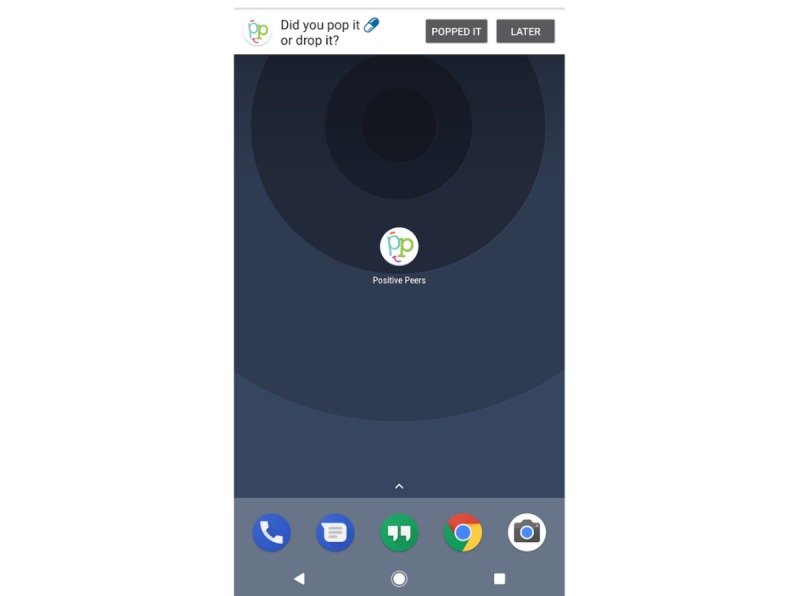
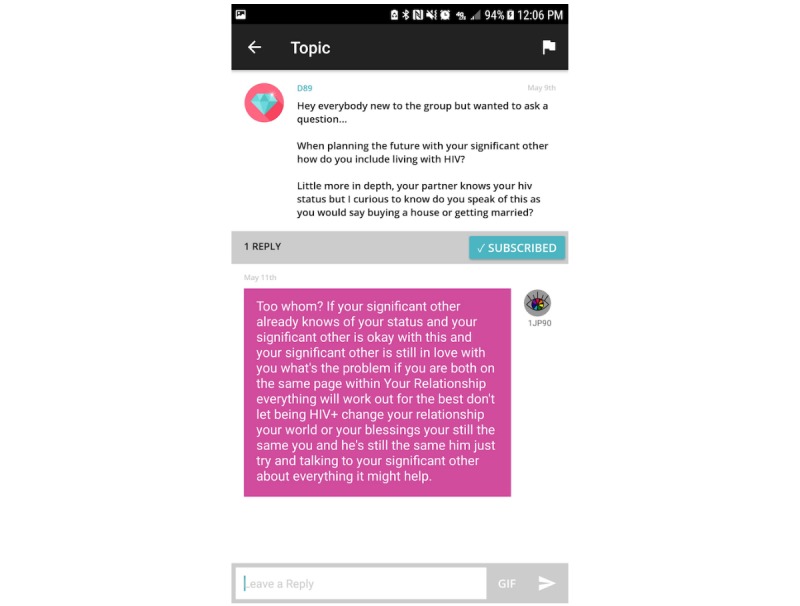
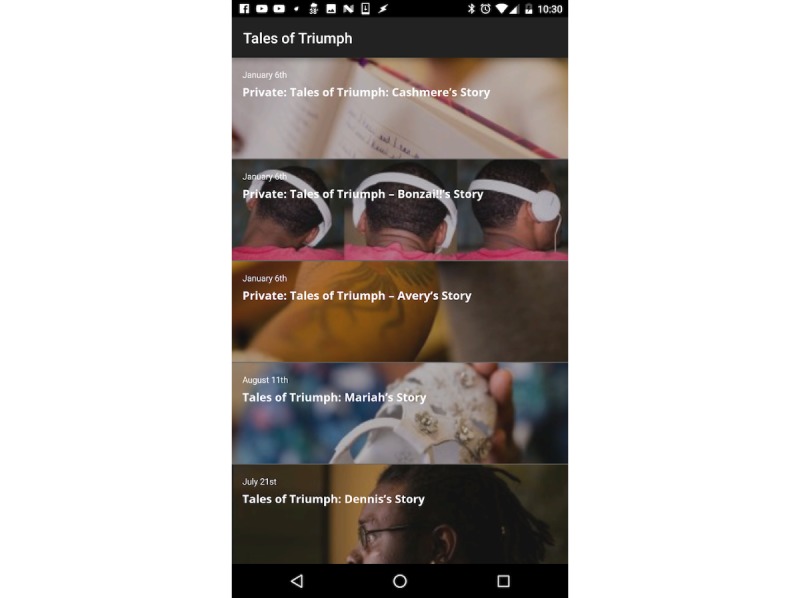
The objective of this study was to describe the "Positive Peers" app, a mobile app currently being evaluated in a public hospital in the Midwestern United States. Formative development, key development strategies, user recruitment, and lessons learned are discussed in this paper.
"Positive Peers" was developed in collaboration with a community advisory board (CAB) comprising in-care young adults living with HIV and a multidisciplinary project team. Mobile app functions and features were developed over iterative collaborative sessions that were tailored to the CAB members. In turn, the CAB built rapport with the project team and revealed unique information that was used in app development.
The study was funded on September 1, 2015; approved by the MetroHealth Institutional Review Board on August 31, 2016; and implemented from October 11, 2016, to May 31, 2019. The "Positive Peers" mobile app study has enrolled 128 users who reflect priority disparity population subgroups. The app administrator had frequent contact with users across app administration and study-related activities. Key lessons learned from the study include changing privacy concerns, data tracking reliability, and user barriers. Intermediate and outcome variable evaluation is expected in October 2019.
Successful development of the "Positive Peers" mobile app was supported by multidisciplinary expertise, an enthusiastic CAB, and a multifaceted, proactive administrator.
尽管针对艾滋病毒感染的治疗广泛可用且耐受性良好,但感染艾滋病毒的青少年和年轻人中,只有不到30%的人实现了稳定的病毒抑制。移动技术为感染艾滋病毒的年轻人提供了更多机会,使他们能够接触到有助于支持遵循治疗建议和服药的信息、健康管理工具及社会联系。尽管移动应用越来越普遍,但很少有应用是根据目标人群的需求开发的。
本研究旨在描述“积极同伴”应用程序,这是一款目前正在美国中西部一家公立医院进行评估的移动应用程序。本文讨论了其形成性开发、关键开发策略、用户招募及经验教训。
“积极同伴”应用程序是与一个社区咨询委员会(CAB)合作开发的,该委员会由感染艾滋病毒的住院青年和一个多学科项目团队组成。移动应用程序的功能和特性是在为CAB成员量身定制的迭代协作会议上开发的。反过来,CAB与项目团队建立了融洽的关系,并透露了在应用程序开发中使用的独特信息。
该研究于2015年9月1日获得资助;2016年8月31日获得地铁健康机构审查委员会的批准;并于2016年10月11日至2019年5月31日实施。“积极同伴”移动应用程序研究已招募了128名用户,他们反映了优先差异人群亚组。应用程序管理员在整个应用程序管理和与研究相关的活动中经常与用户联系。该研究的主要经验教训包括不断变化的隐私问题、数据跟踪的可靠性和用户障碍。预计将于2019年10月进行中间变量和结果变量评估。
多学科专业知识、热情的CAB和多方面积极主动的管理员为“积极同伴”移动应用程序的成功开发提供了支持。