Laboratory of Angiopathology, Institute of General Pathology and Pathophysiology, 8 Baltiiskaya Street, 125315 Moscow, Russia.
Laboratory of Infection Pathology and Molecular Microecology, Institute of Human Morphology, 3 Tsyurupa Street, 117418 Moscow, Russia.
Int J Mol Sci. 2020 Jan 27;21(3):817. doi: 10.3390/ijms21030817.
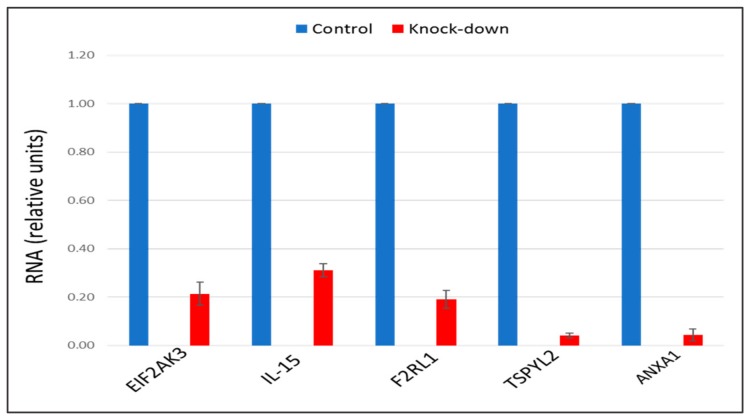
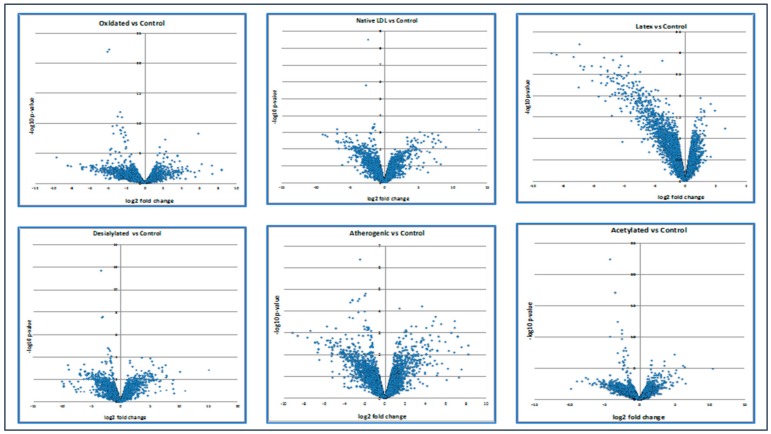
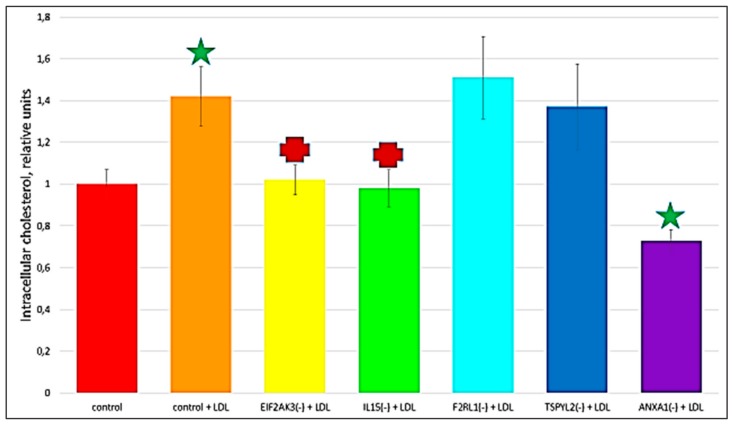
Excessive accumulation of lipid inclusions in the arterial wall cells (foam cell formation) caused by modified low-density lipoprotein (LDL) is the earliest and most noticeable manifestation of atherosclerosis. The mechanisms of foam cell formation are not fully understood and can involve altered lipid uptake, impaired lipid metabolism, or both. Recently, we have identified the top 10 master regulators that were involved in the accumulation of cholesterol in cultured macrophages induced by the incubation with modified LDL. It was found that most of the identified master regulators were related to the regulation of the inflammatory immune response, but not to lipid metabolism. A possible explanation for this unexpected result is a stimulation of the phagocytic activity of macrophages by modified LDL particle associates that have a relatively large size. In the current study, we investigated gene regulation in macrophages using transcriptome analysis to test the hypothesis that the primary event occurring upon the interaction of modified LDL and macrophages is the stimulation of phagocytosis, which subsequently triggers the pro-inflammatory immune response. We identified genes that were up- or downregulated following the exposure of cultured cells to modified LDL or latex beads (inert phagocytosis stimulators). Most of the identified master regulators were involved in the innate immune response, and some of them were encoding major pro-inflammatory proteins. The obtained results indicated that pro-inflammatory response to phagocytosis stimulation precedes the accumulation of intracellular lipids and possibly contributes to the formation of foam cells. In this way, the currently recognized hypothesis that the accumulation of lipids triggers the pro-inflammatory response was not confirmed. Comparative analysis of master regulators revealed similarities in the genetic regulation of the interaction of macrophages with naturally occurring LDL and desialylated LDL. Oxidized and desialylated LDL affected a different spectrum of genes than naturally occurring LDL. These observations suggest that desialylation is the most important modification of LDL occurring in vivo. Thus, modified LDL caused the gene regulation characteristic of the stimulation of phagocytosis. Additionally, the knock-down effect of five master regulators, such as , and , on intracellular lipid accumulation was tested. We knocked down these genes in primary macrophages derived from human monocytes. The addition of atherogenic naturally occurring LDL caused a significant accumulation of cholesterol in the control cells. The knock-down of the and genes completely prevented cholesterol accumulation in cultured macrophages. The knock-down of the gene caused a further decrease in cholesterol content in cultured macrophages. At the same time, knock-down of and did not cause an effect. The results obtained allowed us to explain in which way the inflammatory response and the accumulation of cholesterol are related confirming our hypothesis of atherogenesis development based on the following viewpoints: LDL particles undergo atherogenic modifications that, in turn, accompanied by the formation of self-associates; large LDL associates stimulate phagocytosis; as a result of phagocytosis stimulation, pro-inflammatory molecules are secreted; these molecules cause or at least contribute to the accumulation of intracellular cholesterol. Therefore, it became obvious that the primary event in this sequence is not the accumulation of cholesterol but an inflammatory response.
动脉壁细胞中脂质包涵体的过度积累(泡沫细胞形成)是动脉粥样硬化最早和最明显的表现,这种脂质包涵体是由修饰后的低密度脂蛋白(LDL)引起的。泡沫细胞形成的机制尚未完全阐明,可能涉及改变脂质摄取、脂质代谢受损或两者兼有。最近,我们已经确定了在培养的巨噬细胞中由修饰的 LDL 孵育引起的胆固醇积累所涉及的前 10 位主调控因子。结果发现,大多数鉴定出的主调控因子与炎症免疫反应的调节有关,但与脂质代谢无关。对于这个出乎意料的结果,一种可能的解释是,修饰的 LDL 颗粒与相对较大的大小相关联的物质刺激巨噬细胞的吞噬活性。在目前的研究中,我们使用转录组分析研究了巨噬细胞中的基因调控,以测试以下假设:修饰的 LDL 与巨噬细胞相互作用后发生的主要事件是吞噬作用的刺激,随后触发炎症免疫反应。我们鉴定了在培养细胞暴露于修饰的 LDL 或乳胶珠(惰性吞噬刺激物)后上调或下调的基因。大多数鉴定出的主调控因子参与固有免疫反应,其中一些编码主要的促炎蛋白。获得的结果表明,吞噬刺激的炎症反应先于细胞内脂质的积累,并可能有助于泡沫细胞的形成。通过这种方式,目前公认的脂质积累引发炎症反应的假设未得到证实。主调控因子的比较分析显示,巨噬细胞与天然 LDL 和去唾液酸化 LDL 相互作用的遗传调控存在相似性。氧化和去唾液酸化的 LDL 影响的基因谱与天然 LDL 不同。这些观察结果表明,去唾液酸化是体内发生的 LDL 的最重要修饰。因此,修饰的 LDL 导致了以吞噬作用刺激为特征的基因调控。此外,还测试了五个主调控因子(如 、 和 )对细胞内脂质积累的敲低效应。我们在源自人单核细胞的原代巨噬细胞中敲低了这些基因。在添加致动脉粥样硬化的天然 LDL 后,对照细胞中胆固醇的积累显著增加。敲低 和 基因完全阻止了培养的巨噬细胞中胆固醇的积累。敲低 基因导致培养的巨噬细胞中胆固醇含量进一步降低。同时,敲低 和 没有产生影响。获得的结果使我们能够解释炎症反应和胆固醇积累之间的关系,从而证实了我们基于以下观点的动脉粥样硬化发生发展的假设:LDL 颗粒发生致动脉粥样硬化的修饰,进而伴随着自身缔合的形成;大的 LDL 缔合体能刺激吞噬作用;吞噬作用刺激后,促炎分子被分泌;这些分子导致或至少有助于细胞内胆固醇的积累。因此,很明显,该序列中的主要事件不是胆固醇的积累,而是炎症反应。