• 文献检索
  • 文档翻译
  • 深度研究
  • 学术资讯
  • Suppr Zotero 插件Zotero 插件
  • 邀请有礼
  • 套餐&价格
  • 历史记录
应用&插件
Suppr Zotero 插件Zotero 插件浏览器插件Mac 客户端Windows 客户端微信小程序
定价
高级版会员购买积分包购买API积分包
服务
文献检索文档翻译深度研究API 文档MCP 服务
关于我们
关于 Suppr公司介绍联系我们用户协议隐私条款
关注我们

Suppr 超能文献

核心技术专利:CN118964589B侵权必究
粤ICP备2023148730 号-1Suppr @ 2026

文献检索

告别复杂PubMed语法,用中文像聊天一样搜索,搜遍4000万医学文献。AI智能推荐,让科研检索更轻松。

立即免费搜索

文件翻译

保留排版,准确专业,支持PDF/Word/PPT等文件格式,支持 12+语言互译。

免费翻译文档

深度研究

AI帮你快速写综述,25分钟生成高质量综述,智能提取关键信息,辅助科研写作。

立即免费体验

污水处理系统去除微生物剂的效果:系统评价。

Effectiveness of wastewater treatment systems in removing microbial agents: a systematic review.

机构信息

Faculty of Public Health, Gonabad University of Medical Sciences, Gonabad, Iran.

Department of Biomedical Science and Environmental Biology, Kaohsiung Medical University, Kaohsiung, 80708, Taiwan, Republic of China.

出版信息

Global Health. 2020 Feb 3;16(1):13. doi: 10.1186/s12992-020-0546-y.

DOI:10.1186/s12992-020-0546-y
PMID:32013988
原文链接:https://pmc.ncbi.nlm.nih.gov/articles/PMC6998187/
Abstract

BACKGROUND

Due to unrestricted entry of wastewater into the environment and the transportation of microbial contaminants to humans and organisms, environmental protection requires the use of appropriate purification systems with high removal efficiency for microbial agents are needed. The purpose of this study was to determine the efficacy of current wastewater treatment systems in removing microbes and their contaminants.

METHODS

A systematic review was conducted for all articles published in 5 Iranian environmental health journals in 11 years. The data were collected according to the inclusion and exclusion criteria and by searching the relevant keywords in the articles published during the years (2008-2018), with emphasis on the efficacy of wastewater treatment systems in removing microbial agents. Qualitative data were collected using a preferred reporting items for systematic reviews and meta-analyzes (PRISMA) standard checklist. After confirming the quality of the articles, information such as the name of the first author and the year of publication of the research, the type of study, the number of samples, the type of purification, the type of microbial agents and the rate of removal of microbial agents were entered into the checklist. Also the removal rates of the microbial agents mentioned in the studies were compared with united states environmental protection agency (US-EPA) standards.

RESULTS

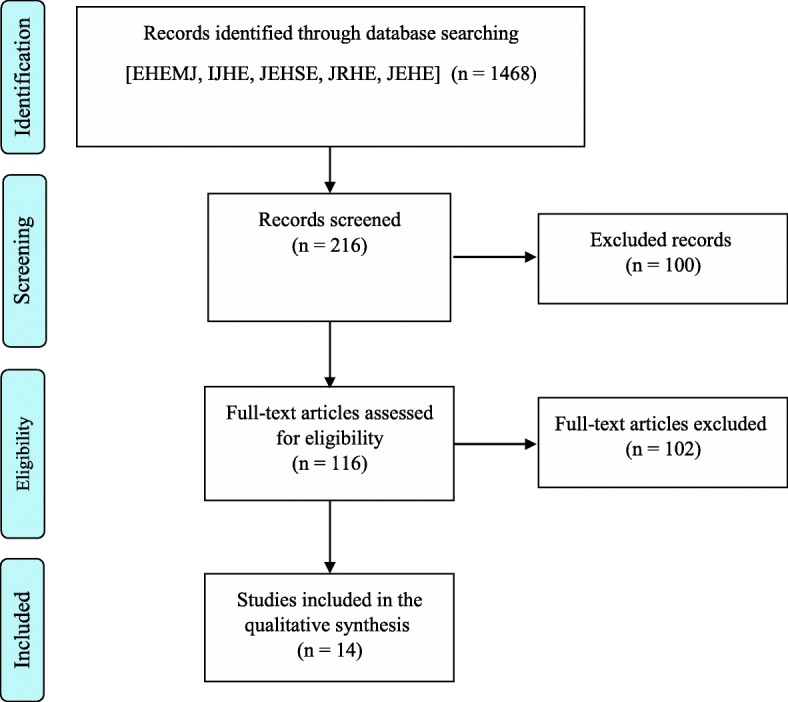
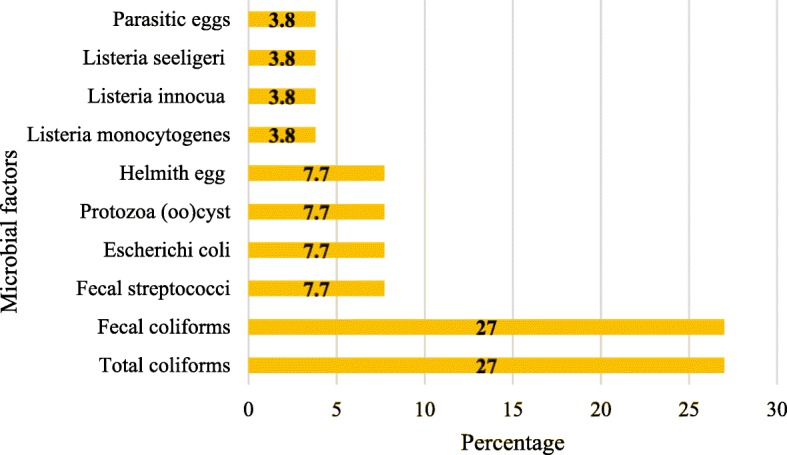
In this study, 1468 articles retrieved from 118 issues of 5 environmental health journals were reviewed. After reviewing the quality of the articles in accordance with the research objectives, 14 articles were included in the study that were published between 2010 and 2018. In most studies, two main indicators Total coliforms and Fecal coliforms in wastewater were investigated. Removing fungi and viral contamination from wastewater was not found in any of the 14 studies. Different systems (activated sludge, stabilization ponds, wetlands, and low and medium pressure UV disinfection systems were used to remove microbial agents in these studies. Most articles used active sludge systems to remove Total coliforms and Fecal coliforms, which in some cases were not within the US-EPA standard. The removal of Cysts and Parasitic eggs was only reporte from stabilization pond systems (SPS) where removal efficiency was found in accordance with US-EPA standards.

CONCLUSIONS

Different types of activated sludge systems have higher efficacy to remove microbial agents and are more effective than other mentioned systems in removing the main indicators of sewage contamination including Total coliforms and Fecal coliforms. However, inappropriate operation, maintenance and inadequate handling of activated sludge can also reduce its efficiency and reduce the removal of microbial agents, which was reported in some studies. Therefore, it is recommended to conduct research on how to improve the operation, maintenance, and proper management of activated sludge systems to transfer knowledge to users of sludge systems and prevent further health issues related to microbial agents.
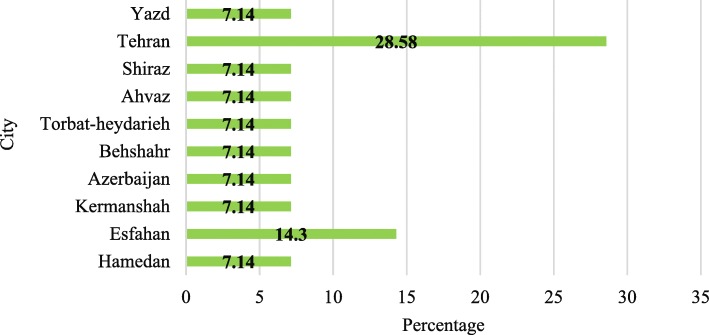
https://cdn.ncbi.nlm.nih.gov/pmc/blobs/e9d4/6998187/e5854fed8b9b/12992_2020_546_Fig3_HTML.jpg
https://cdn.ncbi.nlm.nih.gov/pmc/blobs/e9d4/6998187/53b219325dc8/12992_2020_546_Fig1_HTML.jpg
https://cdn.ncbi.nlm.nih.gov/pmc/blobs/e9d4/6998187/44de05e3bce7/12992_2020_546_Fig2_HTML.jpg
https://cdn.ncbi.nlm.nih.gov/pmc/blobs/e9d4/6998187/e5854fed8b9b/12992_2020_546_Fig3_HTML.jpg
https://cdn.ncbi.nlm.nih.gov/pmc/blobs/e9d4/6998187/53b219325dc8/12992_2020_546_Fig1_HTML.jpg
https://cdn.ncbi.nlm.nih.gov/pmc/blobs/e9d4/6998187/44de05e3bce7/12992_2020_546_Fig2_HTML.jpg
https://cdn.ncbi.nlm.nih.gov/pmc/blobs/e9d4/6998187/e5854fed8b9b/12992_2020_546_Fig3_HTML.jpg
摘要

背景

由于废水不受限制地进入环境以及微生物污染物传播给人类和生物,环境保护需要使用具有高去除效率的适当净化系统来去除微生物。本研究的目的是确定当前废水处理系统去除微生物及其污染物的效果。

方法

对 11 年来在 5 种伊朗环境卫生期刊上发表的所有文章进行了系统评价。根据纳入和排除标准,按照文章发表年份(2008-2018 年)检索相关关键词,收集数据,重点关注废水处理系统去除微生物制剂的效果。使用系统评价和荟萃分析的首选报告项目(PRISMA)标准清单收集定性数据。在确认文章质量后,将第一作者姓名和研究发表年份、研究类型、样本数量、净化类型、微生物制剂类型以及微生物制剂去除率等信息输入清单。还将研究中提到的微生物制剂的去除率与美国环境保护署(US-EPA)标准进行了比较。

结果

本研究从 5 种环境卫生期刊的 118 期中检索出 1468 篇文章,对其进行了综述。根据研究目标对文章质量进行审查后,纳入了 14 篇 2010 年至 2018 年发表的文章。在大多数研究中,主要调查了废水中的总大肠菌群和粪大肠菌群。在这 14 项研究中,没有发现从废水中去除真菌和病毒污染的情况。不同的系统(活性污泥、稳定塘、湿地和低、中压紫外线消毒系统)用于去除这些研究中的微生物制剂。大多数文章使用活性污泥系统去除总大肠菌群和粪大肠菌群,在某些情况下,不符合美国环保署的标准。囊和寄生虫卵的去除仅从稳定塘系统(SPS)报告,在该系统中发现去除效率符合美国环保署的标准。

结论

不同类型的活性污泥系统对去除微生物制剂具有更高的功效,在去除总大肠菌群和粪大肠菌群等污水污染的主要指标方面比其他提到的系统更有效。然而,活性污泥系统的不当操作、维护和处理不当也会降低其效率,降低微生物制剂的去除率,一些研究报告了这一点。因此,建议开展研究,探讨如何改进活性污泥系统的操作、维护和适当管理,将知识传递给污泥系统的使用者,防止与微生物制剂有关的进一步健康问题。

相似文献

1
Effectiveness of wastewater treatment systems in removing microbial agents: a systematic review.污水处理系统去除微生物剂的效果:系统评价。
Global Health. 2020 Feb 3;16(1):13. doi: 10.1186/s12992-020-0546-y.
2
Beyond the black stump: rapid reviews of health research issues affecting regional, rural and remote Australia.超越黑木树:影响澳大利亚地区、农村和偏远地区的健康研究问题的快速综述。
Med J Aust. 2020 Dec;213 Suppl 11:S3-S32.e1. doi: 10.5694/mja2.50881.
3
Removal of bacterial contaminants and antibiotic resistance genes by conventional wastewater treatment processes in Saudi Arabia: Is the treated wastewater safe to reuse for agricultural irrigation?沙特阿拉伯常规废水处理工艺去除细菌污染物和抗生素抗性基因:经处理的废水用于农业灌溉是否安全?
Water Res. 2015 Apr 15;73:277-90. doi: 10.1016/j.watres.2015.01.036. Epub 2015 Feb 3.
4
Pathogens and fecal indicators in waste stabilization pond systems with direct reuse for irrigation: Fate and transport in water, soil and crops.污水稳定塘系统中直接用于灌溉的病原体和粪便指示物:水、土壤和作物中的迁移和归宿。
Sci Total Environ. 2016 May 1;551-552:429-37. doi: 10.1016/j.scitotenv.2016.01.159. Epub 2016 Feb 13.
5
Comparative reduction of Giardia cysts, F+ coliphages, sulphite reducing clostridia and fecal coliforms by wastewater treatment processes.通过废水处理工艺对贾第虫囊肿、F+ 大肠杆菌噬菌体、亚硫酸盐还原梭菌和粪大肠菌群的比较去除率
J Environ Sci Health A Tox Hazard Subst Environ Eng. 2017 Jan 28;52(2):144-148. doi: 10.1080/10934529.2016.1237140. Epub 2016 Oct 21.
6
Removal of Fecal Indicators, Pathogenic Bacteria, Adenovirus, Cryptosporidium and Giardia (oo)cysts in Waste Stabilization Ponds in Northern and Eastern Australia.澳大利亚北部和东部地区稳定塘中粪便指示菌、致病菌、腺病毒、隐孢子虫和贾第虫(卵)囊的去除情况
Int J Environ Res Public Health. 2016 Jan 2;13(1):96. doi: 10.3390/ijerph13010096.
7
[Evaluation of bacterial and polluting loads of effluent from activated sludge wastewater treatment plants in Yaounde, Cameroon].[喀麦隆雅温得活性污泥废水处理厂出水细菌和污染负荷评估]
Sante. 2001 Apr-Jun;11(2):79-84.
8
Footprints of total coliforms, faecal coliforms and E. coli in a wastewater treatment plant and the probabilistic assessment and reduction of E. coli infection risks.污水处理厂中总大肠菌群、粪大肠菌群和大肠杆菌的足迹,以及大肠杆菌感染风险的概率评估和降低。
Sci Total Environ. 2023 Nov 20;900:165845. doi: 10.1016/j.scitotenv.2023.165845. Epub 2023 Jul 26.
9
Hospital wastewater (HWW) treatment in low- and middle-income countries: A systematic review of microbial treatment efficacy.中低收入国家医院废水(HWW)处理:微生物处理效果的系统评价。
Sci Total Environ. 2024 Apr 15;921:170994. doi: 10.1016/j.scitotenv.2024.170994. Epub 2024 Feb 15.
10
Evaluation of nutrients in bread: a systematic review.面包中营养成分的评价:系统评价。
J Health Popul Nutr. 2022 Nov 14;41(1):50. doi: 10.1186/s41043-022-00329-3.

引用本文的文献

1
Harnessing Engineered Microbial Consortia for Xenobiotic Bioremediation: Integrating Multi-Omics and AI for Next-Generation Wastewater Treatment.利用工程化微生物群落进行异生素生物修复:整合多组学和人工智能用于下一代废水处理。
J Xenobiot. 2025 Aug 19;15(4):133. doi: 10.3390/jox15040133.
2
Machine learning-based identification of wastewater treatment plant-specific microbial indicators using 16S rRNA gene sequencing.基于机器学习利用16S rRNA基因测序鉴定污水处理厂特定的微生物指标
Sci Rep. 2025 Jul 3;15(1):23771. doi: 10.1038/s41598-025-07952-0.
3
A Review on Biohazards Removal in Ethiopia: Efficacy of Existing Treatment Systems and Challenges.

本文引用的文献

1
The status of international collaborations in compilation of Iranian scientific articles on environmental health engineering.伊朗环境健康工程科学论文编写国际合作的现状。
Global Health. 2019 Feb 27;15(1):17. doi: 10.1186/s12992-019-0460-3.
2
Health Effects Associated with Wastewater Treatment, Reuse and Disposal.与废水处理、再利用和处置相关的健康影响。
Water Environ Res. 2018 Oct 1;90(10):1759-1776. doi: 10.2175/106143018X15289915807425.
3
Species in Wastewater Final Effluents and Receiving Watershed in South Africa: Implications for Public Health.
埃塞俄比亚生物危害去除综述:现有处理系统的效能与挑战
Environ Health Insights. 2025 Jan 9;19:11786302241312770. doi: 10.1177/11786302241312770. eCollection 2025.
4
Fabrication and catalytic activity of TiO/FeO and FeO/β-cyclodextrin nanocatalysts for safe treatment of industrial wastewater.用于工业废水安全处理的TiO/FeO和FeO/β-环糊精纳米催化剂的制备及其催化活性
Heliyon. 2024 Jul 29;10(15):e35400. doi: 10.1016/j.heliyon.2024.e35400. eCollection 2024 Aug 15.
5
Integrated environmental management and GPS-X modelling for current and future sustainable wastewater treatment: A case study from the Middle East.当前及未来可持续污水处理的综合环境管理与GPS-X建模:中东地区的案例研究
Heliyon. 2024 Jul 5;10(14):e34164. doi: 10.1016/j.heliyon.2024.e34164. eCollection 2024 Jul 30.
6
Bioinspired Synthesis of Silver Nanoparticles for the Remediation of Toxic Pollutants and Enhanced Antibacterial Activity.生物启发法合成用于修复有毒污染物和增强抗菌活性的银纳米粒子。
Biomolecules. 2023 Jun 29;13(7):1054. doi: 10.3390/biom13071054.
7
Using medical university websites for health education about COVID-19; an effective solution for public education during a pandemic.利用医科大学网站进行 COVID-19 健康教育;大流行期间公众教育的有效解决方案。
J Health Popul Nutr. 2023 Jul 28;42(1):76. doi: 10.1186/s41043-023-00417-y.
8
Exploring Microbial-Based Green Nanobiotechnology for Wastewater Remediation: A Sustainable Strategy.探索基于微生物的绿色纳米生物技术用于废水修复:一种可持续战略。
Nanomaterials (Basel). 2022 Nov 25;12(23):4187. doi: 10.3390/nano12234187.
9
Effectiveness of two wastewater disinfection strategies for the removal of fecal indicator bacteria, bacteriophage, and enteric viral pathogens concentrated using dead-end hollow fiber ultrafiltration (D-HFUF).两种废水消毒策略对使用死端中空纤维超滤(D-HFUF)浓缩的粪便指示菌、噬菌体和肠道病毒病原体去除效果的比较。
Sci Total Environ. 2022 Jul 20;831:154861. doi: 10.1016/j.scitotenv.2022.154861. Epub 2022 Mar 28.
10
River Biofilms Microbiome and Resistome Responses to Wastewater Treatment Plant Effluents Containing Antibiotics.河流生物膜微生物群落及抗性组对含有抗生素的污水处理厂出水的响应
Front Microbiol. 2022 Feb 9;13:795206. doi: 10.3389/fmicb.2022.795206. eCollection 2022.
南非污水最终排放和受纳水域中的物种:对公共健康的影响。
Int J Environ Res Public Health. 2018 Jun 15;15(6):1266. doi: 10.3390/ijerph15061266.
4
Seasonal bacterial community succession in four typical wastewater treatment plants: correlations between core microbes and process performance.四季典型污水处理厂细菌群落演替:核心微生物与工艺性能的相关性。
Sci Rep. 2018 Mar 15;8(1):4566. doi: 10.1038/s41598-018-22683-1.
5
Spread of multidrug-resistant Escherichia coli harboring integron via swine farm waste water treatment plant.多药耐药大肠杆菌通过猪场废水处理厂的传播。
Ecotoxicol Environ Saf. 2018 Mar;149:36-42. doi: 10.1016/j.ecoenv.2017.10.071. Epub 2017 Nov 13.
6
Stepwise impact of urban wastewater treatment on the bacterial community structure, antibiotic contents, and prevalence of antimicrobial resistance.城市污水处理对细菌群落结构、抗生素含量及抗菌药物耐药性流行的逐步影响
Environ Pollut. 2017 Dec;231(Pt 2):1578-1585. doi: 10.1016/j.envpol.2017.09.055. Epub 2017 Sep 28.
7
Design of waste stabilization pond systems: A review.污水稳定塘系统设计:综述。
Water Res. 2017 Oct 15;123:236-248. doi: 10.1016/j.watres.2017.06.071. Epub 2017 Jun 26.
8
Division of methods for counting helminths' eggs and the problem of efficiency of these methods.蠕虫卵计数方法的分类及其方法效率问题。
Ann Agric Environ Med. 2017 Mar 21;24(1):1-7. doi: 10.5604/12321966.1233891.
9
Human enteric bacteria and viruses in five wastewater treatment plants in the Eastern Cape, South Africa.南非东开普省五家污水处理厂中的人类肠道细菌和病毒。
J Infect Public Health. 2017 Sep-Oct;10(5):541-547. doi: 10.1016/j.jiph.2016.11.012. Epub 2017 Feb 4.
10
From the conventional biological wastewater treatment to hybrid processes, the evaluation of organic micropollutant removal: A review.从传统的生物废水处理到混合工艺,有机微量污染物去除的评估:综述。
Water Res. 2017 Mar 15;111:297-317. doi: 10.1016/j.watres.2017.01.005. Epub 2017 Jan 6.