Institute for Stem Cell and Regenerative Medicine, University of Washington, Seattle, WA, USA.
Center for Cardiovascular Biology, University of Washington, Seattle, WA, USA.
Nat Rev Cardiol. 2020 Jun;17(6):341-359. doi: 10.1038/s41569-019-0331-x. Epub 2020 Feb 3.
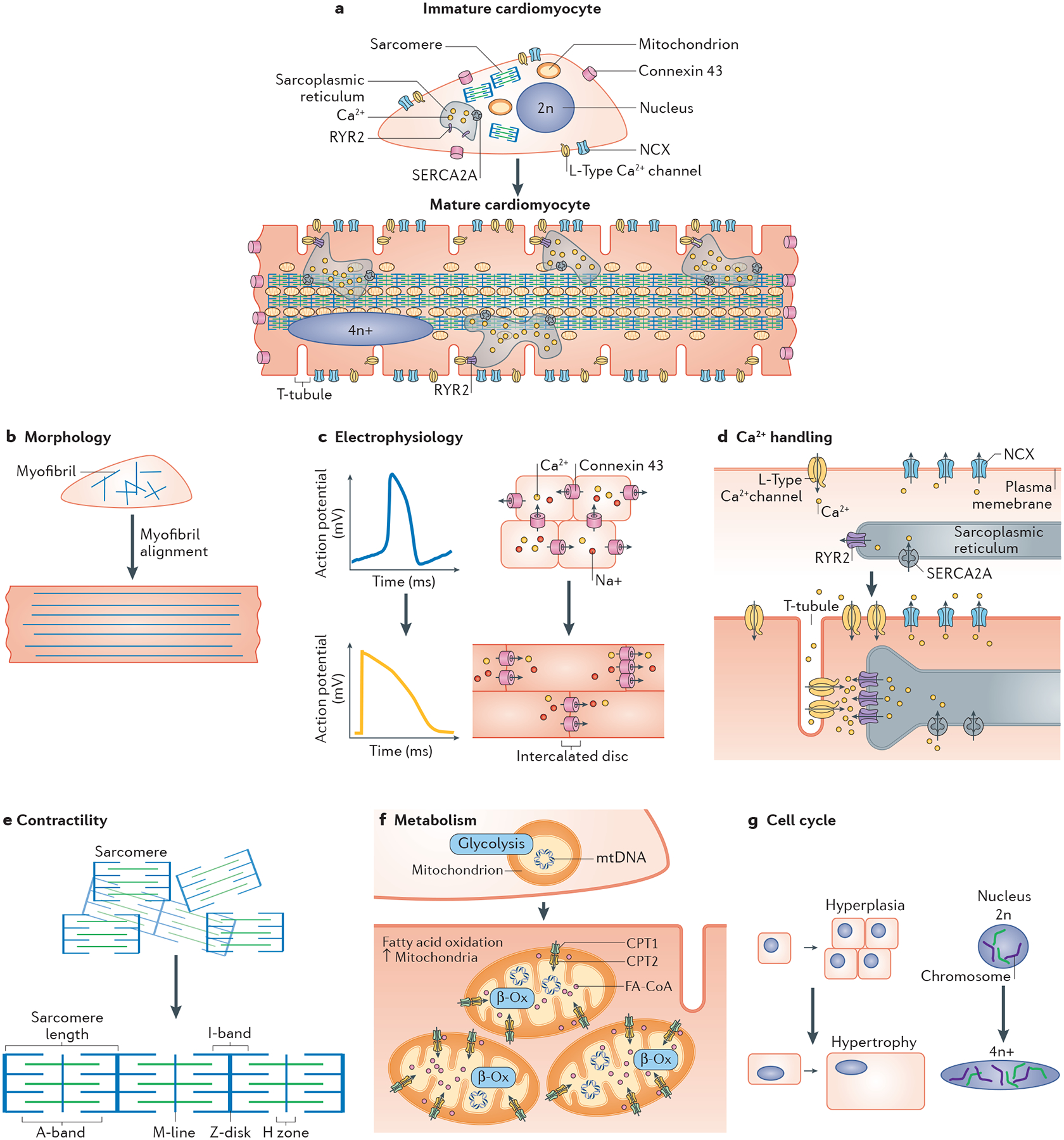
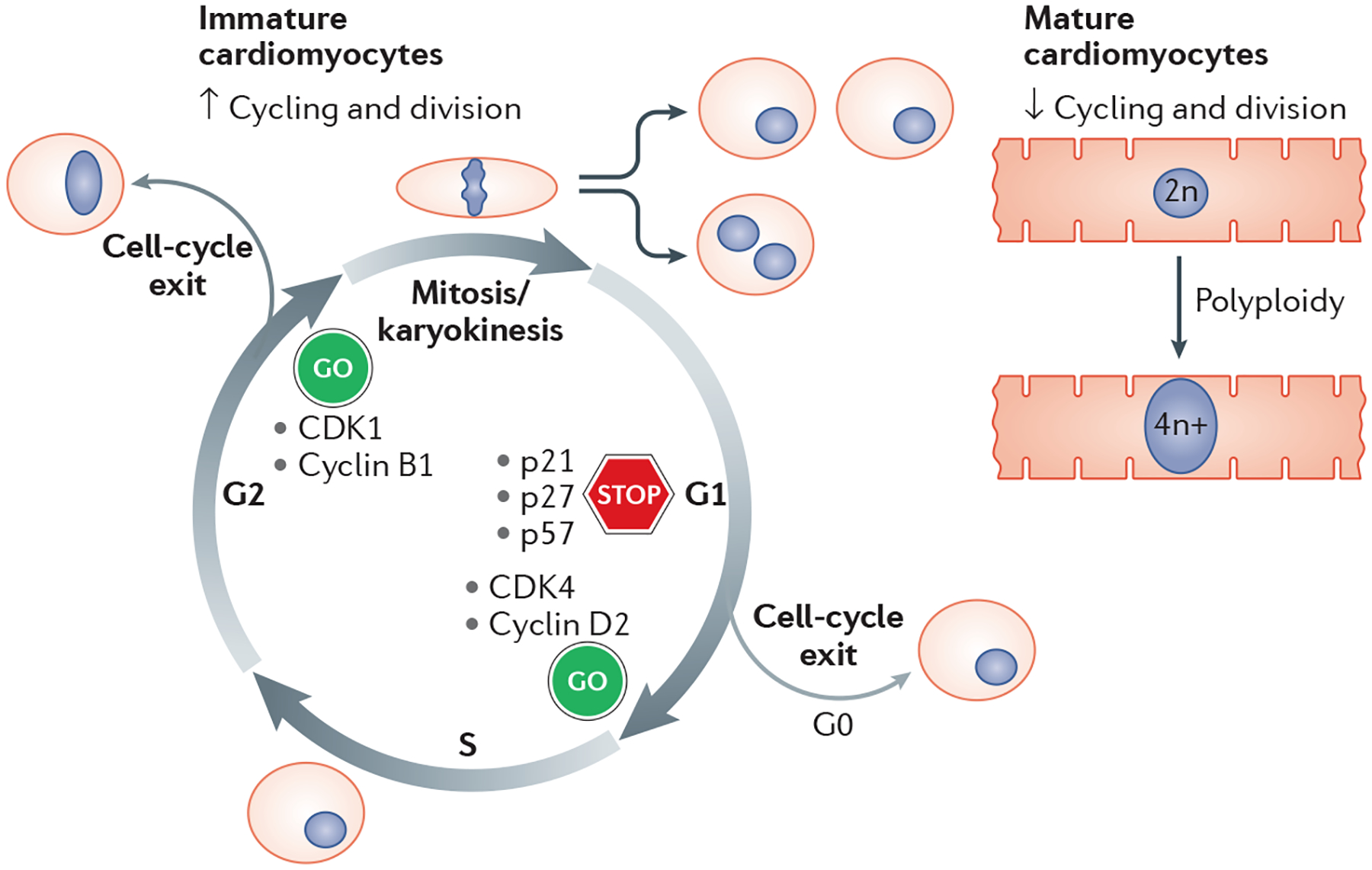
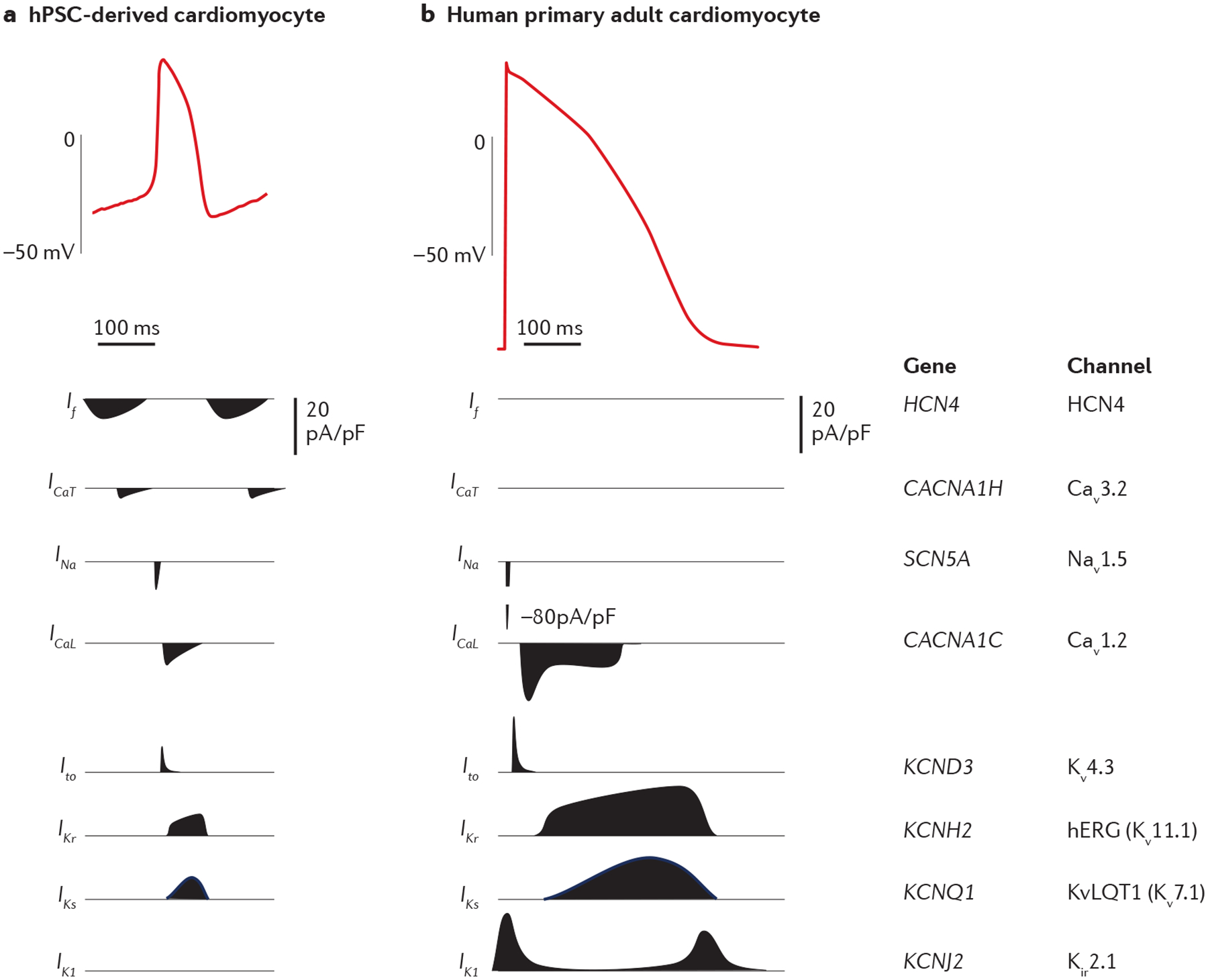
Our knowledge of pluripotent stem cell (PSC) biology has advanced to the point where we now can generate most cells of the human body in the laboratory. PSC-derived cardiomyocytes can be generated routinely with high yield and purity for disease research and drug development, and these cells are now gradually entering the clinical research phase for the testing of heart regeneration therapies. However, a major hurdle for their applications is the immature state of these cardiomyocytes. In this Review, we describe the structural and functional properties of cardiomyocytes and present the current approaches to mature PSC-derived cardiomyocytes. To date, the greatest success in maturation of PSC-derived cardiomyocytes has been with transplantation into the heart in animal models and the engineering of 3D heart tissues with electromechanical conditioning. In conventional 2D cell culture, biophysical stimuli such as mechanical loading, electrical stimulation and nanotopology cues all induce substantial maturation, particularly of the contractile cytoskeleton. Metabolism has emerged as a potent means to control maturation with unexpected effects on electrical and mechanical function. Different interventions induce distinct facets of maturation, suggesting that activating multiple signalling networks might lead to increased maturation. Despite considerable progress, we are still far from being able to generate PSC-derived cardiomyocytes with adult-like phenotypes in vitro. Future progress will come from identifying the developmental drivers of maturation and leveraging them to create more mature cardiomyocytes for research and regenerative medicine.
我们对多能干细胞(PSC)生物学的认识已经发展到可以在实验室中生成人体的大多数细胞的地步。PSC 衍生的心肌细胞可以常规地以高产率和高纯度生成,用于疾病研究和药物开发,并且这些细胞现在逐渐进入临床试验阶段,用于测试心脏再生疗法。然而,它们应用的一个主要障碍是这些心肌细胞的不成熟状态。在这篇综述中,我们描述了心肌细胞的结构和功能特性,并介绍了目前使 PSC 衍生的心肌细胞成熟的方法。迄今为止,在动物模型中移植和进行电机械调节的 3D 心脏组织工程方面,PSC 衍生的心肌细胞成熟方面取得了最大的成功。在传统的 2D 细胞培养中,机械加载、电刺激和纳米拓扑线索等生物物理刺激都会引起显著的成熟,特别是收缩细胞骨架的成熟。代谢已成为控制成熟的有效手段,对电和机械功能产生了意想不到的影响。不同的干预措施诱导不同方面的成熟,这表明激活多个信号网络可能会导致成熟度增加。尽管取得了相当大的进展,但我们仍远不能在体外生成具有成人样表型的 PSC 衍生的心肌细胞。未来的进展将来自于确定成熟的发育驱动因素,并利用它们来创建更成熟的心肌细胞,用于研究和再生医学。