Department of Chemistry, Molecular Sciences Research Hub , Imperial College London , London W12 0BZ , United Kingdom.
Oncology, R&D , AstraZeneca , Cambridge CB4 0WG , United Kingdom.
ACS Chem Biol. 2020 Feb 21;15(2):325-333. doi: 10.1021/acschembio.9b00963. Epub 2020 Feb 10.
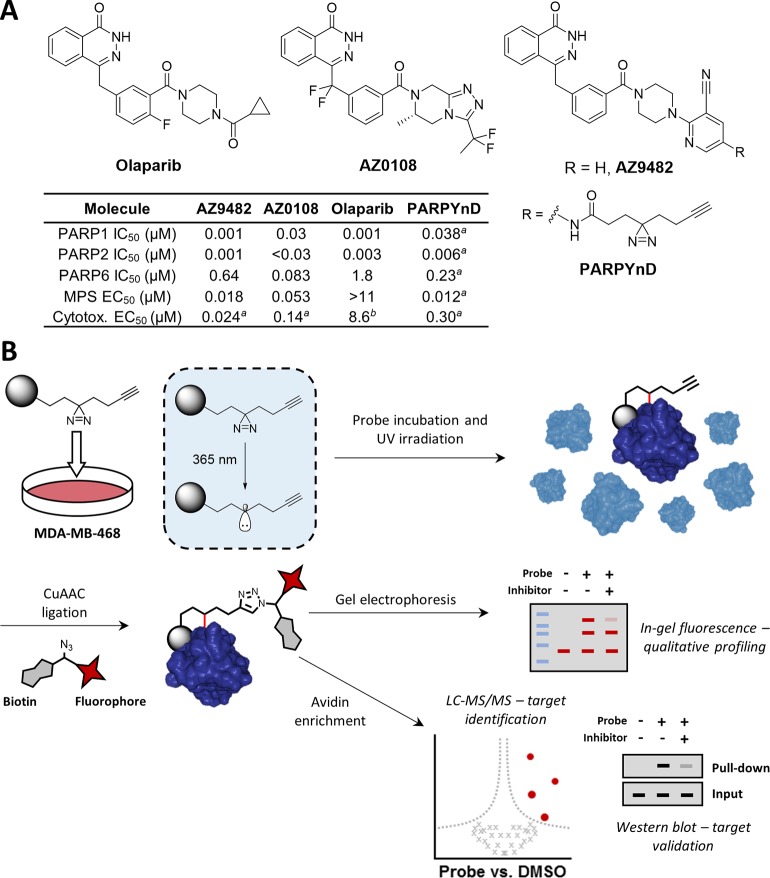
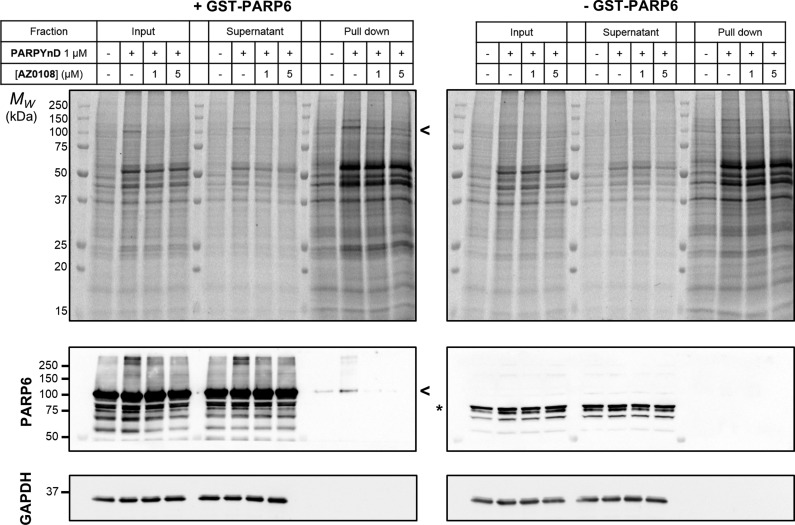
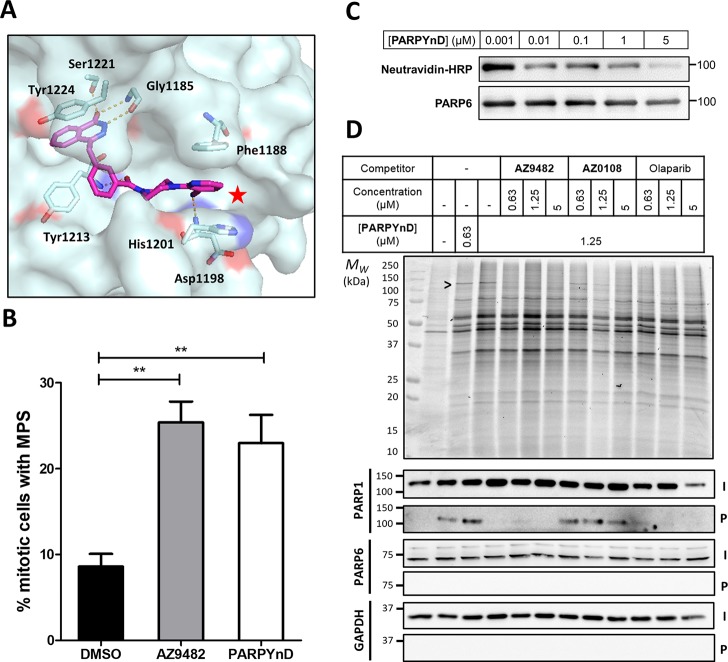
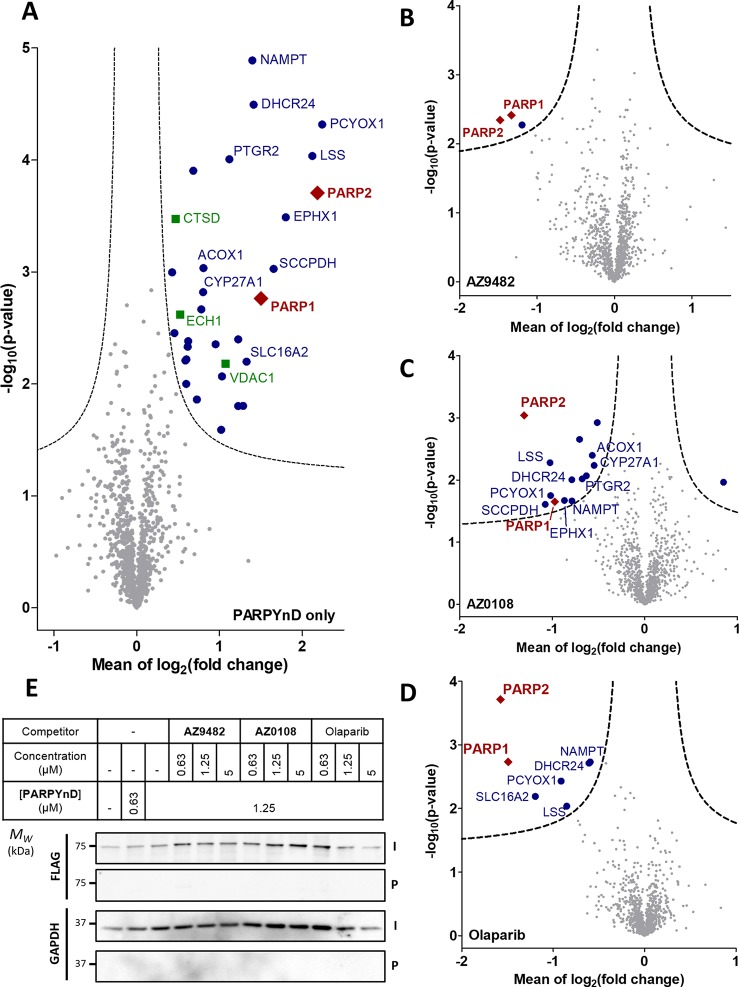
Inhibition of the poly(ADP-ribose) polymerase (PARP) family of enzymes has become an attractive therapeutic strategy in oncology and beyond; however, chemical tools to profile PARP engagement in live cells are lacking. Herein, we report the design and application of , the first photoaffinity probe (AfBP) for PARP enzymes based on triple PARP1/2/6 inhibitor , which induces multipolar spindle (MPS) formation in breast cancer cells. is a robust tool for profiling PARP1/2 and is used to profile clinical PARP inhibitor olaparib, identifying several novel off-target proteins. Surprisingly, while can enrich recombinant PARP6 spiked into cellular lysates and inhibits PARP6 in cell-free assays, it does not label PARP6 in intact cells. These data highlight an intriguing biomolecular disparity between recombinant and endogenous PARP6. provides a new approach to expand our knowledge of the targets of this class of compounds and the mechanisms of action of PARP inhibitors in cancer.
聚 ADP-核糖聚合酶(PARP)家族酶的抑制已成为肿瘤学及其他领域有吸引力的治疗策略;然而,缺乏用于在活细胞中分析 PARP 结合的化学工具。在此,我们报告了基于三重 PARP1/2/6 抑制剂 的聚 ADP-核糖聚合酶(PARP)酶的第一个光亲和探针(AfBP)的设计和应用,该抑制剂可诱导乳腺癌细胞中形成多极纺锤体(MPS)。 是一种用于分析 PARP1/2 的强大工具,并用于分析临床 PARP 抑制剂奥拉帕利,鉴定出几种新的非靶标蛋白。令人惊讶的是,虽然 可以富集掺入细胞裂解物中的重组 PARP6 并在无细胞测定中抑制 PARP6,但它不能标记完整细胞中的 PARP6。这些数据突出了重组和内源性 PARP6 之间引人入胜的生物分子差异。 为扩展我们对这类化合物的靶标以及 PARP 抑制剂在癌症中的作用机制的认识提供了一种新方法。